
The first time many people learn Spanish, they quickly memorize the word “bueno” or “bien.”
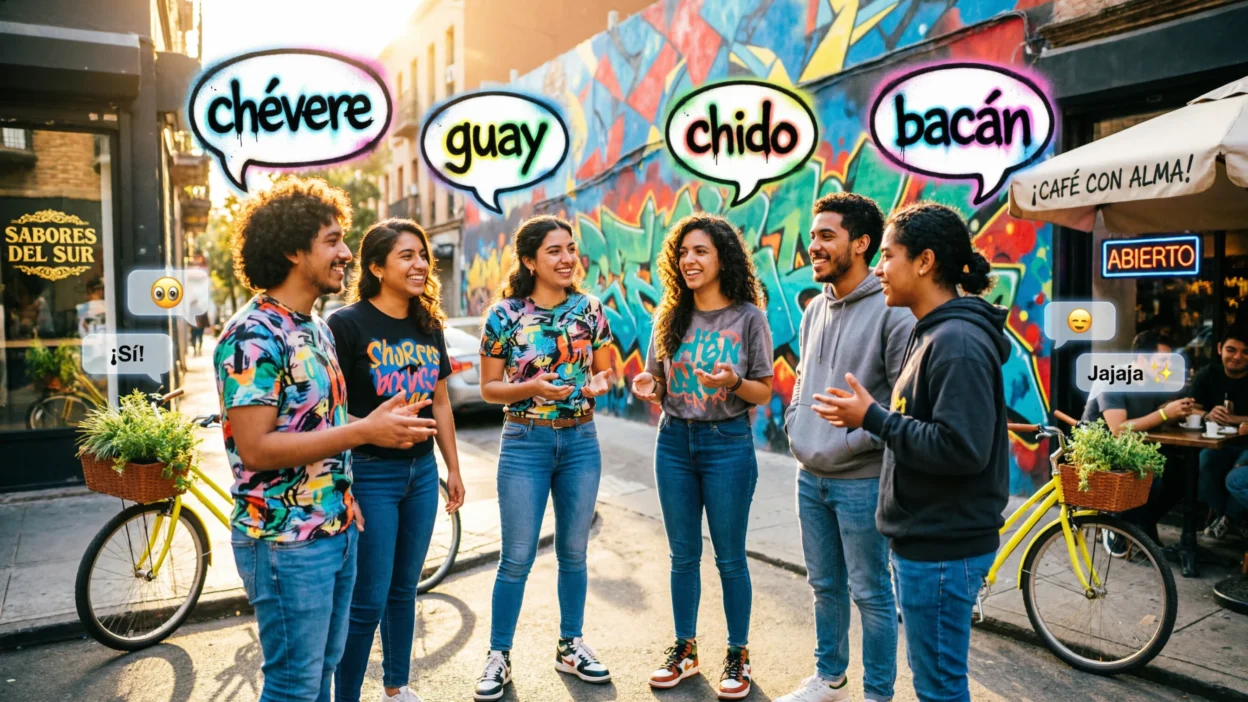
However, later they notice something interesting. Native speakers often say words that sound completely different “chévere,” “guay,” “chido,” or “bacán.” At first, this feels confusing. Are they saying something different? Actually, no. They are simply using Spanish slang for “cool.”
So, if you watch Spanish TikTok videos, chat with Spanish-speaking friends, or travel to different Spanish-speaking countries, you will hear many casual slang words that all mean the same thing: cool, awesome, or great.
Therefore, this guide explains cool in Spanish slang, where each word is used, and how to use them naturally.
Quick Answer
“Cool” in Spanish slang can be said as “chévere,” “guay,” “chido,” “bacán,” or “copado,” depending on the country.
What Does “Cool” Mean in Spanish Slang?
In English, the word cool means nice, great, impressive, stylish, or interesting. Similarly, Spanish speakers use informal slang words to express the same feeling.
Because Spanish is spoken in many countries, each region developed its own slang version. Therefore, learning several options helps you understand conversations everywhere.
Bold summary: Spanish slang uses different words for “cool,” but all express approval, excitement, or admiration.
Most Common Spanish Slang Words for “Cool”
Below are the most popular slang words used across different Spanish-speaking regions.
| Slang Word | Country/Region | Meaning |
|---|---|---|
| chévere | Caribbean, Venezuela, Peru | cool / awesome |
| guay | Spain | cool / great |
| chido | Mexico | cool / nice |
| bacán | Chile, Peru | awesome |
| copado | Argentina | cool / fun |
| padre | Mexico | cool (casual) |
| brutal | Caribbean | amazing |
Although the meaning stays similar, the location determines which word sounds natural.
Why Spanish Has Many Slang Words for “Cool”
Unlike standard dictionary vocabulary, slang changes quickly. Each country creates expressions based on culture, music, and youth language. Therefore, instead of one universal slang word, Spanish developed many regional variations.
Additionally, social media now spreads slang globally. As a result, young speakers often understand multiple versions even if they mainly use one locally.
How These Slang Words Are Used in Sentences
Most of these slang words appear at the end of sentences to describe something positively.
Examples:
- “esa película está chévere.”
- “tu idea está guay.”
- “ese carro está chido.”
- “la fiesta estuvo bacán.”
Each sentence simply means something is cool or awesome.
Where These Slang Words Are Commonly Used
You will usually hear Spanish slang for cool in:
- texting conversations
- TikTok captions
- Instagram comments
- friendly chats
- gaming conversations
- casual spoken language
However, these words are informal, so they rarely appear in professional writing or official communication.
Realistic Conversation Examples (lowercase texting style)
- “esa canción está chévere.”
- “tu camiseta está guay.”
- “ese juego está chido.”
- “la fiesta estuvo bacán.”
- “tu plan está copado.”
- “ese restaurante está padre.”
- “ese video estuvo brutal.”
- “tu idea está muy chévere.”
- “ese lugar está guay vamos.”
These examples reflect everyday social media and texting conversations.
When to Use Spanish Slang for “Cool”
Use these slang words when:
- chatting with friends
- posting on social media
- talking casually
- reacting to music, fashion, or videos
- speaking informally
Because the tone is friendly and relaxed, slang sounds natural in these situations.
When NOT to Use These Slang Words
Avoid using slang when:
- writing formal emails
- attending job interviews
- writing academic essays
- speaking in professional meetings
- preparing official documents
Instead, use standard words like excelente, muy bueno, or genial.
Comparison Table: Formal vs Slang “Cool”
| Context | Phrase | Why It Works / Doesn’t Work |
|---|---|---|
| texting friend | “tu idea está chévere” | informal conversation fits slang |
| social media post | “ese video está guay” | casual online tone |
| business email | “su propuesta está chévere” | sounds unprofessional |
| presentation speech | “este proyecto es genial” | formal alternative works better |
Therefore, choosing the right setting matters greatly.
Similar Slang Alternatives That Also Mean “Great”
Besides the main slang words, Spanish speakers sometimes use other informal terms that also express excitement.
| Word | Meaning | Usage |
|---|---|---|
| genial | great / awesome | semi-formal casual |
| increíble | incredible | common in speech |
| fantástico | fantastic | slightly formal but friendly |
| buenísimo | very good | conversational tone |
| espectacular | spectacular | strong praise |
Although these are not always slang, they still convey a “cool” feeling.
Why Learning Slang Improves Communication
Understanding slang helps you:
- follow real conversations easily
- understand movies and music
- connect naturally with native speakers
- respond quickly in chats
- sound more fluent and relaxed
Therefore, even beginners benefit from learning common slang expressions early.
Common Mistakes Learners Make
Many learners make simple mistakes when using Spanish slang:
- using the wrong country’s slang in very formal settings
- thinking one word works everywhere
- using slang in professional communication
- translating slang directly from English
Instead, learning context-based usage helps avoid confusion.
Quick Memory Tip
To remember quickly:
- Spain → guay
- Mexico → chido
- Caribbean / Peru → chévere
- Chile → bacán
- Argentina → copado
This simple grouping helps you understand conversations worldwide.
FAQs
what is the most universal slang word for cool in spanish?
“chévere” is widely understood across many Spanish-speaking countries, especially in Latin America.
is “guay” used everywhere?
No. “Guay” is mainly used in Spain, although many learners still understand it internationally.
can i use slang words in professional situations?
No. Use formal words like “excelente” or “genial” in professional communication.
do all spanish countries use the same slang?
No. Each country has its own slang expressions, although meanings are often similar.
which slang word should beginners learn first?
“chévere” and “genial” are easy and widely understood starting choices.
are slang words used in texting more than speaking?
They are common in both texting and casual spoken conversations.
Final Thought
Language becomes more lively when slang enters daily conversations. Spanish, spoken across many regions, naturally developed different expressions for simple ideas like “cool.”
Although words such as chévere, guay, chido, bacán, and copado differ by location, they all express the same positive reaction—approval, excitement, or admiration.
Therefore, learning these slang variations not only improves comprehension but also helps you sound more natural when chatting with friends or interacting online.
At the same time, remembering when to switch back to formal vocabulary ensures clear communication in professional environments.
Ultimately, mastering both slang and standard language allows you to understand real-world Spanish conversations confidently and enjoy cultural expressions more deepl