
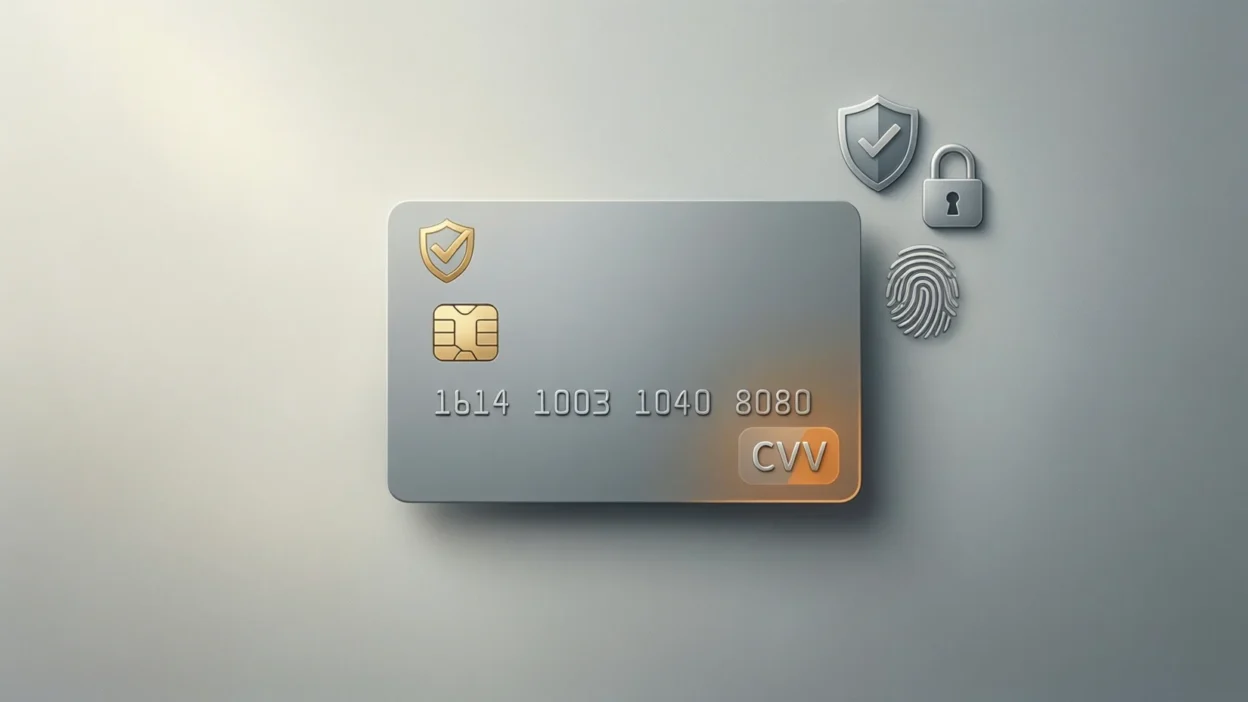
If you’ve ever paid for something online, you’ve seen the CVV field. You type your card number, expiry date, and name, and then the page asks for a few extra digits. At that moment, many people pause.
They flip the card over, search for the numbers, and wonder why this step matters so much.
Online shopping feels normal today, but online fraud also exists. That’s why small security details play a big role.
CVV is one of those details. It works quietly in the background, helping protect your money every time you pay online. Understanding what CVV means removes confusion and helps you make safer payment decisions.
Understanding CVV And Its Meaning
What CVV Stands For
CVV stands for Card Verification Value.
Simple Meaning In Everyday Language
CVV is a short security code printed on your debit or credit card. It proves that you physically have the card when making an online or phone payment.
Where You Find CVV On Your Card
- Visa, MasterCard, Discover: 3 digits on the back
- American Express: 4 digits on the front
Quick summary: CVV is a security code that helps confirm your card is in your possession during payments.
Why CVV Is Important
Adds Extra Protection
CVV adds a second layer of security beyond the card number. Even if someone steals your card number, they still need the CVV to complete many transactions.
Reduces Online Fraud
Most online stores use CVV checks to block unauthorized payments and protect customers.
How CVV Is Used During Payments
Online Shopping
E-commerce websites ask for CVV before approving transactions.
Phone Or Mail Orders
Businesses may request CVV when you give card details verbally.
Subscription Services
Apps and platforms often require CVV when adding a new card.
CVV Compared To Other Card Details
CVV Vs Card Number
- Card number identifies the account
- CVV verifies card ownership
CVV Vs PIN
- CVV works for online or remote payments
- PIN works at ATMs and in-store machines
Common Situations Where CVV Appears
Checkout Pages
Most secure checkout pages include a CVV field.
Banking And Finance Apps
Some apps ask for CVV when linking cards.
Tone: formal and security-focused
Use: financial transactions and verification
Real-Life Examples Using CVV
- “enter your cvv to complete payment”
- “my payment failed because the cvv was wrong”
- “never share your cvv with anyone”
- “the site asked for card number and cvv”
- “cvv helps prevent fraud”
- “i found the cvv on the back of my card”
- “they needed cvv for subscription setup”
When To Share CVV And When Not To
Do Share CVV When
- paying on trusted websites
- using secure payment gateways
- entering details yourself
Don’t Share CVV When
- someone asks through email or sms
- you receive a suspicious phone call
- a website looks unsafe
Quick Comparison Table
| Situation | Example | Why It Works Or Fails |
|---|---|---|
| secure checkout | entering cvv | adds protection |
| scam email | “send cvv” | unsafe |
| trusted app | payment screen | acceptable |
| unknown caller | asking cvv | fraud risk |
Related Terms You Should Know
CVC
Another name for CVV, used by some card companies.
Security Code
A general term used for CVV on cards.
PIN
A private code used at ATMs or stores.
OTP
A one-time password sent for extra verification.
Frequently Asked Questions (FAQs)
Is CVV The Same On Every Card?
No. Each card has a unique CVV.
Does CVV Ever Change?
Usually no, unless the card gets replaced.
Can A Payment Go Through Without CVV?
Some transactions allow it, but many require CVV.
Is CVV Safe To Save Online?
It’s safer not to save it.
Is CVV Encrypted During Payment?
Trusted payment systems encrypt CVV data.
Should I Share CVV With Customer Support?
Never share CVV with anyone directly.
Final Thoughts
CVV may look like a small detail, but it plays a major role in online payment security.
It helps confirm that the person making the payment actually has the card and reduces the risk of fraud.
Knowing what CVV means gives you more control and confidence when shopping online.
You can spot unsafe requests, avoid scams, and protect your financial information better.
In a digital world where payments happen fast, understanding simple security tools like CVV makes a big difference.

Orvian Treloux works on the Wordifs site developing structured blogs coordinating via wordifs@gmail.com to ensure accuracy originality clarity usefulness engagement and long term trust among global readers across digital platforms.