
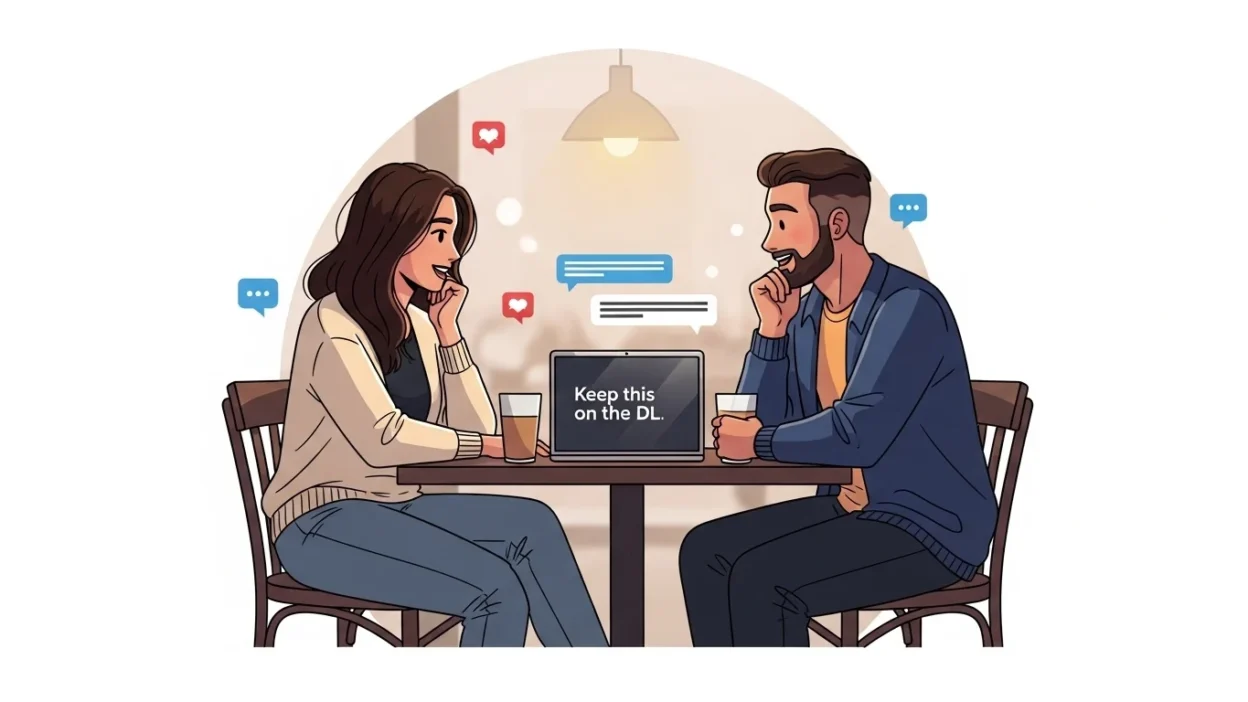
The first time you see “dl” in a message, it feels confusing. Someone writes, “keep this on the dl,” and suddenly you stop and think, what does that even mean? However, after reading the whole conversation, you realize the person is talking about something private.
Because texting culture uses short forms all the time, small phrases like DL quickly become popular. As a result, people now use DL in text messages, social media chats, and online conversations to keep things simple. Therefore, if you have seen this slang recently and want a clear explanation, this guide will make it easy to understand.
Quick Answer
DL in text usually means “Down Low,” and people use it when they want something to stay private or secret.
What Does DL Mean in Text?
First of all, DL meaning in text stands for “Down Low.” People use it when they talk about something that should stay private or quiet.
Because online conversations move fast, DL works as a quick way to say “keep it secret” or “don’t tell others.”
Full Form
DL = Down Low
Plain-English Explanation
In simple words, DL means something should stay private or not shared with everyone.
People often use DL when:
- they want to keep something secret
- they don’t want others to know
- they are sharing private information
- they want to stay low-key
Example Sentence
“i’ll tell you later but keep it on the dl”
Here, the person wants the information to stay private.
Why People Use DL
People use DL because:
- First, it saves time in texting.
- Next, it sounds more casual than saying ‘secret.’
- Also, it fits informal chat language.
- Finally, it helps people communicate quickly.
In simple terms: DL means “Down Low,” and people use it when they want something to stay private.
Where Is DL Commonly Used?
Now let’s explore where people usually use DL in online conversations. Because it feels informal, it mainly appears in casual digital communication.
1. Text Messages
Friends often use DL when sharing something private.
Example:
“keep this on the dl for now”
2. Social Media Chats
People sometimes use DL in direct messages.
Platforms include:
- Snapchat
- TikTok
- Messenger
Example:
“i’ll send you the details but keep it on the dl”
3. Group Chats
Group chats often include private topics, so DL appears frequently.
Example:
“don’t tell anyone yet, keep it on the dl”
4. Online Forums
People sometimes use DL in comments when discussing something quietly.
Example:
“this update is still on the dl”
Tone of DL
The tone of DL usually feels:
- Casual
- Informal
- Slightly secretive
- Friendly
However, it is not suitable for formal communication.
Real Chat Examples Using DL
Now let’s look at realistic texting-style examples. These show how people naturally use DL in conversations.
- “keep this on the dl for now”
- “i’ll tell you later but stay on the dl”
- “we’re planning something on the dl”
- “don’t tell anyone yet, keep it dl”
- “this is still on the dl”
- “let’s keep it on the dl until tomorrow”
- “i heard something but it’s on the dl”
- “this plan is on the dl right now”
- “just keep it dl, ok?”
Clearly, DL appears when someone wants something to stay private.
When to Use DL (And When Not To)
Even though DL meaning in text is simple, context still matters.
When You Should Use DL
You can use DL when:
- chatting with friends
- talking about private topics
- sending informal messages
- sharing secrets casually
- replying quickly in chats
Example:
“keep it on the dl for now”
When You Should Not Use DL
However, avoid DL in professional situations.
Do not use it in:
- work emails
- business communication
- academic writing
- official announcements
- formal messages
Instead, write something like “Please keep this confidential.”
Quick Comparison Table
| Context | Example Phrase | Why It Works / Doesn’t Work |
|---|---|---|
| Casual chat | “keep it on the dl” | Perfect usage |
| Social media | “this is on the dl” | Works naturally |
| Work email | “meeting info dl” | Too informal |
| Formal writing | “details are dl” | Not appropriate |
Therefore, always use slang based on the tone of the conversation.
Similar Slang Words and Alternatives
| Slang | Meaning | When to Use |
|---|---|---|
| Low-key | Keep something quiet | Casual conversations |
| Secret | Private information | Simple alternative |
| Confidential | Very private | Formal situations |
| Private | Not public | Neutral tone |
| Don’t tell anyone | Direct meaning | Everyday chats |
Because texting culture includes many similar phrases, several alternatives work like DL.
Quick Explanation
Low-key
Very similar to DL, but more modern slang.
Secret
A simple word that works everywhere.
Confidential
Best used in professional or serious situations.
All these options help people communicate clearly in modern texting culture.
Frequently Asked Questions
What does DL mean in texting?
DL means “Down Low,” and people use it when they want something to stay private.
Is DL slang or normal English?
It is text slang, but the phrase “down low” also exists in normal English.
Is DL formal or informal?
DL is informal slang, so it works best in casual chats.
Can DL be used on social media?
Yes. People often use DL in private messages and comments.
Is DL the same as secret?
Yes, but DL sounds more casual and friendly.
Who usually uses DL?
Teenagers, social media users, and people who text frequently use DL.
Should DL be used in work emails?
No. Professional communication should use formal language instead.
Final Thought
Online communication continues changing, and people often create shorter ways to express simple ideas. DL meaning in text is a perfect example of this trend.
Most of the time, DL simply means “Down Low.” People use it when they want something to stay private, secret, or not shared with others.
You will commonly see DL in text messages, group chats, and social media conversations. However, because it is informal slang, it does not belong in professional communication.
So next time someone writes “keep it on the dl,” you will instantly understand what they mean.

Orvian Treloux works on the Wordifs site developing structured blogs coordinating via wordifs@gmail.com to ensure accuracy originality clarity usefulness engagement and long term trust among global readers across digital platforms.