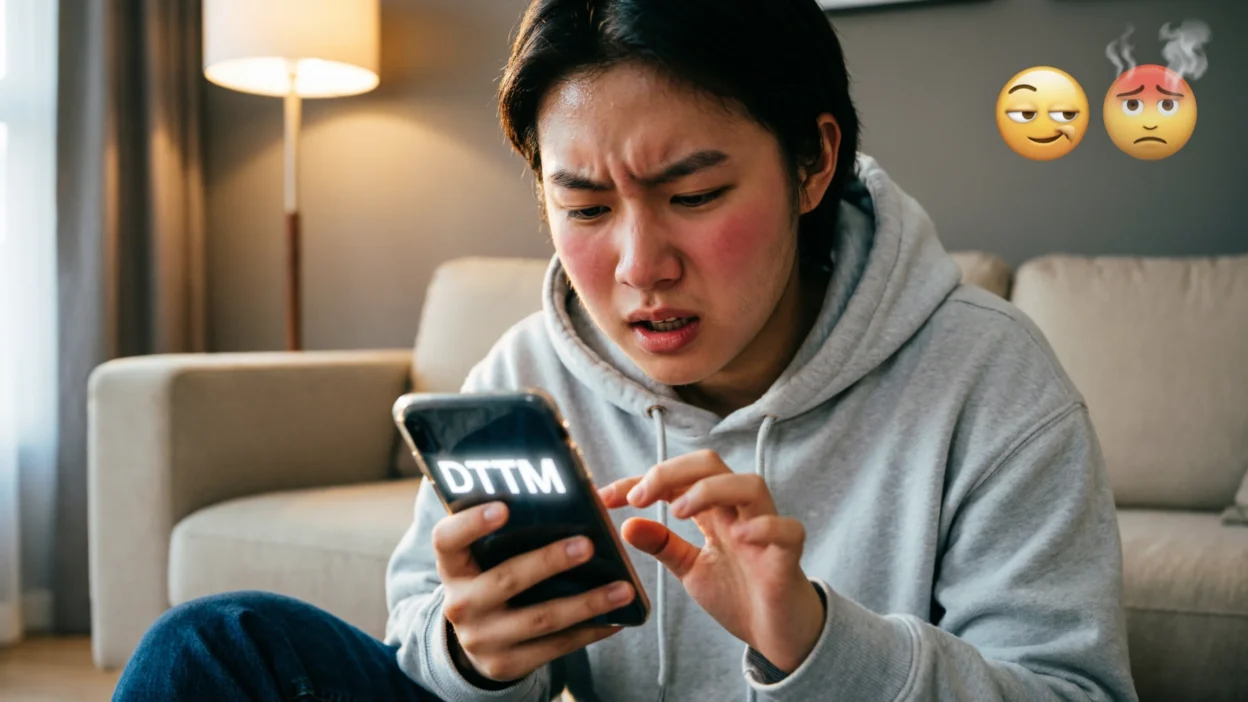
You’re texting someone. Then suddenly, they reply with “dttm.” Now you pause. Is it positive? Is it rude? Or is it something romantic?
At first, it may look confusing. However, like many short texting codes, the meaning depends on context.
So now, let’s clearly understand DTTM meaning in text, how it’s used, and when you should avoid it.
Quick Answer
DTTM most commonly means “Don’t Talk To Me.”
However, in some contexts, it can also mean:
- “Down to the money”
- “Doing too much” (rare variation)
Still, in texting, it usually means Don’t Talk To Me.
What Does DTTM Mean?
First of all, DTTM is an abbreviation:
D = Don’t
T = Talk
T = To
M = Me
So literally, it means:
👉 Don’t talk to me.
However, tone changes everything.
Sometimes it is:
- Serious (during an argument)
- Playful (dramatic joking)
- Flirty (fake anger)
Where Is DTTM Used?
DTTM appears mostly in:
- Text messages
- Snapchat
- TikTok comments
- Instagram captions
Because it is short, it fits fast digital conversations.
8 Lowercase Chat Examples
- “you ate without me? dttm.”
- “that episode ending?? dttm.”
- “you spoiled it for me, dttm.”
- “you got tickets and didn’t tell me? dttm.”
- “why you always late? dttm.”
- “dttm i’m mad.”
- “you won again?? dttm.”
- “stop playing, dttm 😭”
Notice how most examples are playful.
Serious vs Playful Meaning
| Situation | Meaning | Tone |
|---|---|---|
| Real argument | Don’t contact me | Serious |
| Friends joking | I’m fake mad | Playful |
| Social media reaction | Dramatic response | Funny |
So clearly, context matters a lot.
When Should You Avoid DTTM?
You should avoid using DTTM:
- In professional emails
- With teachers or bosses
- In formal conversations
Because without context, it can sound rude.
Similar Text Abbreviations
Here are similar texting shortcuts:
- IDC = I don’t care
- IDK = I don’t know
- IHY = I hate you
- ILY = I love you
All of these depend heavily on tone.
FAQs
Is DTTM always negative?
Not always. Often, it is playful or dramatic.
Can DTTM be flirty?
Yes, sometimes people use it jokingly in flirting.
Is DTTM common?
It’s less common than ILY or IDK, but it appears in casual texting.
Final Thought
Although DTTM literally means “Don’t Talk To Me,” it rarely carries serious anger in casual chats. Most of the time, it expresses playful frustration or dramatic reaction.
However, tone and relationship always matter. Therefore, use it carefully and only with people who understand your style.
Text slang is fast and expressive — but clarity always wins.

Orvian Treloux works on the Wordifs site developing structured blogs coordinating via wordifs@gmail.com to ensure accuracy originality clarity usefulness engagement and long term trust among global readers across digital platforms.