
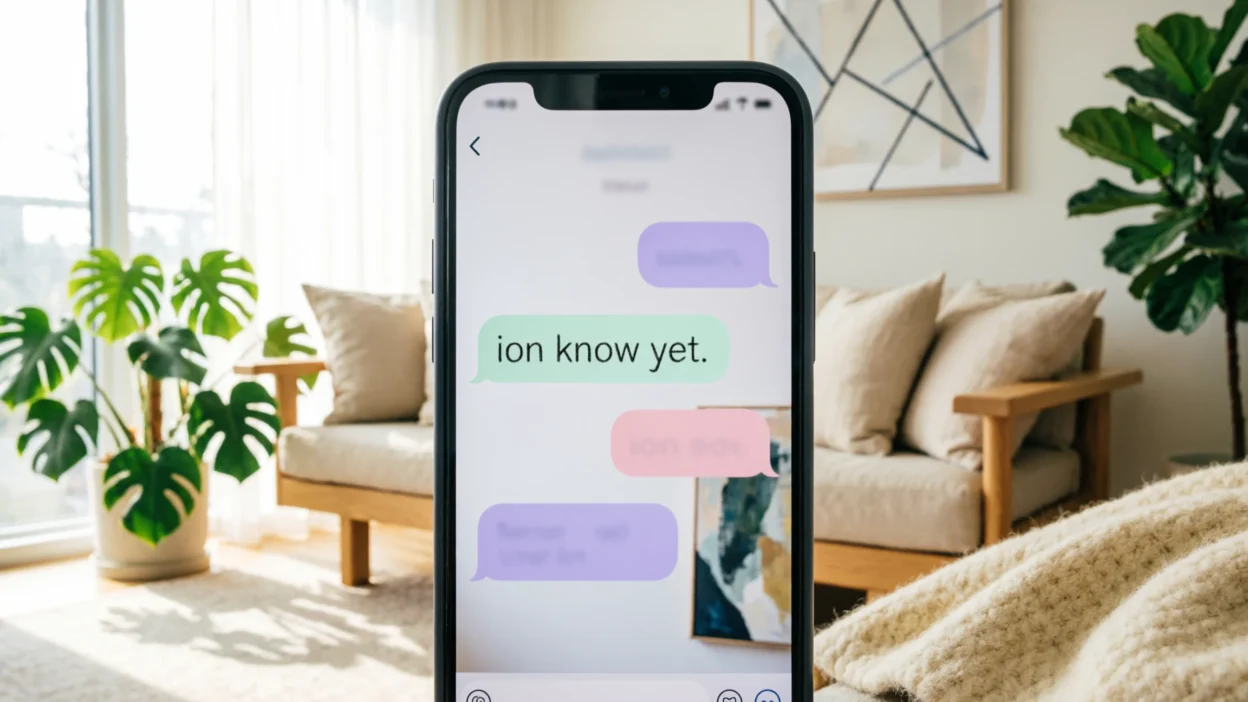
You are scrolling through messages. Suddenly, someone replies, “ion think that’s true.”
At first, it looks strange. Maybe it feels like a typo. However, it isn’t. Instead, it is a very common texting abbreviation used daily in chats, comments, and online conversations.
So, if you have seen ION in Snapchat, TikTok, Instagram, or gaming chats, you are not alone. Many people use it casually. Therefore, understanding ION meaning slang helps you read messages faster and reply naturally. Now, let’s break it down step by step so everything becomes clear and simple.
Quick Answer
ION in slang usually means “I don’t.”
Example:
“ion know” = “I don’t know.”
What Does ION Mean in Slang?
First of all, ION is a texting abbreviation that stands for “I don’t.” Instead of typing three words, people shorten it to save time. Moreover, the spelling reflects how the phrase sounds when spoken quickly.
So essentially:
| Phrase | Slang Form |
|---|---|
| I don’t | ion |
For example:
- “ion understand”
- “ion want that”
- “ion like it”
Bold summary: ION simply means “I don’t” in casual texting.
Why People Use ION in Texting
Now, you might wonder why people use this shorthand instead of typing normally. The reason is simple. Online conversations move fast. Therefore, people shorten words to type quicker and keep chats relaxed.
People use ION because:
- It saves typing time
- It feels modern and casual
- It matches spoken pronunciation
- It fits texting culture
- It looks natural in informal chats
As a result, the slang became very popular across social media platforms.
Where ION Is Commonly Used
You will most often see ION in:
- Snapchat chats
- TikTok comments
- Instagram DMs
- Gaming chats
- Text messages between friends
- Twitter/X replies
- Meme captions
Importantly, the tone is casual and informal. Therefore, it should not appear in professional writing.
Real Texting Conversation Examples
Below are realistic lowercase examples showing how people actually use ION:
- “ion know what happened.”
- “ion think he coming.”
- “ion want pizza today.”
- “ion remember that.”
- “ion like that movie.”
- “ion got time today.”
- “ion believe that story.”
- “ion see the message earlier.”
- “ion think that works.”
These examples show that the abbreviation usually appears at the beginning of sentences.
When to Use ION (Do List)
Use ION when:
- texting friends
- chatting in games
- commenting casually online
- writing memes
- talking informally on social media
Example:
“ion think that’s correct.”
Because the setting is relaxed, the slang sounds natural.
When NOT to Use ION (Don’t List)
Avoid ION when:
- writing emails
- doing school assignments
- creating official documents
- sending professional messages
- writing formal articles
Instead, write “I don’t” fully in formal communication.
Quick Comparison Table
| Context | Example Phrase | Why It Works / Doesn’t Work |
|---|---|---|
| texting friend | “ion know yet” | casual tone fits slang |
| social media comment | “ion agree” | informal environment |
| school essay | “ion think the study shows…” | incorrect and unprofessional |
| job email | “ion understand the task” | inappropriate tone |
Therefore, choosing the right context matters greatly.
Other Meanings of ION (Rare)
Sometimes, ION can also refer to a scientific term meaning a charged particle. However, that meaning appears only in science discussions. In texting, the slang meaning “I don’t” is far more common.
So, context always tells you which meaning is correct.
Similar Slang Words and Alternatives
People also use other texting abbreviations similar to ION. Below are common alternatives:
| Slang | Meaning | When Used |
|---|---|---|
| idk | i don’t know | very common texting reply |
| ima | i am going to | casual planning messages |
| imma | i am going to | relaxed slang version |
| ngl | not gonna lie | expressing honesty |
| fr | for real | agreement or emphasis |
Although each abbreviation has a slightly different meaning, they all belong to the same informal texting culture.
Why Slang Like ION Became Popular
Social media changed communication speed. Because people message quickly, they naturally shorten phrases. Over time, these shortened forms become accepted slang.
Additionally, younger internet users often create new spellings based on pronunciation. Therefore, ION reflects the way many people say “I don’t” in fast speech. As platforms like TikTok and Snapchat grew, the slang spread globally.
Common Mistakes People Make
Many beginners misunderstand ION. For example:
- They think it means something technical
- They read it as the science word “ion”
- They assume it is a typing error
- They try using it in formal writing
However, remembering one rule prevents confusion:
ION in texting = I don’t.
Small Practice Examples
Let’s rewrite normal sentences into slang:
- “I don’t know” → “ion know”
- “I don’t want that” → “ion want that”
- “I don’t see it” → “ion see it”
This helps you quickly recognize the abbreviation when reading messages.
Internal Reading Suggestions
If you are learning texting abbreviations, you may also find these helpful:
- See also: WYO meaning slang
- See also: OC meaning in slang
- See also: Cooked slang meaning
Understanding related slang builds stronger reading speed in chats.
FAQs
what does ion mean in texting?
It usually means “I don’t.” It is a casual abbreviation used in informal conversations.
is ion rude slang?
No. It is neutral and friendly slang used mostly among friends.
can ion mean something else?
Yes, in science it means a charged particle, but in texting it means “I don’t.”
is ion used worldwide?
Yes. Because of social media, the slang is now used globally, especially by younger users.
should i use ion in emails?
No. Always write “I don’t” in professional communication.
why do people type ion instead of i don’t?
Because it is faster to type and reflects casual pronunciation.
Final Thought
Slang evolves constantly, and texting culture shapes modern language faster than ever. Abbreviations like ION meaning show people naturally shorten everyday phrases to communicate quickly and comfortably. While formal writing still requires full grammar, understanding slang helps you stay socially connected and digitally fluent.
Therefore, whenever you see ION, simply read it as “I don’t.” Use it casually with friends, social media chats, or memes.
However, switch back to standard spelling in school or professional situations. By balancing both styles, you communicate clearly in every environment while staying current with modern online language trends.