
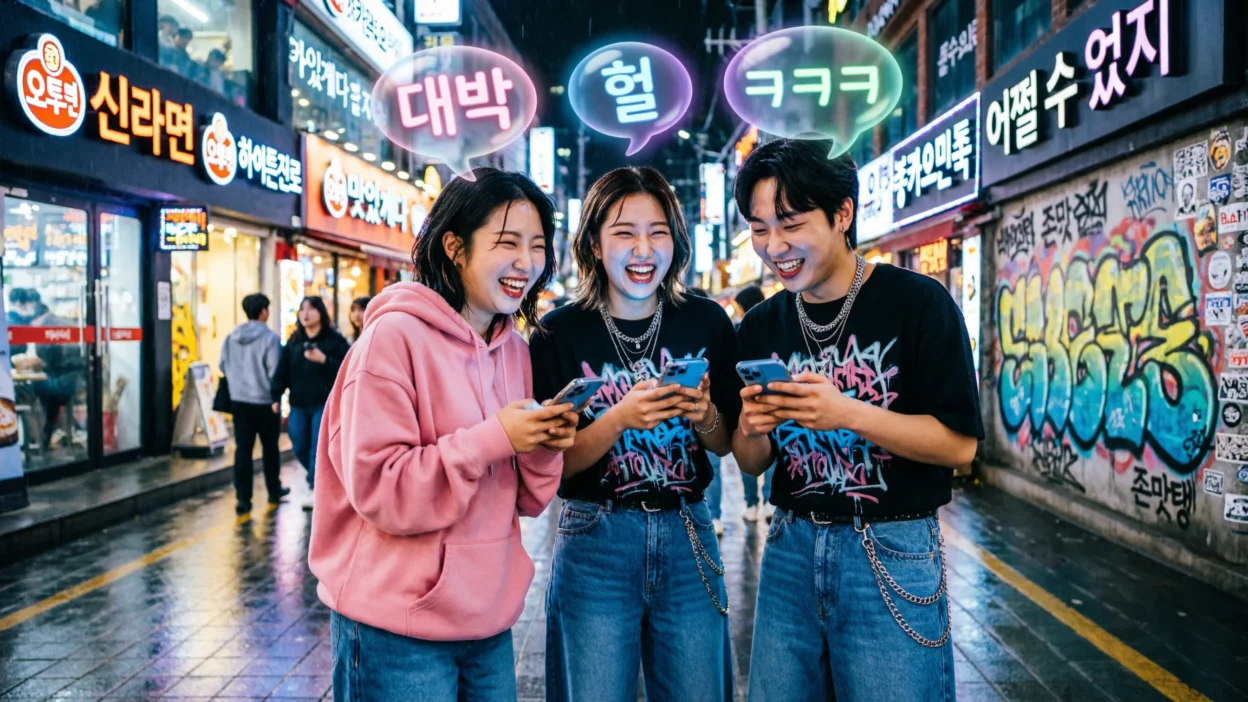
The first time you watch a K-drama or scroll through Korean TikTok, you notice something interesting. People say words that don’t appear in your textbook. Someone comments “대박!” Another types “헐” or “ㅋㅋㅋ.” At first, you feel confused. Are these real words? Yes — they are Korean slang.
Because social media and K-pop spread quickly around the world, Korean slang now appears in comments, fan chats, and online memes everywhere.
Therefore, learning common Korean slang helps you understand real conversations, not just formal classroom Korean. So now, let’s clearly explore the most popular Korean slang words, their meanings, and when to use them.
Quick Answer
Korean slang includes informal words like “대박 (daebak), 헐 (heol), 짱 (jjang), ㅋㅋㅋ (lol), and 존맛 (very tasty).”
What Is Korean Slang?
First of all, Korean slang refers to informal expressions used mostly by young people in texting, social media, and casual speech. Unlike formal Korean taught in school, slang sounds relaxed, fun, and modern.
Because Korean culture changes fast — especially online — new slang appears often. However, some words stay popular for years.
Bold summary: Korean slang is casual, youth-based language used in texting and online conversations.
Most Popular Korean Slang Words
Here are common Korean slang words you’ll see often:
| Slang | Romanization | Meaning |
|---|---|---|
| 대박 | daebak | awesome / amazing |
| 헐 | heol | omg / shocked |
| 짱 | jjang | the best |
| ㅋㅋㅋ | kkk | lol (laughing) |
| ㅎㅎㅎ | hahaha | light laugh |
| 존맛 | jonmat | very delicious |
| 꿀잼 | kkuljaem | super fun |
| 노잼 | nojaem | not fun / boring |
| 갑자기 분위기 싸해짐 | gab bun ssahaejim | awkward suddenly |
| 인정 | injeong | 인정 (agree / 인정!) |
Although pronunciation may look tricky at first, usage becomes easy once you see examples.
How Korean Slang Is Used in Sentences
Let’s look at simple examples:
- “이거 대박!” (this is amazing!)
- “헐 진짜?” (omg really?)
- “그 사람 짱이야.” (that person is the best.)
- “이 영화 꿀잼.” (this movie is super fun.)
- “그거 노잼이야.” (that’s boring.)
As you can see, most slang appears in casual conversations.
Real Texting Examples (lowercase chat style)
- “헐 이거 뭐야.”
- “대박 진짜 좋아.”
- “ㅋㅋㅋ 너무 웃겨.”
- “그 드라마 꿀잼.”
- “오늘은 노잼이네.”
- “와 저 사람 짱이다.”
- “존맛이야 이거.”
- “인정 인정.”
- “헐 대박 사건.”
These examples reflect natural online texting in Korea.
Where Korean Slang Is Commonly Used
You will see Korean slang in:
- KakaoTalk chats
- Instagram comments
- TikTok videos
- YouTube live streams
- K-pop fan communities
- gaming chats
- friend group messages
Importantly, the tone is informal and friendly. Therefore, avoid using slang in business situations.
When to Use Korean Slang
Use slang when:
- chatting with friends
- commenting on social media
- reacting to K-pop performances
- joking casually
- texting people your age
Because slang creates closeness, it helps conversations feel relaxed.
When NOT to Use Korean Slang
Avoid slang when:
- talking to your boss
- writing formal emails
- giving presentations
- speaking in interviews
- writing academic papers
Instead, use polite and standard Korean forms.
Comparison Table: Formal vs Slang Korean
| Context | Example | Why It Works / Doesn’t Work |
|---|---|---|
| texting friend | “이거 대박” | casual tone fits slang |
| k-pop comment | “짱이다” | friendly online setting |
| job interview | “이 회사 대박이에요” | too casual |
| business email | “존맛입니다” | inappropriate language |
So clearly, context always matters.
Why Korean Slang Changes Quickly
Korean internet culture moves fast. Trends spread through K-pop, dramas, and influencers. Therefore, slang evolves quickly.
Additionally, younger generations create playful shortened forms. For example:
- “ㅋㅋㅋ” replaces writing “하하하.”
- “노잼” combines “no” + “재미 (fun).”
- “꿀잼” combines “honey” + “fun” to mean “very fun.”
Because of this creativity, Korean slang feels expressive and modern.
Similar Slang in Korean Culture
Some Korean slang words express emotions strongly, similar to English slang like “OMG” or “LOL.”
| Korean Slang | English Equivalent |
|---|---|
| 헐 | omg |
| 대박 | awesome |
| ㅋㅋㅋ | lol |
| 짱 | the best |
| 꿀잼 | super fun |
| 노잼 | boring |
Although meanings are close, cultural tone can differ slightly.
Common Mistakes Learners Make
Many beginners:
- use slang in formal settings
- pronounce slang too formally
- mix polite endings with casual slang incorrectly
- misunderstand ㅋㅋㅋ as negative
However, remembering that slang equals casual tone only helps avoid mistakes.
How Korean Slang Connects to Pop Culture
K-pop and K-dramas spread slang worldwide. Fans copy expressions they hear from idols or actors. Therefore, words like “대박” and “헐” became globally recognized.
For example, idols often say “대박” during surprise moments. As a result, fans began using it too.
FAQs
what is the most common korean slang word?
“대박 (daebak)” is one of the most common and widely recognized slang words.
what does ㅋㅋㅋ mean?
It means laughing, similar to “lol” in English.
is korean slang rude?
Not usually, but it is informal. Therefore, use it only in casual situations.
can foreigners use korean slang?
Yes, but only in informal conversations. Avoid using it in professional settings.
does korean slang change often?
Yes. New slang appears quickly through social media and pop culture.
is 꿀잼 positive?
Yes. It means something is very fun or enjoyable.
Final Thought
Korean slang adds color and personality to conversations. While textbooks teach formal grammar, real-life communication often sounds different. Words like 대박, 헐, 짱, 꿀잼, and ㅋㅋㅋ show how Korean speakers express emotion quickly and playfully.
Therefore, learning Korean slang improves listening skills, especially when watching dramas, following K-pop, or chatting online. However, balance remains important.
Use slang in relaxed situations, and switch to formal language when respect and professionalism matter. By understanding both styles, you communicate naturally and confidently while enjoying modern Korean culture.