
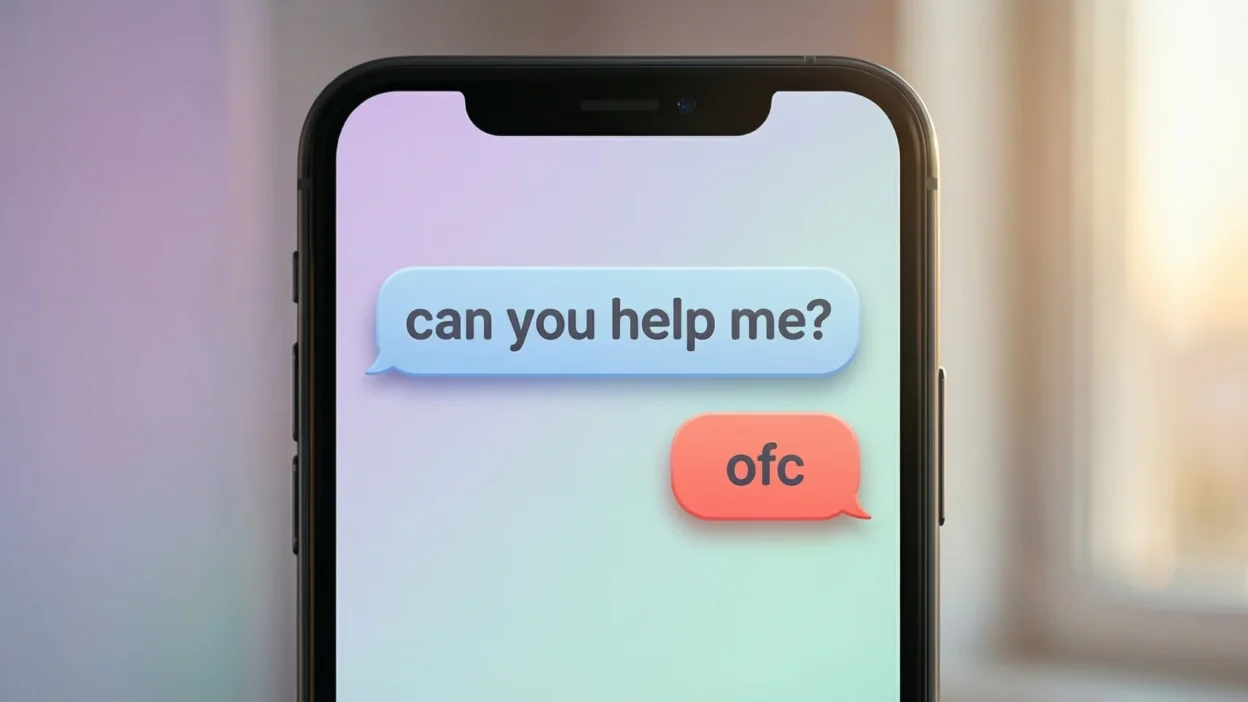
You send a quick message to a friend asking a simple question, and they reply with just “ofc”. No emojis. No extra words. At first, it might feel a little short—or even confusing. Are they annoyed? Rushing? Or just being casual?
If you’ve seen OFC in texts, DMs, or comments and wondered what tone it carries, you’re not alone. It’s a tiny abbreviation, but it plays a big role in modern texting culture. Let’s break it down clearly and simply.
Quick Answer: OFC means “of course” and is used to agree, confirm, or reassure someone in a casual way.
What Does OFC Mean?
OFC is a texting abbreviation.
Full form
- OFC = Of course
Plain-English explanation
When someone says ofc, they usually mean:
- yes, definitely
- obviously
- no problem
- absolutely
The exact tone depends on context, but it’s usually friendly and casual.
Why people use OFC
- To reply faster
- To keep messages short
- To sound relaxed and natural
- To match informal chat style
Simple example sentence
“can you help me later?”
“ofc”
Bold summary: OFC means “of course” and shows agreement or reassurance in casual conversation.
Where Is OFC Commonly Used?
OFC is mostly used in informal digital communication.
Common platforms
- Text messages
- WhatsApp chats
- Instagram DMs
- Snapchat
- Discord
- Twitter (X) replies
Tone and formality
- Tone: casual, relaxed
- Formality: informal
- Vibe: quick, friendly
It’s not appropriate for professional or formal writing.
Different Tones OFC Can Have
Although ofc usually sounds positive, tone matters.
Friendly or supportive
“i’ll be there for you, ofc”
Neutral agreement
“are you coming?”
“ofc”
Slightly dismissive (rare, context-based)
“you forgot again?”
“ofc…”
This tone depends heavily on punctuation and conversation history.
Realistic Conversation Examples Using OFC
Here are natural, lowercase examples that reflect real texting style:
- “can i call you later?”
“ofc” - “you still coming tonight?”
“ofc i am” - “can you send the notes?”
“ofc!” - “you got my back right?”
“ofc always” - “is that okay with you?”
“ofc no worries” - “are we friends?”
“ofc 😭” - “can i vent for a sec?”
“ofc go ahead”
These show how OFC fits naturally into everyday chats.
When to Use and When Not to Use OFC
✅ When to use OFC
- Casual texting
- Friendly confirmations
- Talking with friends or family
- Relaxed online chats
❌ When not to use OFC
- Professional emails
- School assignments
- Formal messages
- Serious or sensitive conversations
Comparison table
| Context | Example | Why It Works / Doesn’t |
|---|---|---|
| friend text | “can you help?” → “ofc” | friendly |
| group chat | “you in?” → “ofc” | casual |
| work email | “ofc i’ll do it” | unprofessional |
| apology | “ofc sorry” | sounds careless |
OFC vs Similar Abbreviations
Here’s how ofc compares to other common replies:
Sure
- Neutral and polite
Yep / Yeah
- Casual agreement
Absolutely
- Strong and enthusiastic
No problem
- Reassuring and helpful
Obviously
- Can sound rude if not careful
OFC sits in the middle—casual but positive.
Is OFC Rude or Polite?
Most of the time, OFC is polite and friendly.
However, it can feel rude if:
- used with sarcasm
- paired with “…”
- sent during a serious conversation
Tone comes from context, not the word alone.
FAQs About OFC Meaning
What does OFC mean in text?
OFC means “of course” and shows agreement or reassurance.
Is OFC slang?
Yes. It’s informal texting and internet slang.
Is OFC rude?
Usually no, but it can sound dismissive in some contexts.
Can I use OFC with friends?
Yes, it’s very common in friendly chats.
Is OFC professional?
No. Avoid using it in work or formal writing.
Does OFC always mean yes?
Most of the time, yes—but tone matters.
Final Thought
The OFC meaning may seem simple, but it plays an important role in modern texting culture.
It’s fast, casual, and efficient perfect for quick confirmations and friendly reassurance.
Like many abbreviations, its tone depends on how and where it’s used. When shared between friends or in relaxed chats, ofc feels warm and natural.
In formal or serious situations, though, it can come across as careless. Understanding small terms like OFC helps you read messages more accurately and respond in a way that matches the moment.
In a world of short replies and fast conversations, even three letters can shape how a message feels.

Orvian Treloux works on the Wordifs site developing structured blogs coordinating via wordifs@gmail.com to ensure accuracy originality clarity usefulness engagement and long term trust among global readers across digital platforms.