One evening, you’re scrolling through a group chat when someone suddenly shares a screenshot of an embarrassing moment. Immediately, one friend replies with a short message: “oof.”
At first, you pause. The word looks simple, yet it clearly reacts to the situation.
Soon after, others send laughing emojis and similar comments. Because internet conversations move quickly, people often use small expressions to show reactions.
As a result, short slang words like oof appear everywhere in texting, gaming chats, and social media. Therefore, if you have seen OOF in a message and wondered what it means, you’re definitely not alone.
Quick Answer
OOF in text means a reaction to something painful, awkward, embarrassing, or unfortunate.
What Does OOF Mean in Text?
First of all, OOF meaning in text represents a quick reaction to a situation that feels awkward, painful, or unfortunate. People often use it when something goes wrong or when someone experiences an embarrassing moment.
Originally, the word “oof” imitates the sound people make when they feel sudden pain or surprise. Over time, internet users started using it as a slang reaction.
Plain-English Explanation
In simple words, OOF expresses sympathy, secondhand embarrassment, or shock.
People often type oof when:
- someone tells an embarrassing story
- a friend shares bad news
- a joke feels painfully relatable
- something unfortunate happens
Example Sentence
“you forgot your presentation today? oof”
Here, the person reacts with sympathy and mild shock.
Why People Use OOF
People use OOF because:
- First, it quickly shows a reaction.
- Next, it adds emotion without long explanations.
- Also, it fits meme culture and gaming chats.
- Finally, it feels relatable and humorous.
In short: OOF is a quick reaction people use when something awkward, painful, or unfortunate happens.
Where Is OOF Commonly Used?
Now let’s explore where people usually use OOF in online conversations. Because it feels casual, it mostly appears in informal communication.
1. Text Messages
Friends often send oof when reacting to awkward or unlucky situations.
Example:
“i just missed my bus again”
“oof”
2. Social Media Comments
On social platforms, OOF often appears under posts describing embarrassing moments.
Common platforms include:
- TikTok
- X (Twitter)
Example:
“you dropped your phone in water? oof”
3. Gaming Chats
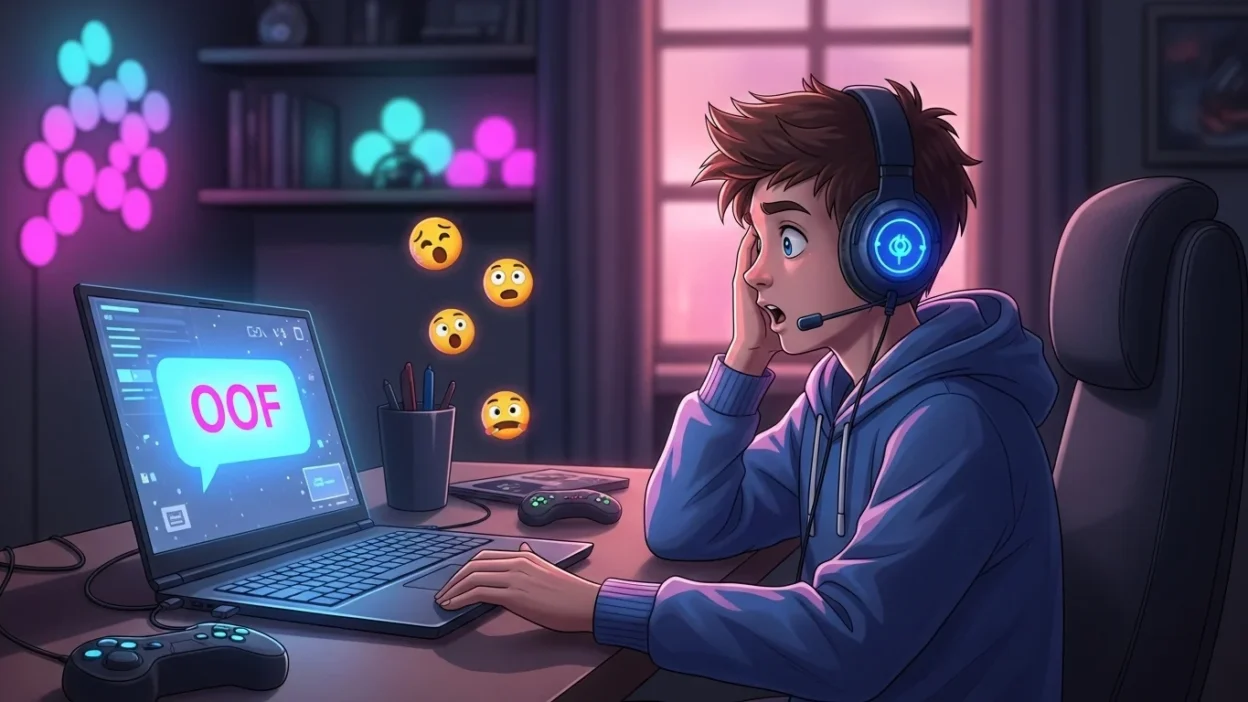
Gamers frequently use oof when someone fails, loses, or makes a mistake.
Example:
“i fell off the map again”
“oof”
4. Meme Culture
Many memes show awkward situations. Therefore, OOF appears as a simple reaction.
Example:
“that moment when you wave back but they weren’t waving at you… oof”
Tone of OOF
The tone usually feels:
- Casual
- Lighthearted
- Sympathetic
- Slightly humorous
However, it remains informal slang, so it does not belong in formal writing.
Real Chat Examples Using OOF
Now let’s look at real texting-style examples. These show how people naturally use oof in conversations.
- “i forgot my homework today”
“oof” - “my phone battery died during the trip”
“oof that’s rough” - “i accidentally sent that message to the wrong person”
“oof 😭” - “i studied the wrong chapter for the test”
“oof man” - “i spilled coffee on my laptop”
“oof that hurts” - “i waved at someone who wasn’t waving at me”
“oof” - “i just realized the exam is tomorrow”
“oof good luck” - “i deleted the file before saving”
“oof” - “i missed the last bus home”
“big oof”
Clearly, OOF works as a quick reaction to unfortunate or awkward moments.
When to Use OOF (And When Not To)
Even though OOF meaning in text seems simple, context still matters.
When You Should Use OOF
You can use OOF when:
- reacting to awkward stories
- responding to embarrassing moments
- showing sympathy for small problems
- chatting casually with friends
- reacting to gaming mistakes
Example:
“i dropped my phone again”
“oof”
When You Should Not Use OOF
However, you should avoid OOF in serious or professional situations.
Do not use it in:
- work emails
- formal messages
- serious conversations
- academic writing
- professional discussions
Instead, use a more respectful response like “I’m sorry that happened.”
Quick Comparison Table
| Context | Example Phrase | Why It Works / Doesn’t Work |
|---|---|---|
| Casual chat | “you lost the match again? oof” | Natural reaction |
| Social media | “you forgot your lines? oof” | Fits meme humor |
| Work email | “the project failed, oof” | Too informal |
| Academic writing | “the experiment failed, oof” | Not professional |
Therefore, always match slang with the situation.
Similar Slang Words and Alternatives
Because internet culture evolves constantly, several other expressions work similarly to OOF.
| Slang | Meaning | When to Use |
|---|---|---|
| Yikes | Reaction to awkward situation | Casual chat |
| Bruh | Shock or disbelief | Informal texting |
| Rip | Something unfortunate happened | Gaming or memes |
| Big Oof | Stronger reaction | Online humor |
| Dang | Mild surprise or disappointment | Everyday conversation |
Quick Explanation
Yikes
People use it when something feels embarrassing or uncomfortable.
Rip
This slang often appears when someone fails or loses.
Big Oof
This version emphasizes stronger embarrassment or misfortune.
All these expressions help people react quickly in modern texting culture.
Frequently Asked Questions
What does OOF mean in texting?
OOF is a reaction to something painful, awkward, embarrassing, or unfortunate.
Is OOF a common internet slang?
Yes. OOF is widely used in texting, gaming chats, memes, and social media comments.
Why do gamers say OOF?
Gamers often say OOF when someone fails, loses a match, or makes a mistake during gameplay.
Is OOF rude?
No. OOF usually shows sympathy or playful reaction, although tone depends on context.
What does “big oof” mean?
Big Oof simply means a stronger reaction to a very awkward or unfortunate situation.
Can OOF be used on social media?
Yes. People often comment OOF under posts about embarrassing or unlucky moments.
Should I use OOF in professional messages?
No. It is informal slang, so formal communication requires clearer and more respectful wording.
Final Thought
Today, digital conversations rely heavily on quick reactions. Therefore, small expressions often replace long sentences. OOF meaning in text perfectly represents this style of modern communication.
Most of the time, OOF simply reacts to something awkward, painful, or unfortunate. People use it to show sympathy, humor, or secondhand embarrassment in casual conversations.
You will commonly see OOF in texting, gaming chats, memes, and social media comments. However, because it belongs to informal slang, it does not fit professional writing or serious discussions.
So the next time someone sends “oof” in a message, you will immediately understand — they are reacting to an awkward or unlucky situation.

Kalven Driost works on the Wordifs site producing reliable content while communicating through wordifs@gmail.com to support research editing publishing consistency transparency and audience focused knowledge sharing practices for modern readers.