You’re scrolling through lyrics, a tweet, or a heated comment thread, and someone drops “that’s my opp” or “we don’t mess with opps.” It sounds serious almost cinematic.
If you’ve ever stopped to wonder what OPP actually means in slang and why people use it with so much intensity, you’re not alone.
This term has roots in street language, traveled through hip-hop, and now lives comfortably in modern texting culture.
Quick Answer
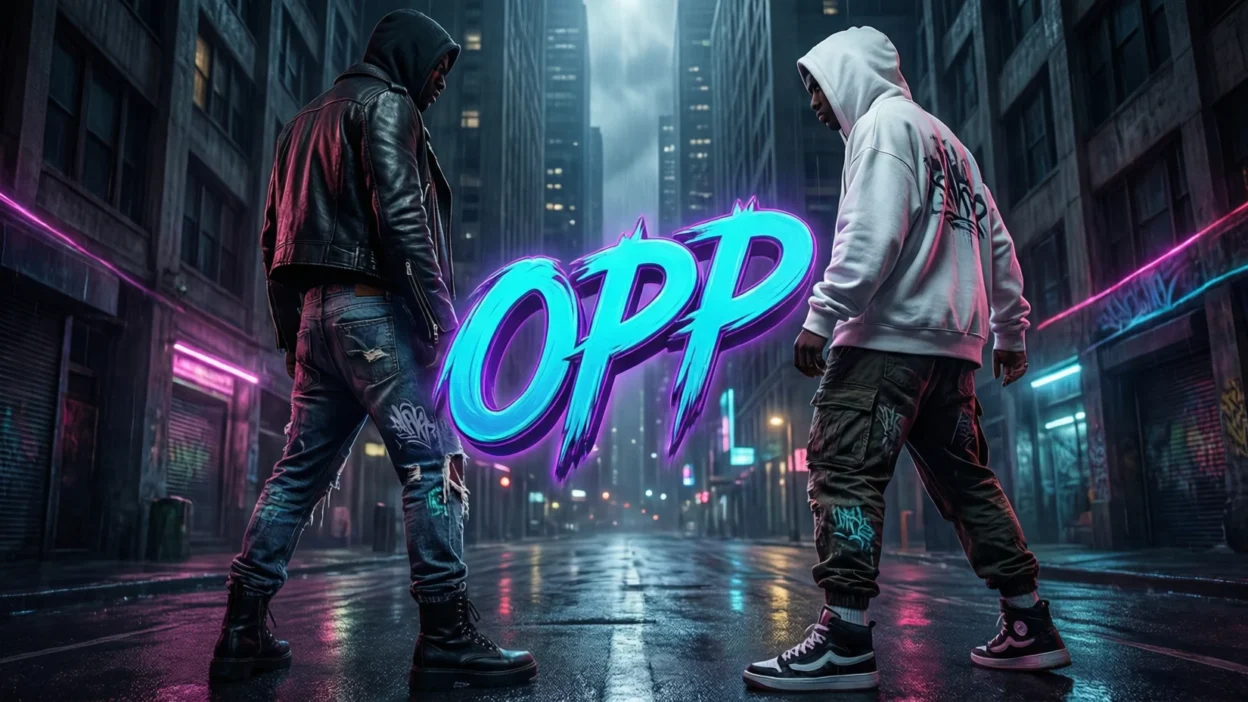
OPP in slang means “opponent” or “enemy,” referring to someone you’re against, beefing with, or in conflict with.
What Does OPP Mean in Slang?
OPP is short for opponent.
Plain-English explanation
When someone calls another person their opp, they’re saying:
- “that person is against me”
- “we’re not cool”
- “there’s tension or beef”
It doesn’t always mean a literal enemy. Sometimes it just means rival, hater, or someone on the other side.
Example sentence:
“he been acting weird lately, might be an opp.”
Why people use it:
- it sounds bold and confident
- it’s quick and expressive
- it carries social and cultural weight
Bold summary: OPP means an opponent or enemy—someone you’re not aligned with.
Where Is OPP Commonly Used?
OPP is widely used across music, social media, and casual online chats.
Common places:
- hip-hop lyrics
- TikTok captions & comments
- Instagram stories
- X (Twitter) posts
- group chats & gaming chats
Tone: casual to intense
Formality: informal
Vibe: confrontational, confident, sometimes joking
Depending on context, OPP can be serious or playful.
OPP in Real Conversations (Examples)
(all lowercase, realistic texting style)
- “nah he switched up, that’s an opp now”
- “keep your circle small, too many opps”
- “why you defending the opp 😭”
- “that team been our opps since day one”
- “he cool but his friends are opps”
- “don’t bring opp energy over here”
- “every hater an opp fr”
- “turned a fan into an opp real quick”
- “internet got everyone calling strangers opps”
When to Use and When NOT to Use OPP
✅ Use OPP when:
- talking casually with friends
- joking about rivalry
- referencing music or pop culture
- describing clear opposition
❌ Avoid OPP when:
- speaking formally
- dealing with sensitive conflicts
- talking to people unfamiliar with slang
- situations that could escalate
Comparison Table
| Context | Example | Why it works / doesn’t |
|---|---|---|
| friend chat | “that dude an opp” | casual slang works |
| rap lyric | “no love for opps” | cultural fit |
| work meeting | “our competitors are opps” | too slangy ❌ |
| serious argument | “you’re my opp” | escalates ❌ |
Similar Slang Words & Alternatives
Here are related slang terms and when to use them:
| Term | Meaning | When to use |
|---|---|---|
| enemy | someone against you | serious tone |
| rival | competitive opponent | sports/work |
| hater | someone negative | casual |
| ops | enemies (plural) | slang & music |
| beef | ongoing conflict | informal |
| opp pack | mocking enemies | joking/meme |
Among these, OPP is the most street-coded and modern.
FAQs About OPP Meaning Slang
What does opp mean in slang?
It means opponent or enemy.
Is opp always serious?
No, it can be joking or exaggerated.
Is opp from hip-hop culture?
Yes, it became popular through rap and street slang.
Can opp mean rival instead of enemy?
Yes, often it just means someone on the other side.
Is opp Gen Z slang?
It’s used by Gen Z, but older generations know it too.
Is it okay to use opp casually?
Yes, as long as context and tone are appropriate.
Final Thought
The OPP meaning in slang shows how language evolves through culture, music, and online spaces. What started as a shortened form of “opponent” now carries layers of meaning rivalry, tension, loyalty, and even humor.
In modern texting culture, calling someone an opp doesn’t always mean hatred; sometimes it’s just a dramatic way to say, “we’re not on the same side.”
Understanding how and when to use OPP helps you read tone better, avoid unnecessary conflict, and stay fluent in today’s digital language. Like many slang terms, it’s powerful—but context is everything.

Kalven Driost works on the Wordifs site producing reliable content while communicating through wordifs@gmail.com to support research editing publishing consistency transparency and audience focused knowledge sharing practices for modern readers.