
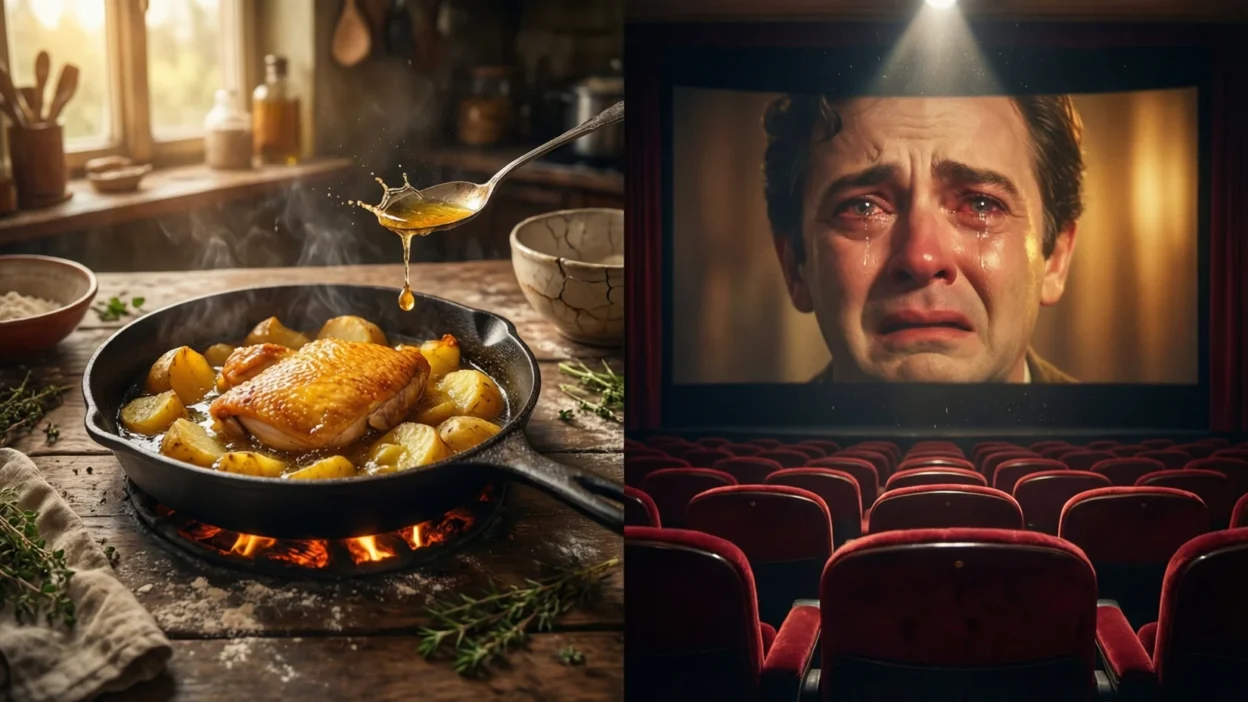
The first time many people hear the word schmaltz, it’s usually in a movie review, a food video, or a comment like, “that scene was a bit too schmaltzy.”
You pause and think is that a compliment or an insult? The word sounds funny, almost warm, but the tone around it feels mixed.
Maybe you heard it from a grandparent talking about cooking, or from a critic describing an emotional song.
That’s what makes schmaltz interesting. It has two very different meanings, depending on where and how it’s used. Once you understand both, the word suddenly makes a lot more sense.
Quick Answer: Schmaltz means rendered chicken or goose fat or overly emotional, sentimental content, depending on the context.
What Does Schmaltz Mean?
The schmaltz meaning changes based on usage. It can be literal (food-related) or figurative (emotional tone).
Literal meaning (food)
- Schmaltz is rendered animal fat, usually from chicken or goose
- Common in Jewish and Eastern European cooking
- Used for frying, flavor, and richness
Figurative meaning (language & media)
- Schmaltz describes something overly sentimental or emotionally exaggerated
- Often used in film, music, or writing criticism
Simple example sentences
- “the potatoes were fried in schmaltz.”
- “the movie was heartfelt, but a little schmaltzy.”
Bold summary: Schmaltz can mean animal fat in cooking or exaggerated sentiment in speech and media.
Why Does Schmaltz Have Two Meanings?
The word comes from Yiddish, where it originally meant melted fat. Over time, people began using it metaphorically.
How the meaning evolved
- Fat = rich, heavy
- Emotions = “laid on thick”
- Result → emotional excess became known as schmaltz
Language loves metaphors, and this one stuck.
Schmaltz in Food Culture
In cooking, schmaltz is still respected and loved.
Where it’s commonly used
- Jewish cuisine
- Ashkenazi recipes
- Traditional home cooking
Common dishes
- fried potatoes
- matzo balls
- chopped liver
In this context, schmaltz is positive and flavorful.
Schmaltz in Movies, Music, and Writing
In modern English, this is the more common meaning.
What it describes
- Overly emotional scenes
- Forced romance
- Excessive sweetness
Tone
- Usually negative or mildly critical
- Sometimes playful or affectionate
Example:
“the ending was touching, but dipped into schmaltz.”
Tone and Usage Breakdown
| Context | Meaning | Tone |
|---|---|---|
| cooking | animal fat | neutral / positive |
| film criticism | too emotional | mildly negative |
| music reviews | cheesy sentiment | critical |
| casual talk | exaggerated feelings | informal |
Realistic Conversation Examples
Here’s how schmaltz appears in real conversations (lowercase, natural style):
- “i liked the movie, but the last scene was pure schmaltz”
- “my grandma still cooks with schmaltz”
- “that song is catchy but very schmaltzy”
- “he loves romantic comedies full of schmaltz”
- “nothing beats potatoes fried in schmaltz”
- “the speech felt sincere, not schmaltzy”
- “too much schmaltz ruins a good story”
When to Use and When Not to Use Schmaltz
✅ Do use schmaltz when:
- Talking about traditional cooking
- Critiquing emotional content
- Writing reviews or commentary
❌ Don’t use schmaltz when:
- Speaking formally without context
- Talking to someone unfamiliar with the word
- Referring to real emotions in sensitive situations
Quick comparison table
| Context | Example | Why it works / doesn’t |
|---|---|---|
| movie review | “a bit too schmaltzy” | common critical term |
| cooking | “fried in schmaltz” | literal meaning |
| serious apology | “sorry for the schmaltz” | may sound dismissive |
Similar Words and Alternatives
| Word | Meaning | When to use |
|---|---|---|
| cheesy | predictable sentiment | casual talk |
| sentimental | emotional, nostalgic | neutral tone |
| sappy | overly sweet | informal |
| corny | unoriginal emotion | criticism |
| heartfelt | genuine emotion | positive |
Choose wisely—tone matters.
FAQs
What does schmaltz mean in simple terms?
It means either animal fat used in cooking or overly emotional content.
Is schmaltz a bad word?
No, but it can be mildly critical depending on context.
Is schmaltz slang?
Not exactly—it’s a borrowed word with figurative use.
Where does the word schmaltz come from?
It comes from Yiddish and German roots.
Can schmaltz be positive?
Yes, especially when talking about food or playful emotion.
Is schmaltz still commonly used?
Yes, especially in film, music, and cultural discussions.
Final Thought
The schmaltz meaning is a great example of how language evolves with culture.
What began as a simple word for cooking fat grew into a colorful way to describe emotions that feel a little too heavy or sweet.
Whether you’re reading a movie review, listening to music criticism, or exploring traditional recipes, understanding schmaltz helps you catch the nuance behind the words.
It reminds us that emotions like food are best when balanced. A little richness adds flavor, but too much can overwhelm the experience.

Orvian Treloux works on the Wordifs site developing structured blogs coordinating via wordifs@gmail.com to ensure accuracy originality clarity usefulness engagement and long term trust among global readers across digital platforms.