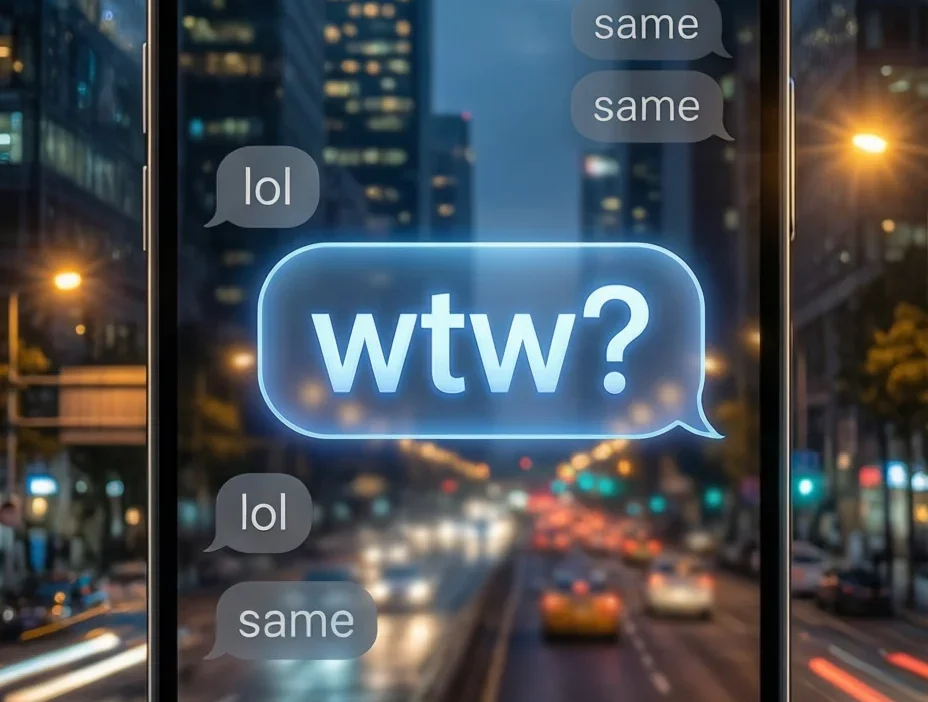
The first time you see WTW in a message, it can feel confusing. Someone texts you “wtw?” out of nowhere, and you pause are they asking a question, starting a conversation, or hinting at plans? It’s short, casual, and very modern, which makes it popular but also easy to misunderstand if you’re not used to texting slang.
WTW pops up a lot in casual chats, DMs, and social media replies, especially among people who like fast, no fluff communication.
Once you understand it, you’ll start noticing it everywhere and you’ll know exactly how to reply without overthinking it.
Quick Answer: WTW means “what’s the word?”, which is a casual way of asking what’s going on, what’s new, or what’s the plan?
What Does WTW Mean in Text?
WTW is a texting abbreviation used to start or continue a conversation.
Full form
- WTW = What’s the Word?
Plain-English explanation
When someone says wtw, they’re usually asking:
- what’s up?
- what’s going on?
- any plans?
- what’s new with you?
It’s short, relaxed, and open-ended.
Why people use it
- It’s faster than typing a full sentence
- It sounds friendly and casual
- It keeps conversations flowing
Simple example sentence
“wtw later tonight?”
Bold summary: WTW means “what’s the word?” and is used to ask what’s going on or what the plan is.
Where Is WTW Commonly Used?
WTW is part of modern texting culture and informal online chat.
Common platforms
- text messages
- instagram DMs
- snapchat chats
- twitter / x replies
- discord servers
- casual gaming chats
Tone and formality
- Tone: casual, friendly
- Formality: informal
- Best for: friends, acquaintances, social conversations
WTW is not appropriate for professional or formal settings.
How WTW Is Used in Conversation
WTW is flexible. Its meaning depends on context and timing.
It can mean:
- “what are you doing?”
- “what’s the plan?”
- “anything new?”
- “let’s talk”
Often, it’s used as a conversation opener.
Realistic Conversation Examples (Text Style)
Here are natural, lowercase examples that reflect real chats:
- “wtw tonight?”
- “just got home, wtw with you?”
- “wtw after class?”
- “you’ve been quiet, wtw?”
- “wtw this weekend 👀”
- “bored rn, wtw?”
- “wtw, you free?”
- “hey wtw, long time”
These show how casual and flexible the term is.
When to Use and When Not to Use WTW
✅ Do use WTW when:
- texting friends
- starting a casual chat
- asking about plans
- replying quickly
❌ Don’t use WTW when:
- emailing teachers or bosses
- talking to strangers formally
- writing professional messages
- the situation is serious or emotional
Comparison table
| Context | Example | Why it works / doesn’t |
|---|---|---|
| friend texting | “wtw tonight?” | casual and natural |
| instagram dm | “wtw 👋” | friendly opener |
| work email | “wtw about meeting” | too informal |
| serious talk | “wtw about the issue” | sounds careless |
Similar Slang Words and Alternatives
Here are common alternatives to WTW and when to use them:
| Term | Meaning | When to use |
|---|---|---|
| wyd | what are you doing | direct question |
| wya | where are you at | location-based |
| sup | what’s up | casual greeting |
| hru | how are you | checking in |
| plans? | asking directly | clearer intent |
| what’s good | friendly vibe | informal chats |
Each option slightly changes the tone of the conversation.
Possible Misunderstandings of WTW
Some people confuse WTW with other abbreviations. Context helps avoid confusion.
- It does not mean “what the what”
- It is not rude, but can feel abrupt
- Adding emojis or follow-up text softens it
Example:
“wtw tonight 🙂”
FAQs
What does WTW mean in texting?
WTW means “what’s the word?” and asks what’s going on or what the plan is.
Is WTW the same as WYD?
Not exactly. WYD asks what someone is doing; WTW is more open-ended.
Is WTW slang?
Yes, it’s informal texting slang.
Who usually uses WTW?
Mostly teens, young adults, and social-media users.
Is WTW rude?
No, but it can sound blunt without context.
Can WTW be flirty?
Yes, depending on tone and timing.
Final Thought
The WTW meaning fits perfectly into today’s fast-paced digital conversations.
It’s short, flexible, and friendly ideal for checking in, starting plans, or simply keeping a chat alive. While it’s best saved for informal situations, WTW has become a natural part of modern texting culture.
Understanding it helps you read between the lines, reply confidently, and stay in sync with how people actually communicate online today.
Used thoughtfully, it’s a simple phrase that opens the door to real connection.

Kalven Driost works on the Wordifs site producing reliable content while communicating through wordifs@gmail.com to support research editing publishing consistency transparency and audience focused knowledge sharing practices for modern readers.