
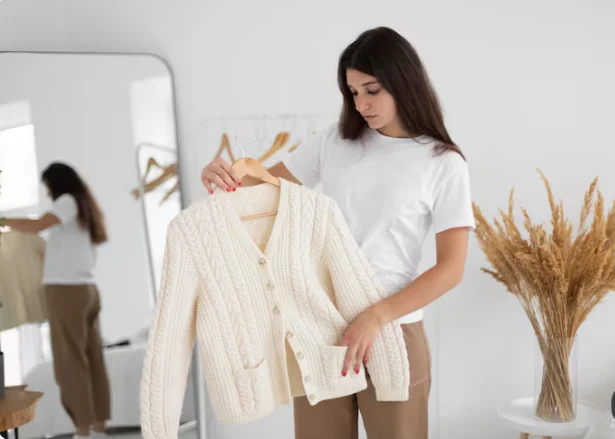
Getting dressed can feel surprisingly difficult when a wardrobe is full of clothes that do not work together. An appealing shirt may lack a suitable companion, favorite trousers may need repairing, and several nearly identical pieces may crowd the shelves.
Minimalist fashion offers a practical approach to this problem. It focuses on choosing clothing deliberately and building combinations that suit everyday life. There is no required number of items or prescribed color palette. The aim is a wardrobe you understand, enjoy, and can use with less effort.
Start With Your Actual Routine
A useful wardrobe reflects how you spend your time. Before deciding what to keep or buy, consider a typical week.
Someone working in a formal office needs different options from a person who works from home or spends much of the day outdoors. Climate, commuting, caregiving, hobbies, and laundry arrangements also influence what is practical.
Notice which clothes you repeatedly reach for and why. They may fit comfortably, require little maintenance, or work in several settings. These patterns reveal more about your needs than an idealized wardrobe checklist.
Build around the life you lead, including occasional events that genuinely require different clothing.
Identify What Makes Outfits Easy
Minimalist dressing becomes simpler when individual pieces have compatible shapes, colors, and levels of formality.
For example, a pair of well-fitting trousers might work with a casual T-shirt, a knitted top, and a shirt. A comfortable jacket could finish several of those combinations.
You do not need every garment to match everything else. Instead, look for enough connections that most pieces have a clear role.
Try combinations before buying additional clothing. You may discover that a difficult-to-style item only needs a different layer or a small adjustment.
Choose a Color Palette You Enjoy
A coordinated palette reduces the number of decisions involved in combining clothes. Begin with colors you already wear comfortably and build around them.
Neutral shades can provide flexibility, but minimalist fashion can include bright colors, patterns, and strong contrasts. Repeating a few preferred shades across different pieces can create cohesion without making outfits feel identical.
Consider how colors work together in complete outfits, including shoes and outerwear. A garment’s versatility depends partly on what you already own.
Avoid replacing useful clothes simply to achieve a perfectly coordinated wardrobe. Let the palette develop gradually as items need replacing.
Prioritize Fit and Everyday Comfort
Clothes are easier to choose when you know they will feel comfortable throughout the day. Check how garments behave when you sit, walk, bend, and reach.
An item may look appealing on a hanger yet require constant adjustment when worn. Another may fit almost perfectly and benefit from straightforward tailoring.
Pay attention to fabric care too. A piece that needs maintenance you cannot realistically provide may remain unworn, regardless of its appearance.
Minimalism works best when clothing is dependable in ordinary use.
Create a Few Reliable Outfit Combinations
An outfit formula is a combination you can repeat with different pieces. Examples include straight-leg trousers with a relaxed shirt, a dress with a light jacket, or jeans with a simple top and knitwear.
These combinations provide a starting point on busy mornings. Weather, footwear, and accessories can change while the basic structure remains familiar.
Photograph outfits you enjoy if that helps you remember them. Keep a few suitable options in mind for work, errands, social occasions, and days when comfort is the priority.
Repeating a successful outfit allows personal style to become familiar rather than requiring reinvention every day.
Organize Clothing So Choices Stay Visible
Even a carefully selected wardrobe can become difficult to use when items are hidden or mixed together.
Arrange clothing in a way that supports your routine. You might group by garment type, separate workwear from casual clothing, or keep complete combinations near one another.
Create a place for items awaiting repair so they do not repeatedly appear as unavailable options. Store out-of-season clothing separately where practical, while keeping frequently needed layers accessible.
The best system is one you can maintain without extensive effort.
Shop to Fill Specific Gaps
Before purchasing something, identify what it would add. Would it replace a worn essential, complete several outfits, or meet a recurring need?
Consider whether you already own something that serves the same purpose. A discount does not make an item useful if it has no place in your routine.
Thoughtful shopping also means allowing for change. Bodies, preferences, jobs, and circumstances evolve. A minimalist wardrobe should remain flexible enough to accommodate them.
Keep Personality at the Center
Minimalist fashion does not require plain clothing or an anonymous style. A distinctive coat, colorful scarf, handmade accessory, or favorite print can remain central to your wardrobe.
Its value lies in reducing friction between owning clothes and wearing them. When pieces fit well, suit your routine, and form combinations you enjoy, getting dressed becomes a manageable part of the day—leaving more attention for everything that follows.
Read more: Understanding the Importance of Choosing Beauty Products for Your Skin Type
