
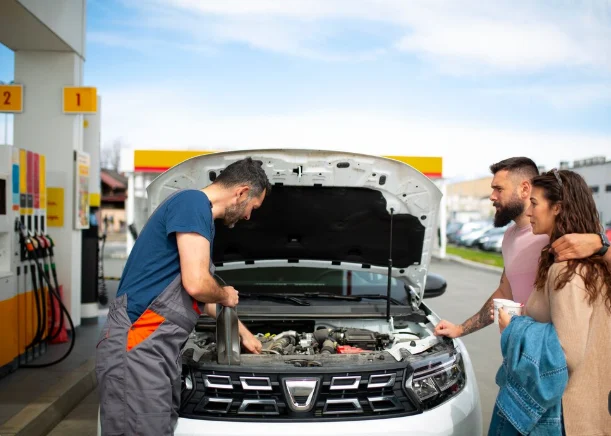
A car that uses fuel efficiently can be more affordable to drive and more pleasant to own. Improving efficiency does not usually require expensive modifications. Regular maintenance, sensible driving habits, and attention to small changes in vehicle behavior provide a useful starting point.
Performance also means more than acceleration. Smooth power delivery, predictable handling, reliable starting, and consistent braking all contribute to how well a car operates.
The most effective approach is to keep the vehicle working as its manufacturer intended while reducing unnecessary demands on the engine.
Follow the Correct Maintenance Schedule
Routine servicing helps keep essential components in good working condition. Follow the maintenance schedule in the owner’s manual, including any requirements for demanding operating conditions.
Frequent short journeys, dusty roads, heavy loads, and prolonged stop-and-go driving may affect service needs. Mileage alone does not tell the whole story, so pay attention to time-based intervals too.
Use replacement parts and fluids that meet the vehicle’s specifications. Keeping service records makes it easier to identify overdue work and investigate recurring problems.
Use the Specified Engine Oil
Engine oil lubricates moving components and helps manage heat. Using the correct oil specification supports proper engine operation.
Choose oil according to the manufacturer’s required viscosity and performance standards. A thicker oil is not automatically more protective, and a thinner oil should not be selected simply in the hope of reducing fuel consumption.
Check the level using the procedure in the manual. Persistent oil loss, leakage, or an oil-pressure warning needs investigation rather than repeated topping up.
Maintain the Recommended Tyre Pressure
Incorrect tyre pressure can affect rolling resistance, wear, and handling. Check pressures when the tyres are cold and use the figures specified on the vehicle’s placard or in its manual.
The number printed on a tyre’s sidewall is not the recommended operating pressure for your car. Some vehicles specify different pressures for normal and fully loaded conditions.
Do not overinflate tyres to pursue better fuel economy. Maintain the appropriate pressure and inspect for uneven wear, damage, or repeated pressure loss.
If the vehicle pulls to one side or develops unusual wear patterns, arrange an inspection of the alignment and related components.
Accelerate Progressively and Anticipate Traffic
Repeated hard acceleration followed by abrupt braking wastes momentum. Looking ahead allows you to respond earlier and make smoother adjustments.
Maintain a suitable following distance, ease off the accelerator when traffic slows, and build speed progressively when conditions permit. These habits can also make journeys more comfortable for passengers.
Avoid treating fuel-saving techniques as a reason to compromise safety. Do not follow vehicles closely, coast in neutral, or switch off the engine while moving.
The goal is controlled, predictable driving within road conditions and speed limits.
Choose Suitable Gears and Driving Modes
In a manual car, use an appropriate gear without forcing the engine to struggle at low speed. Change down when the engine needs more power, such as when climbing a hill.
For an automatic, smooth accelerator inputs generally help the transmission respond predictably. Select driving modes according to conditions and consult the manual to understand what each mode changes.
An economy mode may adjust throttle response or other settings, but it cannot compensate for aggressive driving. Likewise, sport mode may be useful in certain situations without being necessary for ordinary journeys.
Avoid repeatedly launching the car hard or using unnecessary high engine speeds.
Remove Unnecessary Weight and Drag
Extra weight increases the work required to move a vehicle. Clear out heavy items that do not need to remain in the boot, while retaining essential safety equipment.
Roof boxes and external carriers can add aerodynamic drag. Remove them when they are no longer needed, following their installation instructions.
Keep loads within the vehicle’s limits and secure them properly. Appropriate loading supports handling as well as efficient operation.
Plan Journeys and Limit Unnecessary Idling
Combining compatible errands can reduce repeated journeys and cold starts. A slightly different route may also be more practical if it avoids extensive congestion, although distance, road conditions, and travel time all matter.
Avoid leaving the engine running merely while waiting, where switching it off is safe and appropriate. Follow the manufacturer’s instructions regarding warm-up, shutdown, and any stop-start system.
After starting a cold engine, drive gently rather than immediately demanding strong acceleration. Most routine driving does not require prolonged stationary warm-up.
Use Fuel That Meets the Manufacturer’s Requirements
Choose fuel that meets the specification stated in the owner’s manual. Higher-priced fuel does not automatically improve economy or power in every engine.
Some vehicles require a particular octane rating, while others may recommend one under certain conditions. Understanding that distinction helps avoid unnecessary spending or unsuitable fuel choices.
Be cautious about additives and devices promising dramatic improvements. Addressing a genuine maintenance fault is more useful than relying on an unverified shortcut.
Investigate Changes in Fuel Consumption
Monitor fuel use across several comparable journeys or tankfuls. Traffic, weather, load, and air-conditioning use can influence results, so one unusually thirsty trip does not necessarily indicate a fault.
A persistent increase accompanied by rough running, reduced power, unusual smells, or warning lights deserves professional assessment. Problems such as a misfire or dragging brake should be diagnosed rather than guessed at.
Consistent care offers the strongest foundation for fuel efficiency and dependable performance. Keep the car properly maintained, drive smoothly, and respond early when its behavior changes. These habits help the vehicle deliver the performance it was designed to provide.
Read more: The Future of Wearable Devices in Personal Health and Fitness Tracking
