
Cities depend on transportation to connect people with jobs, education, healthcare, and essential services. Yet moving large numbers of people and goods also brings challenges, including air pollution, noise, congestion, and demand for limited street space.
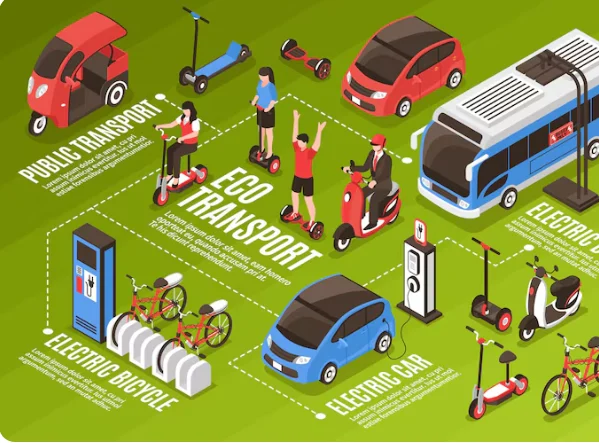
Electric vehicles offer one way to address some of these problems. Their role extends beyond private cars to buses, delivery vans, taxis, bicycles, and other forms of urban mobility.
Their contribution depends on how they are used, how electricity is generated, and how they fit into the wider transport system. A sustainable city needs both cleaner vehicles and practical alternatives to unnecessary vehicle journeys.
Improving Air Quality at Street Level
Battery electric vehicles produce no exhaust emissions while driving. Replacing petrol or diesel journeys with electric operation can therefore remove a source of pollution from streets where people live, walk, and work.
This distinction is particularly relevant for vehicles that spend much of the day on the road. Buses, taxis, and delivery vehicles can operate close to homes, schools, shops, and busy pedestrian areas.
However, electric vehicles are not entirely pollution-free. Tire wear, road dust, manufacturing, and electricity generation still have environmental effects. Plug-in hybrids also produce exhaust emissions whenever their combustion engines operate.
Understanding these differences helps cities assess what electrification can achieve.
Using Energy More Efficiently
Electric motors convert a greater share of their input energy into movement than combustion engines. Electric vehicles can also recover some energy during slowing through regenerative braking.
Urban driving, with its frequent changes in speed, provides opportunities for this recovery. Regenerative braking does not capture all the energy used, but it can reduce some of the losses associated with stopping.
Vehicle size remains important. Moving a large, heavy vehicle generally requires more energy than moving a smaller one under comparable conditions. Efficient transport planning therefore considers the type of vehicle needed for the journey alongside its power source.
Expanding the Potential of Electric Public Transport
Electrifying buses can bring cleaner operation to routes used by many passengers. A well-used bus also carries people who might otherwise travel in several separate vehicles.
Successful implementation requires more than purchasing buses. Operators need to assess route length, passenger loads, weather conditions, charging schedules, and depot capacity.
A route that works comfortably within a vehicle’s range may suit overnight depot charging. Another may require a different arrangement or additional operational flexibility.
Reliable service remains central. Passengers need convenient routes, reasonable waiting times, and accessible vehicles for public transport to become an attractive everyday choice.
Supporting Cleaner Urban Deliveries
Cities rely on frequent deliveries to businesses and households. Electric vans, smaller delivery vehicles, and cargo bicycles can serve different parts of this system.
Predictable routes and a return to a central depot can make charging easier to organize. Smaller electric vehicles may also suit deliveries where space is limited and loads are manageable.
The vehicle should match the task. Sending a large van for a small parcel may use more resources and road space than necessary, regardless of whether the van is electric.
Combining deliveries, improving loading arrangements, and reducing failed delivery attempts can complement fleet electrification.
Making Charging Practical and Accessible
Charging access strongly influences whether electric transport is convenient. A driver with private parking has different options from someone living in an apartment or parking on the street.
Urban charging plans need to consider these differences. Shared residential facilities, workplace charging, public charging, and fleet depots can each serve particular needs.
Reliability, clear pricing, accessible design, and suitable locations matter alongside the number of chargers installed. Charging equipment should also be positioned without obstructing pavements or creating difficulties for pedestrians.
Planning for electrical capacity early can help avoid problems as demand develops.
Considering the Full Environmental Picture
The environmental impact of an electric vehicle extends across its production, use, and end of life. Battery manufacturing requires materials and energy, while the electricity used for charging affects operational emissions.
Vehicle lifespan, battery size, distance traveled, and electricity sources all influence the overall result. Cleaner electricity can strengthen the benefits of electric operation.
Repairability, responsible material sourcing, and appropriate battery reuse or recycling also deserve attention. These considerations make lifecycle assessment more useful than judging a vehicle only by its exhaust emissions.
Connecting Electrification With Better City Design
Replacing a combustion-engine car with an electric car does not remove congestion or the need for parking. Sustainable transportation also requires attention to how much space each journey uses.
Walking routes, protected cycling infrastructure, accessible public transport, and convenient connections between services can reduce dependence on private cars. Electric bicycles and shared vehicles may complement these options where they are safely integrated.
Electric vehicles have an important place in urban transportation, particularly where they replace heavily used combustion vehicles. Their strongest contribution comes within a broader approach that moves people and goods efficiently, protects public space, and gives residents practical choices about how to travel.
Read more: How Business Management Software Helps Improve Workplace Efficiency
