
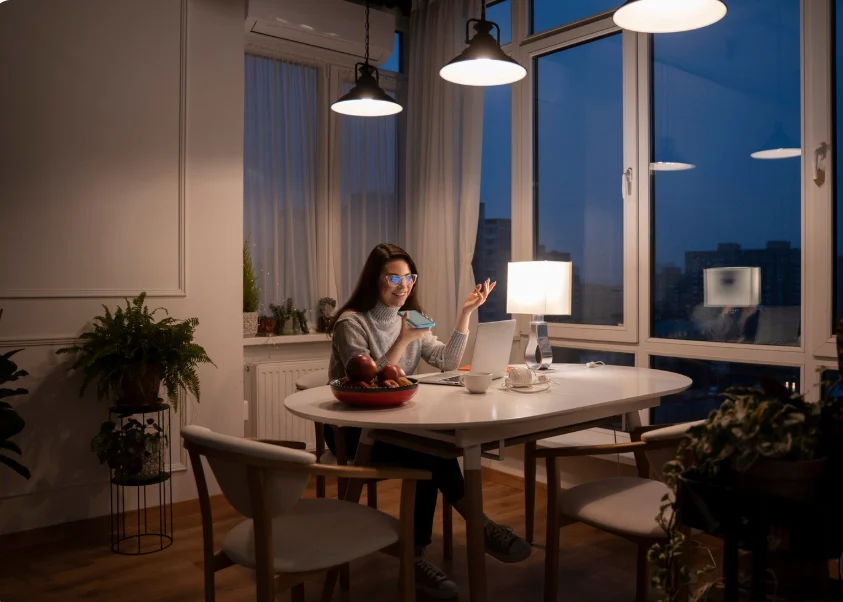
A room can contain beautiful furniture and carefully chosen colors yet still feel uncomfortable if its lighting is poorly planned. A bright ceiling fixture might leave a reading corner in shadow, while an exposed bulb can create glare across an otherwise inviting living space.
Lighting influences how people use a room and how its materials, proportions, and colors appear. It helps distinguish a place for focused work from somewhere to relax, while making everyday activities easier.
Comfortable interiors depend on more than brightness. The position, direction, quality, and control of light all contribute to how a home feels.
Begin with How the Room Is Used
Lighting decisions become clearer when they start with activities. Reading, cooking, dressing, working, and entertaining place different demands on a space.
Consider where these activities happen and at what times of day. A dining table may also serve as a workspace, while a bedroom may include a reading chair or dressing area.
Map these uses before selecting fixtures. This helps avoid relying on a single central light to serve every purpose.
The aim is to put useful light where people need it, with enough flexibility for the room’s changing roles.
Build Layers of Light
A comfortable lighting scheme usually combines several types of illumination.
Ambient lighting provides general visibility. Task lighting supports activities such as reading or preparing food. Accent lighting draws attention to features such as artwork, shelving, or architectural details.
These layers can work together without all being equally bright. A living room might combine a softly lit ceiling, a reading lamp beside a chair, and a small light illuminating a bookshelf.
Separate controls allow the balance to change. Bright general lighting may suit cleaning, while a combination of smaller lights can create a quieter setting later.
Make Daylight Part of the Plan
Windows introduce changing light that can shape the atmosphere of a room throughout the day. Before adding artificial lighting, observe where daylight falls and where shadows remain.
Furniture placement can help make use of this resource. A desk near a window may receive useful light, but its orientation matters if direct sunlight causes reflections on a screen.
Curtains, blinds, and other shading allow occupants to manage glare and privacy. Adjustable coverings offer more flexibility than a permanent solution that either blocks too much light or provides too little control.
Keep the surrounding space in mind too. Tall furniture positioned directly beside a window may interrupt light reaching farther into the room.
Control Glare for Greater Comfort
More light does not always make a room easier to use. Glare can occur when a bright source is visible or when light reflects strongly from a surface.
Exposed bulbs, poorly positioned spotlights, and reflections on glossy tables or televisions can all become distracting.
Shades, diffusers, and careful fixture placement help soften direct views of bright sources. Adjustable lamps allow users to direct light toward a task without shining it into their eyes.
Assess fixtures from the positions people actually occupy. A pendant that looks attractive while standing may feel uncomfortable when viewed from a nearby sofa.
Choose Light Appearance Thoughtfully
The appearance of white light influences the character of an interior. Warmer-looking light can create a gentle atmosphere, while cooler-looking light can give a space a different sense of clarity.
Neither is suitable for every room or person. Consider the intended activity, nearby finishes, and individual preferences.
Consistency within a visual area can help avoid an accidental patchwork of different light colors. Where a room serves several functions, adjustable options may provide useful flexibility.
Evaluate samples in the actual space when possible. Packaging and showroom displays cannot fully predict how a lamp will look against your walls and furnishings.
Consider How Materials Respond
Lighting and interior finishes work together. Pale, matte surfaces distribute light differently from dark timber, polished stone, or metallic details.
A textured wall may become more expressive when illuminated from an angle. A glossy surface may produce unwanted reflections under the same arrangement.
Artwork and decorative objects also change under different lamps. Color rendering—the way a light source reveals colors—matters when selecting lighting for these areas.
This interaction explains why a fixture should be assessed as part of the whole room rather than as an isolated object.
Give Kitchens and Bathrooms Focused Attention
Practical spaces need lighting that supports detailed activities. In a kitchen, a ceiling light behind the person cooking may leave the worktop shadowed. Appropriately positioned task lighting can address that problem.
Bathroom lighting should help users see their faces clearly without relying solely on a strong overhead source. Placement around a mirror deserves particular consideration.
Fixtures must also be suitable for their location, especially where moisture or splashes are possible. Electrical work and bathroom installation requirements should be handled according to applicable local rules.
Make Controls Easy to Use
A well-lit room can still be frustrating if switches are awkwardly placed. Think about entrances, bedside access, and the routes people use through the home.
Separate circuits and compatible dimmers can make lighting more adaptable. Smart controls may add convenience, but basic operation should remain understandable for household members and visitors.
Check compatibility before combining lamps, drivers, and dimming equipment. Poorly matched components can produce flicker or unreliable adjustment.
Good lighting brings together useful illumination, comfortable viewing, and straightforward control. By planning around real activities and observing how light interacts with the room, homeowners can create interiors that feel welcoming and work well throughout the day.
Read More: How to Create a Relaxing Living Room with Simple Decorating Ideas
