
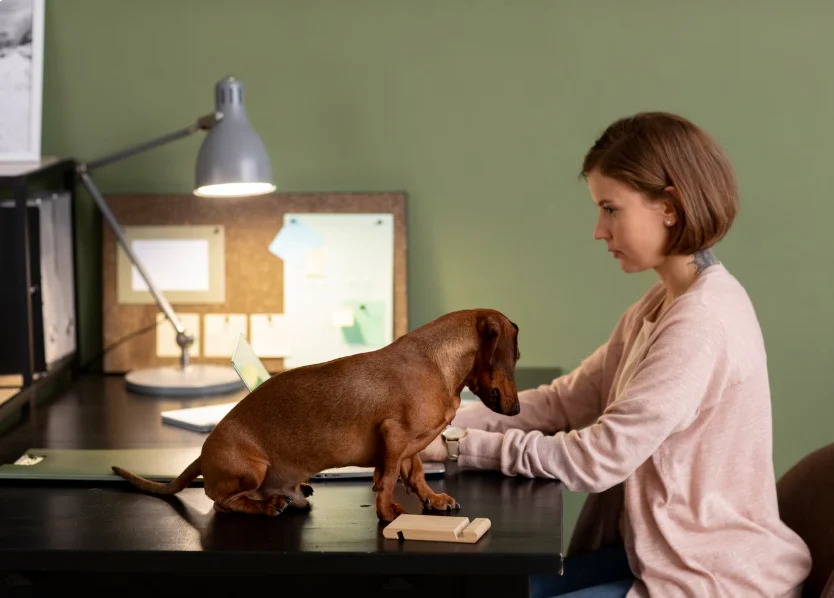
Indoor pets need more than food, shelter, and a comfortable place to sleep. They also need opportunities to explore, make choices, and engage in activities suited to their species.
A predictable home can feel secure, but it may offer limited opportunities for discovery. Mental stimulation adds interest through activities such as searching for food, investigating safe objects, learning simple cues, or playing with a familiar person.
The aim is not to keep an animal busy constantly. Good enrichment balances enjoyable activity with choice, security, and uninterrupted rest.
What Mental Stimulation Means
Mental stimulation gives an animal opportunities to use its senses and interact meaningfully with its surroundings. It can involve problem-solving, exploration, play, or familiar behaviors such as foraging.
Different species need different opportunities. A cat may enjoy stalking a toy, while a dog may prefer searching for a hidden food reward. Rabbits and birds have their own requirements, which should guide the activities offered.
Enrichment works best when it allows the animal to participate willingly. An elaborate toy offers little benefit if the pet finds it frightening or cannot use it comfortably.
Supporting Natural Behaviors Indoors
Indoor living can limit activities that animals would otherwise perform across a more varied environment. Thoughtful changes can provide suitable alternatives.
For cats, sturdy scratching surfaces, accessible climbing areas, hiding places, and hunting-style play can make the home more engaging. These meet different needs and should complement one another rather than relying on a single toy. The RSPCA recommends suitable indoor activities, safe hiding places, and opportunities to scratch and play. rspca.org.uk
Dogs also need appropriate exercise and opportunities to explore. Indoor games can supplement these experiences, but they should not automatically replace outdoor activity suitable for the individual dog. rspca.org.uk
Making Mealtimes More Engaging
Food-based activities can turn part of a normal meal into an opportunity to search or investigate. A suitable puzzle feeder or a few small portions placed in accessible locations can encourage participation.
Begin with an easy version. The animal should be able to obtain food without becoming frustrated or giving up. Increase difficulty gradually only if the activity remains enjoyable.
Use food from the pet’s normal allowance where appropriate, accounting for any extra treats. The RSPCA identifies food games as a way to provide indoor cats with mental and physical stimulation while emphasizing the need to consider total calorie intake. rspca.org.uk
Do not make access to essential nutrition depend on solving a difficult puzzle.
Using Play to Build Engagement
Interactive play gives owners an opportunity to observe what their pets enjoy. Some prefer chasing, others investigating, and others manipulating an object.
Allow pauses and watch for signs that the animal wants to stop. Turning away, retreating, or becoming tense should prompt a break.
Choose toys that match the animal’s size and behavior. Supervise unfamiliar items, inspect them for damage, and put away strings, ribbons, or detachable parts that could be swallowed.
Rotating suitable toys can maintain variety without continually buying new ones. Keep familiar favorites available if the pet finds them reassuring.
Introducing Simple, Reward-Based Training
Training can provide a manageable mental challenge when it is clear and enjoyable. Simple activities might include responding to a name, approaching a target, or voluntarily entering a carrier.
Reward small steps and keep sessions brief. If the pet repeatedly struggles, simplify the task rather than increasing pressure.
Training should never require withholding necessary food, forcing contact, or punishing confusion. Its value comes from understandable communication and voluntary participation.
For some animals, quietly investigating a new object may be more suitable than a structured training session.
Designing Spaces That Offer Choice
A stimulating home includes places to engage and places to withdraw. Resting areas should remain accessible without requiring an animal to pass another pet or enter a busy space.
In multi-pet households, provide enough appropriate resources to reduce competition. Observe whether one animal blocks another from food, resting places, or preferred activities.
New items should be introduced gradually. Constant rearrangement can be unsettling, so preserve familiar areas while adding variety thoughtfully.
Enrichment does not need to fill every corner. A usable space with a few well-chosen options can be more valuable than a crowded collection of equipment.
Adjusting for Age and Ability
Young, energetic animals may engage differently from older pets or those with limited mobility. Adapt access, difficulty, and session length to the individual.
A floor-level search activity may be more suitable than jumping. An easily opened feeder may work better than a complicated device requiring strong physical effort.
If a pet has a medical condition, ask the veterinarian which activities are appropriate. Comfort should guide participation.
Recognizing When Something Else Is Wrong
Chewing, vocalizing, hiding, or reduced activity should not automatically be attributed to boredom. Pain, illness, fear, and environmental conflict can also affect behavior.
A sudden or persistent change deserves veterinary attention. Enrichment can support daily welfare, but it is not a substitute for investigating an underlying problem. rspca.org.uk
The most useful routine develops through observation. Offer safe opportunities, notice the animal’s response, and adjust accordingly. Mental stimulation becomes meaningful when it gives indoor pets enjoyable ways to explore their world while retaining control over when to engage and when to rest.
Read More: Understanding Connotative Meanings i-Ready Quiz Level H: Complete Guide
