If you have seen WLC Meaning in Text while reading messages online, understanding its context helps make modern digital conversations much easier. From my experience studying internet language, I have noticed that abbreviations change quickly, and new slang appears across social media almost every day.
You may have received a message that simply said WLC and wondered what it meant, but you are not alone. A short message can leave people confused, especially when there is little context available.
Many users search for the meaning after seeing WLC in messages, Snapchat chats, Instagram comments, gaming conversations, or even at work. Since many abbreviations have more than one meaning, it can be hard to know what someone is trying to say.
The good news is that understanding WLC is usually simple once you understand the context. In most cases, it is used as a friendly expression, though it can also have other meanings depending on where you see it.
This guide explains how people use it, how to reply, and when to avoid using it. By the end, you can understand exactly what WLC means in modern texting and online communication.
What Does WLC Mean In Text?
The most common WLC Meaning In Text is “Welcome.”
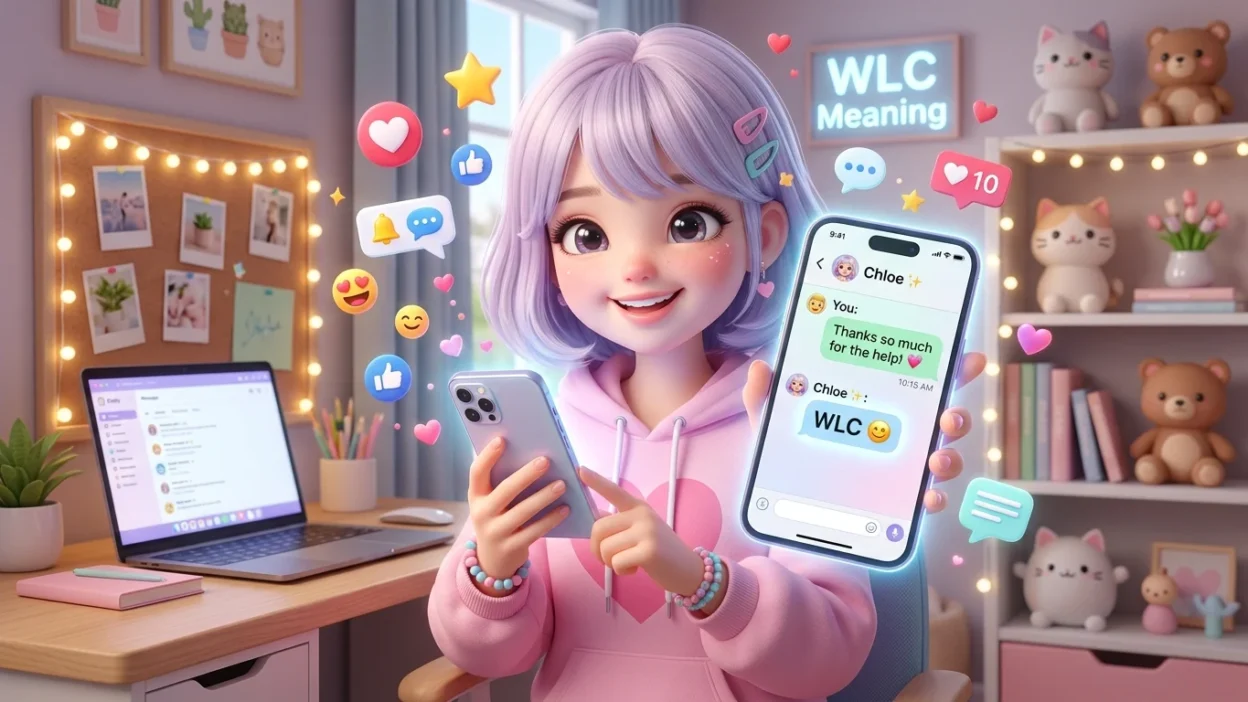
People often use WLC as a shortened version of “welcome” when replying to someone who has said “thank you.” Since texting culture encourages quick communication, abbreviations like WLC save time while keeping the conversation friendly.
In plain English, WLC is simply a fast way of saying:
- Welcome
- You’re welcome
- Glad to help
Because it is short and easy to type, many people use it in casual conversations instead of writing the full word.
Example:
Person A: “thanks for helping me today!”
Person B: “wlc 😊”
In this example, WLC means “you’re welcome.”
Bold Summary: WLC most commonly means “Welcome” and is used as a friendly response in casual online conversations.
Why Do People Use WLC?
Modern communication happens quickly. People send hundreds of messages every week, and many prefer short forms over longer phrases.
WLC helps users:
- Reply faster
- Keep conversations friendly
- Save typing time
- Follow texting culture trends
Just like abbreviations such as LOL, BRB, and TY, WLC makes digital communication more efficient.
Additionally, younger users who spend a lot of time online often prefer chat shorthand because it feels natural in fast-moving conversations.
Where Is WLC Commonly Used?
You can find WLC across many digital platforms and communication styles.
Text Messages
Friends and family often use WLC when responding to thanks or appreciation.
Social Media Comments
WLC occasionally appears in comments on platforms like Instagram, TikTok, and Snapchat.
Direct Messages (DMs)
Private conversations frequently include WLC because people want quick responses.
Gaming Chats
Players often use WLC when helping teammates or answering questions.
Online Forums
Community members sometimes reply with WLC when assisting new users.
Group Chats
WLC works naturally in family groups, friend groups, and casual communities.
Tone of WLC
The tone of WLC is usually:
- Casual
- Informal
- Friendly
- Positive
While it is acceptable in everyday conversations, it is less common in formal business communication.
Real Conversation Examples
Here are some realistic examples of WLC in modern texting:
- “thanks for the info” — “wlc”
- “you helped me a lot today” — “wlc anytime”
- “thanks for sending the notes” — “wlc 😊”
- “appreciate the advice” — “wlc glad it helped”
- “thanks for explaining that” — “wlc”
- “you saved me so much time” — “wlc no problem”
- “thanks for the recommendation” — “wlc hope you enjoy it”
- “thanks for the invite” — “wlc”
- “thank you for helping” — “wlc happy to help”
- “thanks again” — “wlc!”
These examples show how naturally WLC fits into everyday online chat meaning and texting culture.
When To Use WLC
Using WLC correctly makes conversations smoother.
Use WLC When
✅ Someone thanks you.
✅ You want a quick friendly reply.
✅ The conversation is casual.
✅ You are texting friends or family.
✅ You are chatting online informally.
Do Not Use WLC When
❌ Writing professional emails.
❌ Creating business reports.
❌ Sending formal applications.
❌ Communicating in academic writing.
❌ Writing legal or official documents.
Context Comparison Table
| Context | Example Phrase | Why It Works or Doesn’t Work |
|---|---|---|
| Friend Chat | “wlc, happy to help” | Friendly and natural |
| Family Text | “wlc 😊” | Casual and warm |
| Gaming Chat | “wlc bro” | Fits the environment |
| Work Email | “wlc for your request” | Too informal |
| Academic Report | “wlc for the assistance” | Not appropriate |
Other Possible Meanings of WLC
Although “Welcome” is the most common meaning, WLC can occasionally represent other phrases.
Because abbreviations often depend on context, the exact meaning may vary between communities, industries, or organizations.
That is why reading the surrounding conversation is important before assuming what WLC means.
In everyday texting and social media slang, however, “Welcome” remains the most widely recognized meaning.
Similar Slang Words and Alternatives
Many abbreviations serve a similar purpose to WLC.
| Slang | Meaning | When to Use |
|---|---|---|
| YW | You’re Welcome | Most common alternative |
| NP | No Problem | Casual response |
| NBD | No Big Deal | Downplays the favor |
| TY | Thank You | Showing gratitude |
| TYSM | Thank You So Much | Extra appreciation |
| OFC | Of Course | Friendly assistance |
| IDC | I Don’t Care | Different meaning but common shorthand |
YW
YW is probably the closest alternative to WLC. Both mean “you’re welcome.”
NP
NP stands for “No Problem” and reassures the other person that helping was easy.
OFC
OFC means “Of Course” and works well when helping someone feels natural.
NBD
NBD means “No Big Deal” and suggests the favor was not difficult.
Why WLC Became Popular
Abbreviations continue to grow because people communicate more online than ever before.
Instead of typing full words repeatedly, users create shorter alternatives that still deliver the same message.
WLC became popular because it is:
- Short
- Easy to remember
- Friendly
- Quick to type
As texting abbreviation culture evolves, terms like WLC remain useful tools for efficient communication.
Common Misunderstandings About WLC
Some users think WLC always has a single meaning.
However, many abbreviations can represent different phrases depending on context.
Others assume WLC is formal because it resembles an acronym. In reality, it is generally considered informal chat language.
The best approach is to examine the conversation around the abbreviation before deciding what it means.
Frequently Asked Questions
What does WLC mean in text?
WLC usually means “Welcome” and serves as a quick response to someone saying thank you.
Is WLC considered slang?
Yes. It falls under texting abbreviations and chat shorthand used in informal communication.
Is WLC formal or informal?
WLC is mostly informal and works best in casual conversations.
Where is WLC commonly used?
People use it in text messages, social media comments, DMs, gaming chats, and online forums.
Can WLC have other meanings?
Yes. Like many abbreviations, WLC can have different meanings depending on context.
Who uses WLC the most?
Teenagers, young adults, gamers, and active social media users commonly use it.
Should I use WLC in professional communication?
No. Writing the full word “welcome” is usually better in professional situations.
Final Thought
Understanding WLC Meaning In Text helps you stay current with modern texting culture and online communication.
In most situations, WLC simply means “Welcome” and acts as a friendly response to thanks or appreciation. Because abbreviations can sometimes have multiple meanings, context remains important.
Still, when you see WLC in text messages, social media comments, gaming chats, or direct messages, it usually carries a positive and helpful tone. Learning slang terms like WLC makes online conversations easier to follow and helps you communicate more naturally in today’s digital world.

Zevran Callix works on the Wordifs site creating clear informative articles while collaborating through wordifs@gmail.com to maintain consistency quality research readability and reader focused blogging standards worldwide digital content platform.