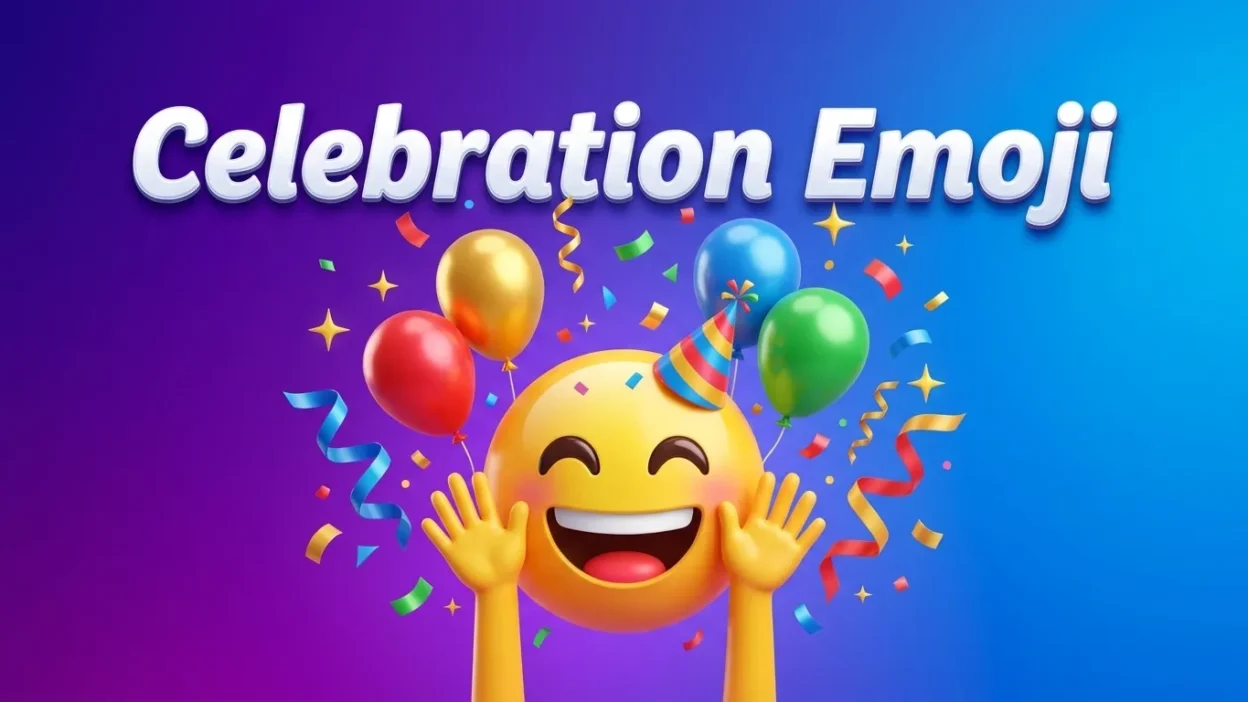
Celebration emojis are small symbols that show joy, pride, or excitement about good news. The most common is the party popper emoji (🎉), which means “congratulations” or “let’s celebrate.” The partying face emoji (🥳) shows that you are in a festive mood, and the confetti ball emoji (🎊) adds a decorative, festive touch.
This guide explains what each one means, how they differ, which to pick for different occasions, and which mistakes to avoid.
Quick Answer
- 🎉 Party popper: congratulations, announcements, launches, parties
- 🥳 Partying face: personal excitement, birthdays, playful good news
- 🎊 Confetti ball: festive decoration for events, holidays, and weddings
- 🎈 Balloon: birthdays and kids’ celebrations
- 🥂 Clinking glasses: toasts and milestones
- 🏆 Trophy: wins, awards, top results
A simple rule: use 🎉 to celebrate someone else’s news and 🥳 to show your own excitement.
What Counts as a Celebration Emoji?
A celebration emoji is any emoji that expresses happiness, success, or a festive occasion. The Unicode Consortium standardizes emojis so they work across iPhone, Android, Windows, and most apps. Each company draws its own artwork, but the core meaning stays the same.
They fall into a few groups:
- Party symbols: 🎉 🥳 🎊
- Decorations: 🎈 🪅 🪩 ✨
- Food and drink: 🎂 🍰 🥂 🍾
- Gifts and prizes: 🎁 🏆 🥇 🎖️
- Applause and reactions: 👏 🙌 🤩
What Does the Party Popper Emoji (🎉) Mean?
The party popper emoji shows a cone releasing colorful streamers and confetti. Its Unicode code point is U+1F389, and it became part of the standard emoji set in 2015.
- “Congratulations!”
- “Big news!”
- “We launched!”
- “Happy birthday!”
- “I’m so excited!”
Because it is almost always positive, 🎉 is one of the safest celebration emojis for friends, family, social media, and relaxed work chats.
What Does the Partying Face Emoji (🥳) Mean?
The partying face emoji shows a smiling face with a party hat, a blower, and confetti. It arrived with Unicode 11.0 in 2018 (U+1F973).
Where 🎉 celebrates an event, 🥳 shows a person enjoying it. It suits messages like:
- “Payday tomorrow 🥳”
- “My sister is visiting this weekend 🥳”
- “Birthday week starts now 🥳”
It is also used playfully for small wins, like finishing a hard task or reaching the weekend.
What Does the Confetti Ball Emoji (🎊) Mean?
The confetti ball emoji looks like a ball bursting with colorful paper pieces (U+1F38A). It feels more like decoration than a reaction. You will often see it in event posters, holiday greetings, wedding messages, and announcements.
It is also popular in Japanese messaging culture, where it has long been used for festive occasions.
🎉 vs 🥳 vs 🎊: What Is the Difference?
| Emoji | Name | Feels like | Best for |
| 🎉 | Party popper | Cheering for good news | Congratulations, launches |
| 🥳 | Partying face | Your own party mood | Birthdays, personal excitement |
| 🎊 | Confetti ball | Festive decoration | Events, holidays, weddings |
Many people use them interchangeably, and that is usually fine. The differences matter most when you want your tone to be precise.
Other Celebration Emojis Worth Knowing
| Emoji | Name | Typical use |
| 🎈 | Balloon | Birthdays, baby showers |
| 🎂 | Birthday cake | Birthday wishes |
| 🥂 | Clinking glasses | Toasts, anniversaries |
| 🍾 | Bottle with popping cork | Big wins, New Year |
| 🏆 | Trophy | Awards, victories |
| 🎓 | Graduation cap | Graduations |
| 🎁 | Gift | Presents, surprises |
| 🪩 | Mirror ball | Dance parties, nightlife |
| 🪅 | Piñata | Fiestas, kids’ parties |
| 🎆 | Fireworks | New Year, national days |
| 👏 | Clapping hands | Praise and applause |
Which Emoji Fits Which Occasion?
Birthdays
Combine 🎂, 🎈, and 🥳. Example: “Happy birthday, Ayesha! 🎂🥳”
Promotions and work wins
Keep it professional with one 🎉 or 👏. Example: “Congratulations on the promotion! 🎉”
Weddings and anniversaries
Use 🥂 or 🎊 with a warm message. Add ❤️ for close relationships.
Graduations and exam results
Try 🎓 with 🎉. Example: “You did it! 🎓🎉”
Festivals and national days
Eid, Diwali, Christmas, New Year, and independence days often pair 🎊 with 🎆 or ✨. Many people also add a festival-specific symbol, such as 🌙 for Eid or 🪔 for Diwali.
Business announcements
A single 🎉 or 🎊 can make a launch post friendlier. Avoid long strings of emojis.
Common Misunderstandings
“All celebration emojis mean the same thing.” They overlap, but each carries a slightly different tone. 🥳 is personal, 🎉 is general, and 🎊 is decorative.
“Emojis look identical everywhere.” Apple, Google, Samsung, Microsoft, and WhatsApp each design their own versions, so the same emoji can look different on another person’s phone.
“Any emoji is fine in a professional message.” Workplace culture varies. One friendly emoji is usually acceptable, but heavy use can seem unserious.
“A celebration emoji always means good news.” Not always. It is sometimes used sarcastically, as in “Another Monday 🎉.” Context and tone matter.
Common Mistakes to Avoid
- Overusing them. A row of ten 🎉 can feel noisy. Two or three are plenty.
- Replying to sad news with a party emoji. Check the full message first.
- Using them in serious contexts. Complaints, legal notices, and condolences call for plain language.
- Ignoring cultural context. Some occasions, such as mourning periods or religious observances, call for respectful wording instead of party symbols.
- Relying on emojis alone. “🎉” by itself can feel vague. Add words like “Congrats!” to sound sincere.
- Using brand-new emojis on old devices. Recent emojis may appear as empty boxes on outdated phones.
Practical Tips for Better Results
- Match the mood. Casual chats welcome 🥳. Formal messages work better with one 🎉.
- Put emojis at the end of a sentence. It keeps the message easy to read.
- Think about your audience. Friends may enjoy a playful reply, while a client may prefer restraint.
- Consider accessibility. Screen readers read each emoji aloud by name, so long strings are tiring to hear.
- Keep your device updated. New emojis only display correctly on current software.
- Stay consistent in brand posts. Choose one or two favorites rather than rotating dozens.
Ready-to-Use Examples
Congratulations
- “Huge congratulations on your new job! 🎉”
- “So proud of you! 👏🏆”
Birthdays
- “Happy birthday! Hope your day is amazing 🎂🥳”
- “Another year, another reason to celebrate 🎈”
Announcements
- “Our new website is live! 🎊”
- “Registrations are open 🎉”
Casual
- “Exams finished. Time to celebrate 🥳”
- “Friday mode: activated 🎉”
How to Find and Type Celebration Emojis
- iPhone: open the emoji keyboard and search “party.”
- Android: open the emoji panel and use the search bar.
- Windows: press Windows key + period (.).
- Mac: press Control + Command + Space.
- Predictive text: typing “congrats” or “party” often suggests the right emoji.
A Brief History
Emojis began in Japan in the late 1990s, and early sets already included festive symbols. Over time, Unicode added more: 🥂 in 2016, 🥳 in 2018, and 🪅 and 🪩 around 2020. New batches are released regularly, so the celebration options keep growing.
Celebration Emojis in Marketing
Brands use them in product launches, sales, thank-you posts, and event invitations. A few guidelines help:
- Use only one or two in an email subject line.
- Match your brand voice.
- Test how they display in different email apps and social platforms.
- Skip them in legal, billing, or sensitive customer messages.
FAQs
1. What is the most popular celebration emoji?
The party popper (🎉) is the most widely used. It works for congratulations, launches, birthdays, and parties.
2. What is the difference between 🎉 and 🎊?
🎉 shows active celebration, like a popper going off. 🎊 is a confetti ball that feels more decorative. Many people use them interchangeably.
3. What does 🥳 mean in a text message?
It means the sender is excited or in a party mood. It is often used for birthdays, good news, or playful moments.
4. Can I use celebration emojis in work emails?
Yes, sparingly. One 🎉 in a friendly congratulations note is usually fine. Avoid them in formal or sensitive messages.
5. Which emoji means congratulations?
🎉, 👏, and 🥳 are the most common. 🏆 suits achievements, and 🎓 suits graduations.
6. Why does my celebration emoji look different on another phone?
Each company designs its own artwork for Unicode emojis. The meaning is the same, but the style varies.
7. Are there newer celebration emojis?
Yes. 🪅 (piñata) and 🪩 (mirror ball) are more recent additions. Update your device to see the latest ones.
8. Is it rude to reply with 🎉 to someone’s news?
Not for good news. If you are unsure, add a few words like “Congratulations!” so your reply feels sincere.
Conclusion
Celebration emojis add warmth and emotion to digital messages. The party popper (🎉) is the reliable all-purpose choice, 🥳 shows personal excitement, and 🎊 adds a festive finish. Knowing the small differences helps your message land the way you intend.
The best approach is simple: pick one or two emojis that fit the moment, keep your words clear, and think about who will read them. Used with care, these tiny symbols can turn an ordinary message into a real moment of shared joy.