
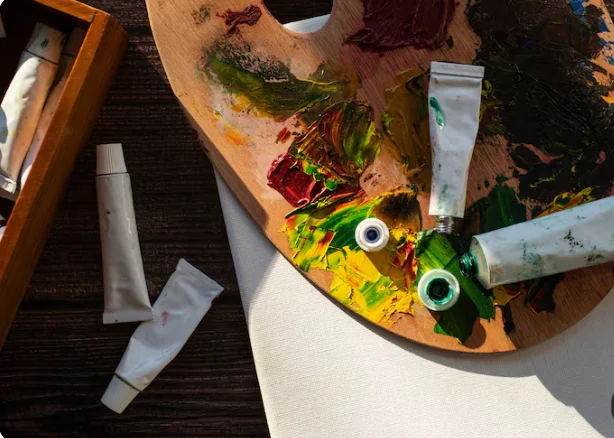
A painting can attract attention through a striking color before its subject becomes clear. A sculpture may invite closer inspection because its surface appears weathered, polished, or unexpectedly soft. These first impressions show how color and texture influence the way people encounter art.
In contemporary art, both elements extend beyond decoration. They help artists establish atmosphere, guide attention, explore materials, and communicate ideas. Their relationship can make a work feel harmonious, unsettling, intimate, or deliberately difficult to interpret.
Looking closely at color and texture reveals how much an artwork can express through its physical and visual qualities alone.
Color as a Language of Relationships
Color rarely operates independently. Its appearance changes according to the colors surrounding it, the lighting, and the material carrying it.
A muted orange may appear vivid beside gray but quieter beside a saturated red. A small area of blue can become a focal point within a predominantly warm composition. Artists use these relationships to direct attention and establish visual balance.
Contemporary artists may work with a restricted palette to emphasize subtle differences or combine contrasting colors to create tension. Neither approach requires a recognizable subject. The interaction between colors can become the central experience of the work.
Creating Emotion Without Fixed Meanings
Color can influence an artwork’s emotional atmosphere, but its meaning is not universal. Personal memories, cultural associations, and the surrounding imagery all affect interpretation.
Red might suggest celebration in one context, urgency in another, or simply function as a formal contrast. Dark colors can create an atmosphere of restraint, depth, or comfort rather than necessarily implying sadness.
Artists may draw on familiar associations or deliberately complicate them. A cheerful palette applied to a troubling subject can create discomfort, encouraging viewers to question their initial response.
Understanding color therefore involves asking how it functions within a particular artwork rather than assigning each shade a fixed emotion.
Texture Makes the Surface Significant
Texture describes surface qualities. It can be actual, created through the physical properties of a material, or implied through marks that suggest a surface visually.
Thick paint, woven fibers, rough timber, and folded paper offer actual texture. A smooth drawing that convincingly depicts cracked stone creates an impression of texture without reproducing the stone’s surface.
Contemporary art often brings these possibilities together. An artist might paint an illusion of fabric beside a real textile fragment, prompting viewers to compare representation with material presence.
Even when touching is prohibited, texture can encourage viewers to imagine how a surface might feel.
Revealing Process Through Materials
Textured surfaces can preserve evidence of how an artwork was made. Scraping, stitching, layering, sanding, and repeated brushwork leave traces of action.
These marks may suggest time, effort, revision, or resistance. A heavily worked surface can reveal that the final image emerged through several stages rather than a single uninterrupted gesture.
Some artists leave construction methods visible. Seams, joins, drips, or exposed edges become part of the composition instead of being concealed.
This visibility encourages viewers to consider the making of the work alongside its finished appearance.
How Color and Texture Transform Each Other
The same pigment can look different on smooth and uneven surfaces. Raised areas catch light, recesses create shadows, and changes in finish affect reflection.
A matte surface may make a color appear restrained, while a glossy finish can create shifting highlights. Transparent layers can allow underlying colors to remain visible, producing depth without a heavily textured surface.
Artists can also use contrast between the two elements. A rough object painted in a delicate shade may feel unexpectedly gentle. A polished form covered in intense color may appear more assertive.
These combinations make color and texture inseparable parts of the viewing experience.
Mixed Media Expands the Possibilities
Contemporary art accommodates materials such as paint, photographs, cardboard, textiles, metal, ceramics, and found objects. Combining them introduces differences in color, weight, surface, and association.
A faded fabric fragment may bring a sense of previous use into an otherwise newly made work. Packaging can introduce commercial colors and recognizable printing. Rusted metal may contrast with a carefully finished painted panel.
Such materials carry meanings as well as visual qualities. Their origins and treatment can support ideas about memory, consumption, identity, or change.
The strongest combinations give each material a purpose within the work.
Light and Space Change What Viewers See
Color and texture do not remain visually constant under every condition. Lighting can emphasize raised marks, flatten surface detail, or alter how reflective materials appear.
Large installations may require viewers to move around them to understand these changes. A surface that appears uniform from a distance can reveal intricate variations nearby.
Scale also affects perception. A small textured object may encourage intimate inspection, while an expansive colored environment can surround the viewer.
The exhibition setting therefore contributes to how these artistic elements are experienced.
Looking More Closely
When viewing contemporary art, begin by noticing where your attention goes. Consider whether color, surface, contrast, or reflected light draws you in.
Then look for relationships. Does the texture reinforce the mood suggested by the palette? Do different materials seem to belong together, or does their contrast create tension?
There may be no single interpretation. Careful observation allows color and texture to become entry points into the artwork, revealing decisions that might otherwise remain unnoticed. Through those decisions, artists turn surfaces and materials into experiences that invite thought, feeling, and sustained attention.
Read more: How Everyday Inspiration Can Lead to Extraordinary Artistic Creations
