
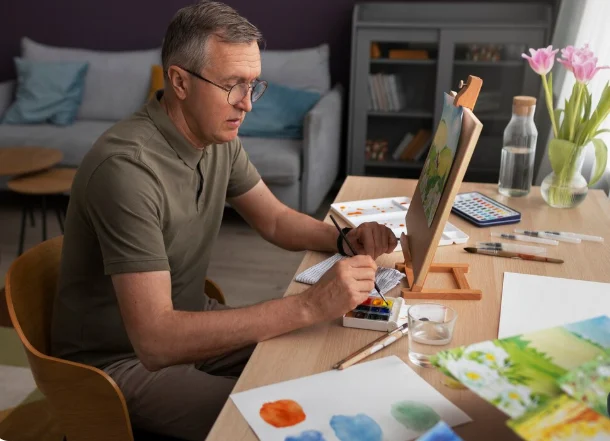
A remarkable artwork can begin with something easily overlooked: sunlight crossing a kitchen wall, the rhythm of footsteps, or a conversation overheard on a bus. Everyday life offers countless starting points for creativity, but recognizing them requires attention.
Artists transform these encounters through selection, interpretation, and experimentation. A familiar object becomes interesting because of how it is framed. A passing feeling becomes a story because someone finds the words to explore it.
Inspiration provides the beginning. The artistic process gives that beginning form, depth, and meaning.
Learning to Notice Familiar Surroundings
Familiarity makes daily life easier to navigate, but it can also make details disappear from conscious attention. We recognize a street as the route to work without examining its colors, surfaces, or sounds.
Looking more closely can reveal unexpected material. A cracked pavement may suggest an abstract composition. Reflections in a shop window might combine people and buildings in an unusual way. The changing sound of rain could provide a structure for a musical piece.
Try observing one familiar place as though you are seeing it for the first time. Notice where your eye travels, which details repeat, and what changes with the light. Specific observations give an idea something concrete to develop from.
Finding Possibility in Ordinary Objects
Household objects carry shapes, textures, histories, and associations. A worn chair can suggest comfort, absence, or years of use. A collection of keys might raise questions about access, ownership, or belonging.
Artists can explore these qualities through drawing, photography, sculpture, writing, or mixed media. The same object may support many interpretations.
For example, a chipped cup could become a study of reflected light, the center of a still life, or an object connecting characters in a short story. Its creative value comes from the questions the artist asks and the decisions that follow.
Changing scale, viewpoint, or context can reveal possibilities that a straightforward representation would miss.
Turning Daily Experiences Into Stories
Ordinary experiences often contain emotional complexity. Waiting for a reply, preparing a family meal, or returning to a childhood neighborhood can involve anticipation, affection, disappointment, and change.
These moments provide useful material because they connect feeling with specific circumstances. Rather than beginning with an abstract theme such as loneliness, a writer might describe someone setting two places at a table before remembering they only need one.
A painter could explore a similar idea through empty space, while a filmmaker might use sound and timing.
Personal experiences can inspire art without being reproduced exactly. Details may be rearranged or invented to explore an idea more fully. When drawing on other people’s experiences, consider their privacy and how they are represented.
Discovering Patterns Across Different Art Forms
Inspiration does not need to remain within the medium where it begins. A visual pattern can suggest rhythm, while a sound can inspire movement or color.
The repeated windows of an apartment building might become the organizing principle of a composition. The interruptions of a busy conversation could influence a poem’s line breaks. A recipe’s sequence of preparation and transformation might suggest the structure of a performance.
Moving an observation into another form requires interpretation. Ask which quality you want to preserve: repetition, contrast, pace, tension, or atmosphere. That choice gives the experiment direction.
Recording Ideas Before They Fade
Interesting observations often arrive at inconvenient moments. Keeping a simple record allows you to return to them later.
Use a notebook, voice recording, quick sketch, or photograph where appropriate. Capture the detail that attracted you and why it mattered. “Blue doorway with peeling paint” offers more to revisit than “interesting building.”
A collection becomes more useful when you review it. Similar themes may emerge across entries: changing neighborhoods, domestic rituals, unusual shadows, or signs of repair.
Organize selectively so that gathering inspiration does not replace making work.
Developing Inspiration Through Experimentation
An initial idea rarely reveals its strongest form immediately. Make small studies before committing to a finished piece.
Photograph an object from several angles, write the same scene from different perspectives, or test a limited color palette. Change one important element and examine what happens.
Some attempts will feel unresolved. They can still clarify which features matter and which choices distract from the idea. Revision gives you an opportunity to strengthen the work’s focus.
Constraints can also help. Working with three colors, one location, or a short time limit creates a manageable problem and encourages deliberate choices.
Building a Personal Artistic Perspective
Many people encounter similar scenes and objects, yet interpret them differently. Memory, interests, cultural background, and experience influence what an artist notices.
A personal perspective develops through repeated decisions: what to include, what to leave out, and how to present it. Studying other artists can expand your options, while regular practice helps you recognize which approaches serve your own intentions.
Everyday inspiration becomes extraordinary through this sustained attention. The starting point may remain simple—a cup, a street, a sound—but careful observation and thoughtful making can reveal something that others had not yet seen.
Read more: Further vs Farther: What’s the Difference and When to Use Each?
