
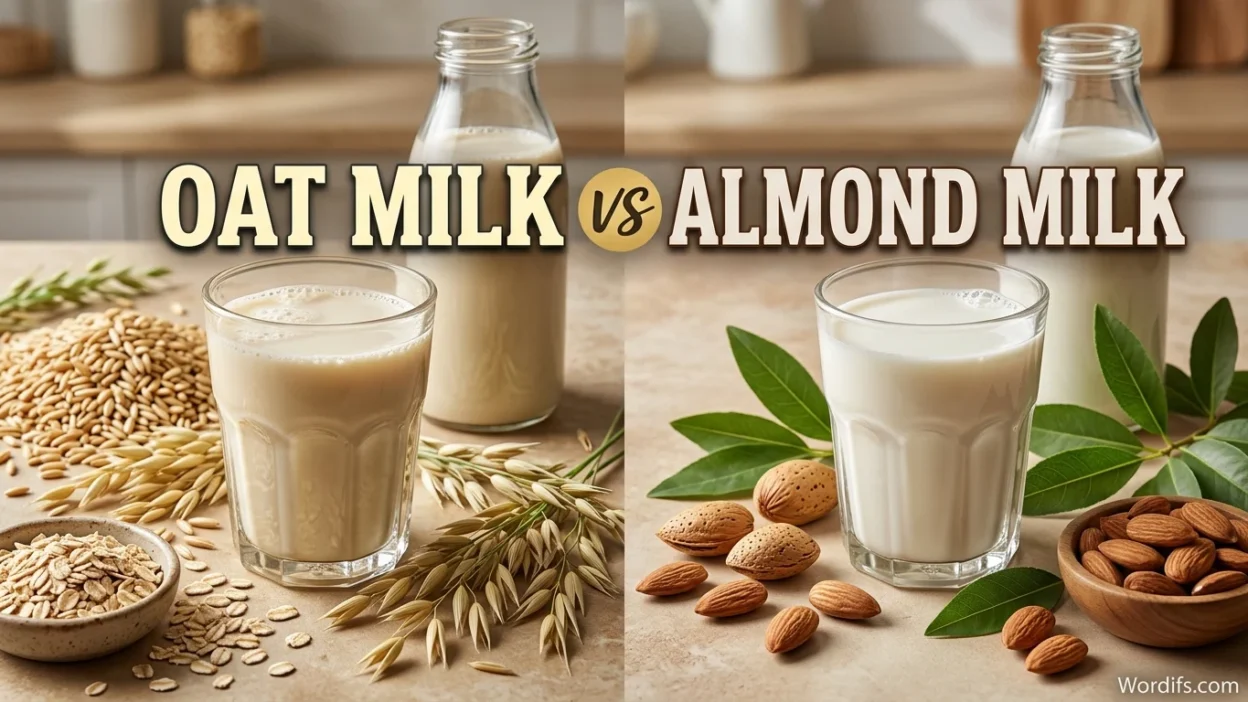
Choosing between oat milk and almond milk can be difficult because both are popular plant-based milk alternatives. These dairy-free milk alternatives are widely used by people following vegan diets, avoiding lactose, or looking for alternatives to traditional dairy products. However, their nutritional value, taste, calories, carbohydrates, protein content, and environmental impact differ.
The main difference between oat milk vs almond milk is their nutritional profile. Oat milk is generally creamier and higher in carbohydrates, while unsweetened almond milk is usually lower in calories and carbohydrates. Both are versatile plant-based beverages, but neither is automatically healthier for everyone.
This guide compares oat milk and almond milk, including their health benefits, nutritional differences, calorie content, weight-management potential, and environmental sustainability.
It also explains how water consumption, agricultural water use, almond cultivation, and oat cultivation affect the environmental footprint of these popular milk alternatives.
Quick Answer: Oat Milk vs Almond Milk
Oat milk is usually creamier, contains more carbohydrates, and works well in coffee, smoothies, cereal, and baking. Unsweetened almond milk generally contains fewer calories and carbohydrates, making it a practical option for people who prefer a lighter beverage.
Both are naturally lactose-free and can fit into a balanced diet. However, most standard varieties contain relatively little protein compared with cow’s milk or soy milk. Their nutritional value also depends on added sugar, oils, fortification, and other ingredients.
If your priority is a creamy texture and versatility, oat milk may be the better option. If you want to reduce calories or carbohydrates from beverages, unsweetened almond milk may suit your needs. For environmental considerations, oat milk often has a lower agricultural water footprint than almond milk, although production methods and growing regions matter.
Why Do People Compare Oat Milk and Almond Milk?
People compare oat milk and almond milk because both can replace dairy milk in coffee, breakfast cereal, smoothies, sauces, and many recipes. They are also popular among consumers seeking plant-based beverages for health, dietary, or environmental reasons.
Despite their similarities, the ingredients and nutritional profiles are different.
- Oat milk is made primarily from oats and water.
- Almond milk is made primarily from almonds and water.
- Oat milk generally has a creamier texture and more carbohydrates.
- Unsweetened almond milk is usually lower in calories.
- Both may contain added calcium, vitamin D, and vitamin B12.
- Neither is generally a high-protein beverage compared with cow’s milk or soy milk.
- Their environmental footprints differ because oat and almond cultivation have different agricultural requirements.
The biggest mistake is assuming that all plant-based milk alternatives provide the same nutrients. Some products are fortified, while others contain added sugars, oils, salt, or stabilizers. Comparing nutrition labels helps you understand the differences between individual products.
What Is Oat Milk?
Oat milk is a plant-based beverage made by combining oats with water and processing the mixture into a smooth, milk-like drink. Commercial products may contain vegetable oils, salt, stabilizers, and added vitamins or minerals.
Oats naturally contain carbohydrates and a soluble fiber called beta-glucan. However, processing and filtration can change how much of this fiber remains in the final beverage. Therefore, oat milk should not automatically be considered nutritionally equivalent to whole oats.
Oat milk is widely used as a dairy-free alternative because of its mild flavor, creamy texture, and versatility in everyday meals. Its nutritional value varies according to the oat content, processing method, added ingredients, and fortification.
What Does Oat Milk Taste Like?
Oat milk usually has a mild, slightly sweet, cereal-like flavor. Its creamy consistency makes it popular for lattes, cappuccinos, smoothies, breakfast cereal, and baked goods.
Barista-style oat milk is formulated to improve texture and foaming in coffee. Depending on the product, added fats and stabilizers can help it produce a smoother texture when steamed.
What Are the Benefits of Oat Milk?
The main oat milk benefits include its versatility, dairy-free ingredients, creamy consistency, and potential environmental advantages.
- Dairy-free and lactose-free: Oat milk can suit people who avoid dairy and lactose.
- Creamy texture: It works well in coffee, oatmeal, sauces, soups, and baking.
- Potential fiber content: Some products retain small amounts of fiber, although they generally contain much less than whole oats.
- Fortified nutrients: Certain varieties provide added calcium, vitamin D, and vitamin B12.
- Nut-free alternative: Oat milk may be suitable for people avoiding almonds, provided the product is free from relevant allergens and problematic cross-contact.
- Versatile plant-based beverage: It can replace dairy milk in many drinks and recipes.
- Environmental considerations: Oat milk generally has lower greenhouse gas emissions than dairy milk and often requires less agricultural water than almond milk.
Oats contain beta-glucan, which can help lower LDL cholesterol when consumed in sufficient amounts as part of an appropriate diet. However, the beta-glucan content of commercial oat milk varies considerably. Many products do not provide enough beta-glucan to deliver the same effect as a meaningful serving of whole oats.
What Are the Disadvantages of Oat Milk?
Although oat milk has several advantages, it also has limitations.
- Higher carbohydrate content: It generally contains more carbohydrates than unsweetened almond milk.
- Potentially more calories: Some varieties contain considerably more calories than unsweetened almond milk.
- Limited protein: Most standard products provide much less protein than cow’s milk or soy milk.
- Added sugar: Flavored varieties may contain added sugars, while unsweetened products can still contain carbohydrates from oats and processing.
- Gluten cross-contact: Oats may come into contact with wheat, barley, or rye during harvesting or processing. People who need to avoid gluten should choose appropriately labeled products.
- Variable ingredients: Oils, salt, stabilizers, and added vitamins differ between brands.
People monitoring blood glucose should pay attention to total carbohydrates and serving sizes rather than assuming that all oat milk products affect blood sugar in the same way.
What Is Almond Milk?
Almond milk is a plant-based beverage made by blending almonds with water and filtering the mixture. Commercial products may contain added vitamins, minerals, salt, stabilizers, or sweeteners.
Unlike whole almonds, almond milk usually contains relatively little protein and fiber because the beverage is diluted with water and some almond pulp is removed during processing. Its nutritional value therefore depends on the amount of almonds used, manufacturing methods, and added ingredients.
Unsweetened almond milk is popular among people seeking a low-calorie, dairy-free beverage. However, choosing almond milk does not automatically provide the same nutritional benefits as eating whole almonds.
What Does Almond Milk Taste Like?
Almond milk usually has a light, mildly nutty flavor. Unsweetened varieties are generally less sweet than oat milk, although taste varies by brand and formulation.
Its thinner texture makes it useful for smoothies, cereal, overnight oats, chia pudding, fruit shakes, and recipes where a lighter consistency is preferred.
What Are the Benefits of Almond Milk?
The main almond milk benefits depend on its ingredients and whether it is fortified.
- Low in calories: Unsweetened varieties are generally lower in calories than oat milk.
- Low in carbohydrates: Many unsweetened products contain very few carbohydrates.
- Dairy-free and lactose-free: Almond milk can be suitable for people avoiding dairy.
- Fortified nutrients: Some products provide calcium, vitamin D, and vitamin B12.
- Versatile flavor: Its mild, nutty taste works well in cereal, smoothies, and many recipes.
- Useful for calorie management: Unsweetened almond milk can help reduce calories from beverages when replacing a higher-calorie option.
- Environmental considerations: Almond milk generally has lower greenhouse gas emissions and land use than dairy milk, although almond cultivation can require substantial irrigation.
Almonds contain vitamin E and unsaturated fats, but the amount of these nutrients in almond milk depends on the almond content and manufacturing process. Do not assume almond milk provides the same nutrients as a serving of whole almonds.
What Are the Disadvantages of Almond Milk?
Almond milk also has limitations worth considering.
- Very little protein: Most standard varieties contain substantially less protein than cow’s milk or soy milk.
- Possible added sugar: Sweetened and flavored versions may contain significant amounts of added sugar.
- Allergy concerns: People with an almond allergy must avoid almond milk.
- Variable fortification: Not every product provides substantial amounts of calcium or vitamin D.
- Environmental water use: Almond cultivation can require considerable irrigation, depending on the region and farming practices.
- Added ingredients: Some varieties contain oils, stabilizers, flavorings, or other additives.
If you choose almond milk because of its low calorie content, make sure you obtain enough protein, fiber, and other essential nutrients from the rest of your diet.
Oat Milk vs Almond Milk: Nutrition Comparison
The nutritional differences between oat milk and almond milk are among the main reasons consumers compare them. Their calorie content, protein, carbohydrates, fat, fiber, calcium, and vitamin levels can differ considerably.
The following table uses illustrative values per 8-ounce (240 ml) serving. These figures are examples, not universal values for every brand or formulation.
| Nutrient | Oat Milk | Almond Milk |
| Calories | 79 | 29 |
| Carbohydrates | 14 g | 1 g |
| Protein | 4 g | 1 g |
| Fat | 1.5 g | 2.5 g |
| Fiber | 1.9 g | 1 g |
| Sodium | 120 mg | 189 mg |
| Calcium | 19 mg | 451 mg |
| Vitamin D | 0 IU | 101 IU |
| Iron | 0.72 mg | 1 mg |
| Potassium | 170 mg | 94 mg |
Important: These figures should not be treated as a direct description of every oat milk or almond milk product. Commercial brands vary, particularly in calcium, vitamin D, protein, calories, and sugar content. Fortified almond milk can contain much more calcium than an unfortified product, and oat milk can also be fortified. Always check the nutrition label for an accurate comparison.
Which Has More Calories?
Unsweetened almond milk generally has fewer calories than oat milk.
The example above provides 29 calories for almond milk compared with 79 calories for oat milk per 8-ounce serving. Actual values vary, especially when products contain added oils or sugar.
If you monitor calorie intake, compare both beverages using the same serving size. Small differences per serving can become more noticeable when you drink several cups daily.
Which Has More Carbohydrates?
Oat milk generally contains more carbohydrates than almond milk.
Oats naturally contain starch, which contributes to oat milk’s carbohydrate content. Unsweetened almond milk is often very low in carbohydrates because it contains relatively little almond material per serving.
People following a low-carbohydrate diet may prefer unsweetened almond milk, but they should still check total carbohydrates and added sugars on the package.
Which Has More Protein?
Oat milk generally contains more protein than standard almond milk, although both are usually low in protein compared with cow’s milk or soy milk.
If protein intake is important, compare the amount per serving rather than choosing based only on the beverage’s name. Unsweetened soy milk is another plant-based option that often provides considerably more protein.
Which Has More Fat?
Almond milk can contain slightly more fat than oat milk in some formulations, although the amounts vary by brand.
Almonds contain unsaturated fats, but commercial almond milk is diluted with water. Some oat milk products contain added oils, which can change their fat and calorie content.
Review total fat and saturated fat on the nutrition label if these nutrients are important to your dietary preferences.
Which Contains More Calcium and Vitamin D?
The answer depends largely on fortification.
Some commercial almond milk products are fortified with substantial amounts of calcium and vitamin D. Oat milk can also contain these nutrients when manufacturers add them.
Neither beverage is automatically a better source. Compare the calcium and vitamin D values on the package, particularly if you regularly use plant-based milk as a substitute for dairy milk.
Which Is Healthier: Oat Milk or Almond Milk?
Neither oat milk nor almond milk is universally healthier. Both can fit into a balanced diet, but the better choice depends on your nutritional priorities, dietary requirements, serving size, and the ingredients in the product.
Is Oat Milk Better for Heart Health?
Oats contain beta-glucan, a soluble fiber associated with lower LDL cholesterol when consumed in sufficient amounts. However, commercial oat milk may contain only small quantities of this fiber.
Almond milk is naturally cholesterol-free, and unsweetened varieties are often low in calories and saturated fat. These characteristics can also fit into a heart-conscious eating pattern.
For heart health, consider your overall diet, saturated fat intake, added sugar content, and whether the beverage supplies meaningful amounts of beta-glucan or other nutrients.
Is Almond Milk Better for Blood Sugar?
Unsweetened almond milk is often lower in carbohydrates, making it a practical option for people who need to monitor carbohydrate intake.
Oat milk generally contains more carbohydrates, and the amount can differ according to processing and added ingredients. Its effect on blood glucose depends on the product, portion size, and the rest of the meal.
If you manage diabetes or another blood glucose condition, compare total carbohydrates per serving and follow the dietary guidance provided by your healthcare professional.
Which Is Better for Bone Health?
Neither beverage automatically provides better bone-health support. Calcium and vitamin D fortification are important factors to compare.
Choose a product that provides useful amounts of these nutrients if you rely on it as part of your regular diet. Also consider your overall calcium and vitamin D intake from other foods and supplements, where appropriate.
Is Oat Milk Easier to Digest Than Almond Milk?
Digestive tolerance varies from person to person. Neither beverage is guaranteed to be easier to digest for everyone.
Some people may experience digestive discomfort from particular ingredients, added fibers, gums, or sweeteners. People with almond allergies must avoid almond milk, while people with gluten-related conditions should select appropriately labeled gluten-free oat milk.
If a beverage repeatedly causes discomfort, review its ingredients and consider discussing persistent symptoms with a qualified healthcare professional.
Oat Milk vs Almond Milk for Weight Loss
Both beverages can fit into a weight-management plan. The main difference is that unsweetened almond milk is generally lower in calories, while oat milk usually provides more carbohydrates and sometimes slightly more protein and fiber.
Is Almond Milk Better for Weight Loss?
Unsweetened almond milk can be useful when you want to reduce calories from drinks. Replacing a higher-calorie beverage with a lower-calorie alternative may help reduce overall energy intake.
However, almond milk is not a weight-loss treatment, and drinking it does not automatically lead to weight loss. Your overall diet, activity, sleep, portion sizes, and long-term habits matter more than a single ingredient.
Can Oat Milk Help You Feel Fuller?
Oat milk may provide slightly more protein and fiber than standard almond milk, depending on the product. These differences can contribute to nutrient intake, but most commercial oat milks contain relatively little fiber compared with whole oats.
You should not assume that oat milk will keep you full for longer simply because it contains more carbohydrates or a small amount of fiber. The protein, fiber, fat, and total calories in your entire meal also influence fullness.
Which Should You Choose for Weight Management?
- Choose unsweetened almond milk if your priority is a lower-calorie beverage.
- Choose unsweetened oat milk if you prefer its creamy texture and it fits your calorie needs.
- Compare added sugars, portion sizes, and total calories.
- Include adequate protein and fiber from other foods.
- Avoid overly restrictive diets that make it difficult to meet your nutritional needs.
The best option is one you enjoy and can include in a balanced, sustainable eating pattern.
Which Is More Environmentally Friendly?
The environmental impact of oat milk and almond milk depends on water use, land use, greenhouse gas emissions, farming practices, processing, packaging, and transportation.
Both oat milk and almond milk generally have lower greenhouse gas emissions and require less land than cow’s milk. However, their environmental footprints are not identical. The agricultural resources needed to grow oats differ from those required to cultivate almonds.
Is Oat Milk More Sustainable Than Almond Milk?
Oat milk often has a lower overall environmental footprint than almond milk, particularly in terms of agricultural water use. Oats are generally grown using less irrigation water than almonds, although local growing conditions, rainfall, and farming methods matter.
Almond cultivation can require substantial water, especially in regions where irrigation is necessary. Almond trees need adequate water during their growing cycle, and the water demand can be significant in dry environments. The actual water footprint depends on the location of the orchard, rainfall, irrigation practices, and agricultural efficiency.
By comparison, oat cultivation often requires less irrigation than almond production. This can make oat milk a reasonable option for consumers concerned about water scarcity and the use of natural resources. Nevertheless, water requirements vary between farms and regions, so the comparison should not be treated as an absolute rule.
Environmental sustainability also involves factors beyond water consumption. Greenhouse gas emissions, land use, fertilizer inputs, processing energy, transportation, and packaging all contribute to the total environmental impact of a beverage.
Almond milk generally still has lower greenhouse gas emissions than dairy milk, even though almond farming can have high irrigation demands. Oat milk also tends to perform well in comparisons with dairy milk across several environmental indicators.
If sustainability is your main concern, oat milk is often a reasonable starting point, particularly when agricultural water use is a priority. However, neither beverage has the same environmental profile in every location or production system.
How to Use Oat Milk and Almond Milk in Everyday Life
Both beverages can replace dairy milk in many recipes, but their taste, texture, and nutritional profiles may affect the final result.
When Should You Choose Oat Milk?
Choose oat milk when you want:
- Coffee and lattes: Barista-style oat milk often provides a creamy texture and good foam.
- Breakfast cereal: Its mild sweetness can complement grains and fruit.
- Smoothies: It can give drinks a thicker consistency.
- Baking: It works in many muffins, cakes, pancakes, and cookies.
- Creamy soups: Unsweetened oat milk can add body to some soups and sauces.
- Mashed potatoes: It can help create a smooth texture without dairy milk.
When Should You Choose Almond Milk?
Choose almond milk when you want:
- Low-calorie smoothies: Unsweetened varieties are generally low in calories.
- Cold cereal: Its light texture works well with breakfast foods.
- Overnight oats: It adds moisture without making the mixture as creamy as some oat milks.
- Chia pudding: It provides a light base with a mild nutty flavor.
- Fruit shakes: Its flavor pairs well with bananas, berries, and other fruit.
- Light baking recipes: It can replace dairy milk in many simple recipes.
Can You Use Oat Milk and Almond Milk Interchangeably?
Yes. In many recipes, you can replace oat milk with almond milk or the other way around using a similar volume.
However, the result may differ in thickness, flavor, browning, and foaming. Use unsweetened versions when you want better control over the taste of savory dishes and baked goods.
For coffee, sauces, and recipes that rely on a specific texture, a product designed for that use may perform better.
Common Mistakes When Choosing Plant-Based Milk
1. Assuming Unsweetened Means Sugar-Free
Unsweetened almond milk is often very low in sugar, but unsweetened oat milk can still contain carbohydrates and sugars produced during processing.
What to do: Check total sugars, added sugars, and total carbohydrates.
2. Assuming Plant-Based Milk Is High in Protein
Most standard oat and almond milk products contain less protein than cow’s milk or soy milk.
What to do: Compare protein per serving and choose a higher-protein alternative if necessary.
3. Ignoring Calcium and Vitamin D
Not every plant-based milk is fortified. Replacing dairy milk with an unfortified beverage may reduce your intake of certain nutrients if you do not obtain them elsewhere.
What to do: Compare calcium, vitamin D, and vitamin B12 on the nutrition label.
4. Believing Almond Milk Always Contains More Almond Nutrients
Almond milk is diluted with water, and processing removes some of the almond solids. It should not be treated as nutritionally equivalent to whole almonds.
What to do: Compare the actual nutrition information rather than assuming the beverage contains all the nutrients found in almonds.
5. Choosing Oat Milk Without Checking Gluten Information
Oats may be exposed to gluten-containing grains during harvesting or processing.
What to do: If you must avoid gluten, choose a product specifically labeled gluten-free and follow any dietary guidance relevant to your condition.
6. Ignoring Allergies
Almond milk is unsuitable for people with almond allergies. Other plant-based beverages can also contain allergens or be manufactured in facilities that handle them.
What to do: Read ingredient and allergen statements carefully.
7. Ignoring Environmental Water Use
Consumers sometimes compare plant-based beverages only by calories and nutrients, overlooking water consumption, irrigation demands, and agricultural practices.
What to do: If sustainability matters to you, consider the water footprint and broader environmental impact of the ingredients, while recognizing that production methods and growing regions affect the results.
Memory Trick: How to Remember the Difference
Use this simple phrase:
Oat = Creamy and Carby. Almond = Light and Low-Calorie.
- Oat milk: Think of oatmeal. It usually has a creamier texture and more carbohydrates.
- Almond milk: Think of a light, nutty drink. Unsweetened versions are generally lower in calories.
This memory trick is a general guide, not a rule for every product. Always check the nutrition label when calories, sugar, or protein matter to your decision.
American vs British English
The terms oat milk and almond milk are used in both American and British English. There is no significant spelling difference between them.
The main differences you may notice involve serving measurements and nutrition labels.
- American labels: Commonly use cups, fluid ounces, and serving sizes expressed in US customary units.
- British labels: Commonly show nutrition per 100 ml and may also include a serving size.
- Product terminology: Terms such as unsweetened, fortified, and barista-style are understood in both countries.
When comparing products, convert serving sizes to the same quantity. Nutrition values per 100 ml should not be compared directly with values per 240 ml without adjusting for the difference.
Similar Words and Related Terms
Understanding these related terms helps you compare different types of milk alternatives.
- Plant-based milk: A general term for beverages made from plants, including oats, almonds, soybeans, and rice.
- Dairy-free milk alternative: A beverage made without dairy ingredients.
- Lactose-free milk: Milk with little or no lactose; it may still contain dairy proteins and therefore is not necessarily dairy-free.
- Soy milk: A plant-based drink made from soybeans that generally contains more protein than standard oat or almond milk.
- Rice milk: A plant-based beverage that is often relatively high in carbohydrates and low in protein.
- Coconut milk: A coconut-based beverage available in different formulations, including thin carton drinks and richer canned cooking products.
- Barista milk: A beverage formulated to improve texture and foaming in coffee.
- Fortified milk alternative: A plant-based drink with added nutrients such as calcium, vitamin D, or vitamin B12.
- Unsweetened milk alternative: A product made without added sweeteners, although it may still contain naturally occurring or processing-related sugars.
These beverages are not nutritionally interchangeable. Their ingredients and nutrient levels differ by product and manufacturing method.
Final Verdict:
The best choice depends on what matters most to you.
Choose oat milk if you prefer a creamy texture, want a beverage for coffee and baking, or enjoy its mild, cereal-like flavor. It generally contains more carbohydrates and often more calories than unsweetened almond milk. Oat milk may also be worth considering if you prioritize reducing agricultural water use compared with many almond milk production systems.
Choose unsweetened almond milk if you prefer a lighter drink and want to reduce calories or carbohydrates. Remember that standard almond milk is usually low in protein, so you may need to obtain protein from other foods. Also consider the irrigation demands and environmental water use associated with almond cultivation.
For either option, look for suitable fortification, check added sugars, and review the ingredient list. If you have an allergy or need to avoid gluten, select products that meet your specific requirements.
Neither beverage is automatically healthier or better for weight loss. The right choice is the one that fits your dietary needs, tastes good, and contributes to a balanced diet.
Frequently Asked Questions
1. Is oat milk healthier than almond milk?
Neither is universally healthier. Oat milk usually contains more carbohydrates and may provide slightly more protein, while unsweetened almond milk generally contains fewer calories. Fortification, added sugar, and your nutritional needs determine which is the better choice.
2. Which is better for weight loss, oat milk or almond milk?
Unsweetened almond milk is usually lower in calories and may be useful when reducing calorie intake. However, weight loss depends on your overall eating pattern and energy balance, not on one beverage alone.
3. Does oat milk have more sugar than almond milk?
Oat milk generally contains more carbohydrates and may contain more sugars than unsweetened almond milk. However, the amount varies by brand and processing method. Check total sugars, added sugars, and total carbohydrates on the package.
4. Which has more protein, oat milk or almond milk?
Oat milk generally contains more protein than standard almond milk, but both are usually low in protein compared with cow’s milk or soy milk. Compare the labels if protein intake is important to you.
5. Can I drink oat milk or almond milk if I am lactose intolerant?
Yes. Both are naturally lactose-free because they are made from plants rather than dairy milk. If you need to avoid all dairy ingredients, check the product label to ensure that no dairy-derived ingredients have been added.
6. Which is better for coffee?
Oat milk is often preferred for its creamy texture and its performance in lattes, especially in barista-style formulations. Almond milk can also work well, but its foaming ability and stability depend on the product.
7. Is oat milk better for the environment than almond milk?
Oat milk often requires less agricultural water than almond milk and generally has a lower environmental footprint than dairy milk. Almond milk can also have lower greenhouse gas emissions than dairy milk, although almond cultivation can require substantial irrigation. The precise impact varies by production method and location.
8. Can I use almond milk instead of oat milk in baking?
Yes. Almond milk can replace oat milk in many pancakes, muffins, cakes, and cookies. However, it may produce a thinner texture and a slightly different flavor. Unsweetened varieties usually make it easier to control the final taste.
Remember This
- Oat milk is usually creamier and higher in carbohydrates.
- Unsweetened almond milk is generally lower in calories.
- Both are naturally lactose-free and can be suitable for vegan diets.
- Neither is usually a high-protein beverage.
- Fortification determines much of their calcium and vitamin content.
- Added sugars, oils, and other ingredients can change their nutritional profiles.
- Oat milk often has a lower agricultural water footprint than almond milk.
- Almond trees may require substantial irrigation, depending on the growing region.
- Environmental sustainability depends on water use, land use, farming practices, processing, and transportation.
- Always check the nutrition label and allergen information before buying.
Conclusion
Oat milk and almond milk are both useful dairy-free milk alternatives, but they offer different nutritional benefits. Oat milk is generally creamier and higher in carbohydrates, making it suitable for coffee, breakfast cereal, smoothies, and baking. Unsweetened almond milk is usually lower in calories and carbohydrates, making it a practical option for people who prefer a lighter drink.
Their environmental impacts also differ. Oat cultivation often requires less irrigation than almond cultivation, while almond trees can have substantial water requirements in dry growing regions. However, the overall environmental footprint depends on farming practices, production methods, and location.
Before deciding which is best for you, compare calories, protein, carbohydrates, added sugars, calcium, and vitamin D on the nutrition label. Consider allergies, dietary restrictions, water consumption, and environmental sustainability as well.
Rather than assuming one beverage is always healthier, choose an option that meets your nutritional goals, fits your everyday routine, and helps you maintain a varied and balanced diet.