
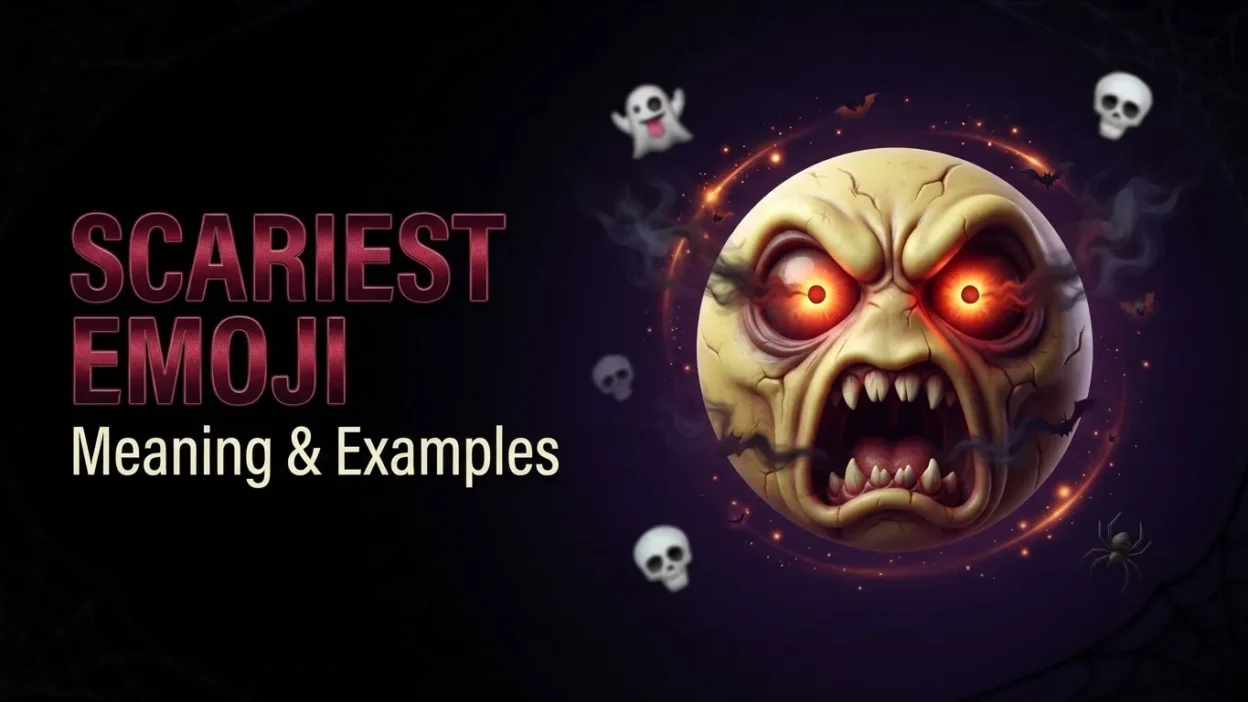
The scariest emoji depends on who you ask, but the clown face 🤡 and the skull 💀 are the most commonly named. The clown feels unsettling because it looks almost human but not quite. The skull is the most universal symbol of death and danger. Ghosts, ogres, zombies, and horned devils follow close behind.
Emojis are tiny, but they carry big emotions. A single creepy emoji can turn a friendly message into a joke, a threat, or a Halloween prank. This guide covers the most spooky emojis, why they feel frightening, how people use them in 2026, and when to avoid them.
Quick Answer:
Overall scariest: 🤡 Clown Face, because of its uncanny, unsettling look.
- Most universal symbol of fear: 💀 Skull, which stands for death and danger.
- Best for Halloween: 👻 Ghost and 🎃 Jack-O-Lantern.
- Most threatening: 👹 Ogre, 😈 Smiling Face with Horns, and 🔪 Kitchen Knife.
- Creepiest in everyday chat: 🙂 Slightly Smiling Face, when used to sound cold or passive-aggressive.
There is no official ranking. Unicode, the organization that standardizes emojis, only defines what each character is, not how frightening it feels.
What Makes an Emoji Scary?
Fear is personal, but a few patterns explain why certain scary emojis stand out.
1. They look almost human. Faces that look nearly real, but slightly off, create what psychologists call the “uncanny valley” effect. This is why the clown and the empty-eyed faces feel creepy.
2. They represent death or danger. Skulls, coffins, blood, and weapons connect directly to survival instincts.
3. They come from horror stories and folklore. Ghosts, zombies, vampires, and demons carry centuries of cultural fear.
4. Context changes everything. A 🔪 sent in a cooking chat is harmless. The same emoji sent after an argument can feel threatening.
5. Design varies by platform. Apple, Google, Samsung, and Microsoft each draw emojis differently, so the same character can look cute on one phone and chilling on another.
The 10 Scariest Emojis, Ranked
1. 🤡 Clown Face
The clown is a favorite pick for the creepiest emoji. Painted smiles, wild hair, and fixed expressions tap into a widespread fear of clowns, often called coulrophobia. Pop culture horror has only strengthened that reputation.
Online, it also works as an insult. Calling someone a clown 🤡 means they are acting foolishly. Fear and mockery share the same symbol.
2. 💀 Skull
The skull is the oldest warning sign in the emoji set. It has long stood for death, poison, and pirates.
In modern slang, though, 💀 often means “I’m dead” from laughing. A message like “that joke killed me 💀” is about humor, not horror. That double meaning makes it one of the most misunderstood horror emojis.
3. 👻 Ghost
The ghost sits between scary and playful. It appears in Halloween posts, spooky stories, and Snapchat’s famous logo. It can also mean someone has “ghosted” you by cutting off contact without warning.
4. 😈 Smiling Face with Horns and 👿 Angry Face with Horns
The purple devil faces look mischievous or menacing. The smiling version often signals playful, flirty, or naughty intent. The angry version is clearly darker and fits threats, rage, or villain energy.
5. 👹 Ogre
This red, fanged mask is based on the Japanese oni, a demon from folklore. It looks aggressive and fierce. In Japan, oni are part of traditional festivals, so the symbol is not always purely negative there.
6. 🧟 Zombie
The zombie covers the undead, apocalypse stories, and gaming. People also use it jokingly to say they feel exhausted, as in “I’m a zombie before coffee.
7. 🔪 Kitchen Knife
Without context, it is a cooking tool. In horror conversations, it becomes a slasher-movie symbol. Because it can also be read as a real threat, it is best used carefully.
8. 🩸 Drop of Blood
Blood signals injury, violence, or horror. It also appears in health contexts, such as blood donation or periods, so meaning depends on the conversation.
9. 🕷️ Spider
Spiders trigger real fear for many people. Paired with 🕸️, the spider adds a creepy, abandoned-house mood that suits Halloween posts and horror themes.
10. 🙂 Slightly Smiling Face
This may be the most surprising entry. A simple smile can feel unsettling when it follows an angry or tense message. Many people read it as cold, fake, or passive-aggressive. It is a good example of how tone, not artwork, can make an emoji scary.
Scary Emojis by Category
| Category | Examples | Typical Meaning |
| Death and horror | 💀 ☠️ ⚰️ 🪦 | Death, danger, dark humor |
| Monsters and creatures | 👹 👺 🧟 🧛 👽 | Fear, fantasy, horror stories |
| Spirits | 👻 🎃 🕯️ | Halloween, haunting, ghosting |
| Danger and violence | 🔪 🩸 🧨 | Threat, injury, intensity |
| Creepy faces | 🤡 😈 👿 🫥 🙂 | Unease, mischief, sarcasm |
| Creepy animals and bugs | 🕷️ 🦇 🐍 🐀 | Fear, spooky settings |
Why Do Scary Emojis Look Different on Different Phones?
Emojis are standardized by Unicode, but each company designs its own artwork. That means the 🤡 on an iPhone may look softer or sharper than the one on an Android or Windows device.
This matters in practice:
- A message that looks funny to you may look creepy to the receiver.
- Screenshots can make an emoji look different from what you intended.
- Older devices may show a blank box if they do not support a newer emoji.
Unicode releases new emojis regularly. Recent releases, including Emoji 17.0 in 2025, have added new faces and symbols, and some of them, like the distorted face, can read as strange or eerie. Always check how a new emoji appears on different platforms before relying on its tone.
Scary Emoji Meanings in Modern Slang
Many scary emojis no longer mean what they once did. Here is how people commonly use them today.
| Emoji | Old Meaning | Common Slang Meaning |
| 💀 | Death, danger | “That’s so funny, I’m dead” |
| 🤡 | Circus clown | “You’re acting foolish” |
| 😈 | Devil | Playful, flirty, or mischievous |
| 👻 | Ghost | Someone who vanished from a chat |
| 🙂 | Happy | Cold, awkward, or passive-aggressive |
| 🧟 | Zombie | Very tired |
| 🔪 | Weapon | Dramatic or “shade” in some contexts |
Slang changes fast, and meanings differ between age groups and online communities. When unsure, read the whole message rather than the emoji alone.
Cultural Differences Matter
Fear is not the same everywhere.
- Skulls look frightening in Western horror, but in Mexico’s Day of the Dead celebrations, skull imagery is colorful and honors loved ones.
- Oni and tengu (👹 and 👺) come from Japanese folklore. They can be fearsome, but they also appear in festivals and traditional stories.
- Ghosts are used playfully in many places, while in others they are taken more seriously.
- Owls and black cats are spooky in some cultures and lucky in others.
Keeping this in mind helps you avoid sending the wrong message to an international audience.
Scary Emoji Combinations for Halloween and Horror
Combining emojis builds a mood quickly. Some popular Halloween emoji combinations include:
- 🏚️🌫️👻 for a haunted house
- 🌕🦇🧛 for a vampire night
- 🕸️🕷️🎃 for a classic Halloween scene
- 🔪🩸🎬 for slasher-movie talk
- 🪦🕯️🌙 for a graveyard setting
These work well for social media captions, party invitations, and horror-themed group chats.
Common Mistakes When Using Scary Emojis
Using them without context. A lone 🔪 or 🩸 can alarm people. Add words that make your intent clear.
Assuming everyone understands the slang. Not everyone knows that 💀 means laughter. An older relative may read it as bad news.
Using them in professional messages. Skulls, clowns, and devils can look unprofessional or even hostile in work emails and client chats.
Ignoring the other person’s feelings. Something funny to you may be frightening to someone who fears spiders, blood, or clowns.
Overusing them. Too many spooky symbols can weaken the effect and make messages hard to read.
Forgetting about screen readers. Assistive technology reads out each emoji’s name, so a string of ten skulls becomes ten spoken words.
Practical Tips for Using Creepy Emojis Well
- Match the audience. Friends joking around can handle 💀 and 😈. Colleagues likely cannot.
- Pair emojis with clear text. Words remove confusion.
- Save the darkest emojis for the right moment. Halloween, horror movie chats, and gaming communities are ideal.
- Check different platforms. If your message matters, test how it looks on both iPhone and Android.
- Use fewer, not more. One well-placed 👻 beats five random symbols.
- Avoid threatening combinations. Knife, blood, and angry faces together can be read as a real threat, even as a joke.
- Respect sensitive moments. Never use death-related emojis around grief, illness, or tragedy.
Frequently Asked Questions
What is the scariest emoji?
The clown face 🤡 and the skull 💀 are the most commonly cited. The clown feels creepy because of its uncanny look, while the skull is a universal symbol of death.
What does the skull emoji mean in texting?
Most often it means something is extremely funny, as in “I’m dead.” It can still mean actual death or danger in a serious context.
Why is the clown emoji considered creepy?
Clowns blend a friendly look with an unsettling, mask-like face. Horror movies and fear of clowns add to that reputation. Online, it can also be used as an insult.
What is the creepiest smiley emoji?
The slightly smiling face 🙂 is often called creepy because many people read it as cold or sarcastic. The upside-down face 🙃 can also feel awkward or mocking.
Which emojis are best for Halloween?
Try 🎃, 👻, 🦇, 🕷️, 🕸️, 🧛, and 🧟. They quickly set a spooky mood in captions and invitations.
Are scary emojis the same on every device?
No. Unicode defines the character, but each company draws its own version. The same emoji can look different on Apple, Google, Samsung, and Microsoft devices.
Can scary emojis be taken as threats?
Yes. Weapons, blood, and angry devil faces can be misread, especially without context. Avoid them in tense conversations.
Are new scary emojis added every year?
New emojis are released regularly through Unicode updates. Some of them can feel eerie or strange, but whether a new emoji seems scary depends on its design and how people use it.
Conclusion
The scariest emoji is not one single symbol. The clown 🤡 wins for unsettling looks, the skull 💀 for its link to death, and the ghost 👻 and ogre 👹 for classic horror energy. What truly makes an emoji frightening is the mix of design, culture, and context.
Used well, creepy emojis add humor, drama, and atmosphere to your messages. Used carelessly, they can confuse or upset people. Think about your audience, add clear words, and remember that the same emoji can look and feel different from one phone to another.

Zevran Callix works on the Wordifs site creating clear informative articles while collaborating through wordifs@gmail.com to maintain consistency quality research readability and reader focused blogging standards worldwide digital content platform.


