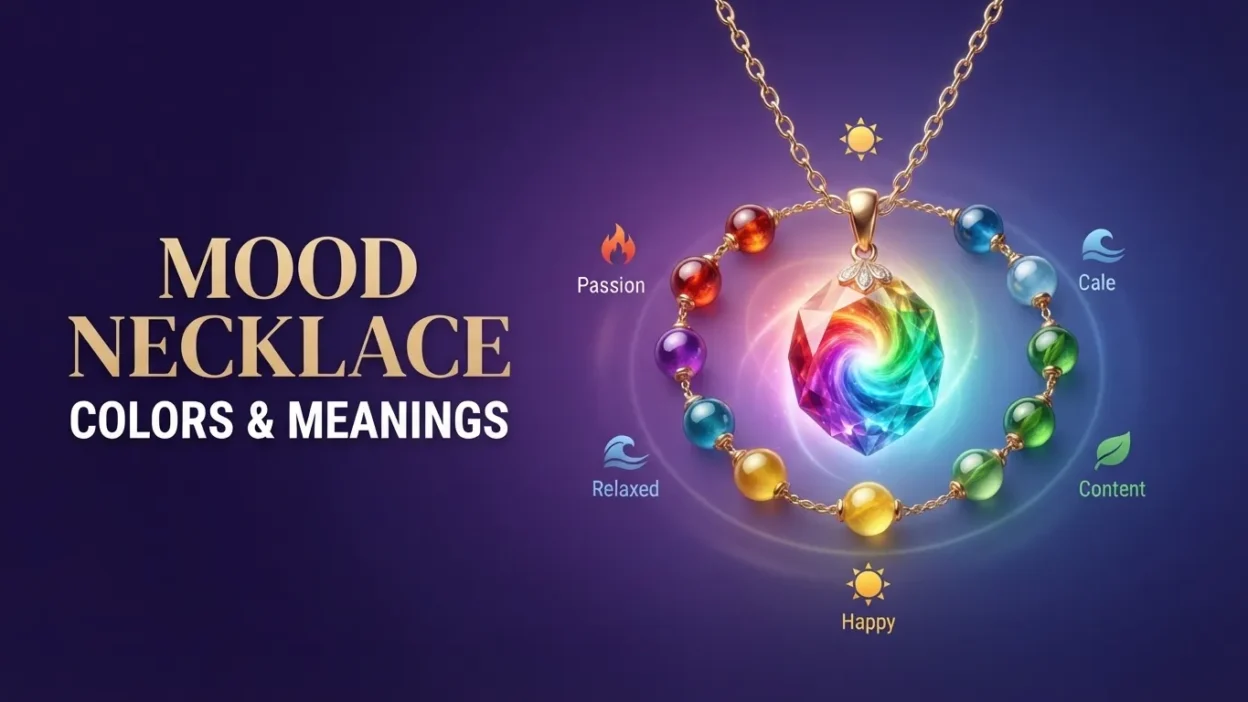
Mood Necklace Colors and Meanings still carry a fascination from the ‘70s, and this unique mood jewelry keeps me curious and guessing every day. I started with mood necklaces and mood rings thinking they were just toys, but these jewelry pieces proved me wrong.
The stones react to heat, so each necklace and each pair of rings shows a new shade on your skin all day, which is why people search for mood necklace colours, color meanings, and colors and meanings, hoping for answers and insight.
How they work is easy: your body temperature moves, and each temperature rise and fall brings a color change. When your hand warms up and the heat rises, you may see blue or purple, and when it falls, you get gray or black.
Sellers claim mood stones can sense your mood and show your underlying mood through the colors, but in my experience, accuracy is shaky, since a warm room, a hot drink, or a cold breeze can shift the shade as fast as a feeling can.
I see it as a playful hint, not a real test. A bit of necklace care helps, so keep the pendant away from water and perfume, wipe it with a soft dry cloth, and stay on top of maintenance, because good mood necklace maintenance keeps the stones sensitive for years to come.
Quick Answer
Mood necklace colors reflect skin temperature, not emotions. In most charts, blue means calm or relaxed, green means average or balanced, purple means happy or romantic, amber means unsettled, gray means nervous, and black means cold or stressed. Exact meanings vary by brand, so check your necklace’s included color chart.
How Does a Mood Necklace Work?
A mood necklace contains thermochromic material, usually liquid crystals sealed behind a glass, resin, or acrylic stone. These crystals twist their molecular structure as temperature changes, which alters the wavelengths of light they reflect. The result is a visible color shift.
Mood jewelry became a pop-culture phenomenon in the 1970s, when the first mood rings were introduced. Today’s mood pendants, mood bracelets, and color-changing jewelry rely on the same basic idea, sometimes using cheaper thermochromic pigments instead of liquid crystals.
The key point is that the stone reacts to heat. Your emotions can influence skin temperature slightly, since stress can reduce blood flow to the skin and relaxation can increase it. But the connection is loose, and a warm room or a cold drink can overpower it.
Mood Necklace Color Chart (Quick Reference)
This table shows the most common meanings. Brands differ, so treat it as a general guide rather than a rule.
| Color | Common Meaning | Typical Temperature Range | What It Often Reflects |
| Black | Stressed, tense, or cold | Coldest | Cool skin, poor fit, or a damaged stone |
| Gray | Nervous or anxious | Cool | Slightly cool skin |
| Amber/Yellow | Unsettled or mixed feelings | Cool to moderate | Transitional temperature |
| Green | Average, balanced, or neutral | Moderate | Your typical resting state |
| Teal/Light Blue | Calm or relaxed | Warm | Comfortable, warm skin |
| Dark Blue | Happy or very relaxed | Warmer | Warm skin, often in warm settings |
| Purple/Violet | Passionate, romantic, or joyful | Warmest | Very warm skin |
Mood Necklace Colors and Meanings, One by One
Black Mood Necklace Meaning
Black is the most misunderstood shade. On most charts it means stressed, tense, or “closed off.” In reality, black usually means the stone is cold, or that it is no longer functioning.
If your necklace turns black and stays black on warm skin, the liquid crystal layer may be damaged by moisture, heat, or age. A black stone that brightens when you warm it in your hands is simply cold.
Gray Mood Necklace Meaning
Gray typically signals nervousness, anxiety, or low energy. Physically, it means your skin is cooler than average. Many people see gray in air-conditioned rooms or on winter days.
Amber and Yellow Mood Necklace Meaning
Amber, yellow, and orange tones usually mean unsettled, restless, or mixed emotions. This shade sits between cool and neutral, so you may see it as the stone shifts from one color to another.
Green Mood Necklace Meaning
Green is the “baseline” color for many necklaces. Charts often label it as average, calm, or balanced. If you wear your necklace often, green may be what you see most when you’re comfortable and not especially warm or cold.
Blue Mood Necklace Meaning
Blue is the color most people hope to see. Light blue and teal commonly suggest calm and relaxed, while dark blue is often listed as happy or deeply relaxed. A blue pendant can appear after you’ve been warm for a while, such as after being outdoors on a mild day.
Purple and Violet Mood Necklace Meaning
Purple is usually the top of the scale. Many charts connect it with passion, romance, joy, or high energy. In practice, purple means your necklace is warm, which can happen after exercise, in hot weather, or when you’re holding the pendant.
Pink and Red Shades
Some mood jewelry, especially thermochromic pigment pieces, includes pink or red. Brands often attach meanings like love, excitement, or playfulness, but these shades are less standardized than blue, green, or black. Always rely on the chart that came with your piece.
Do Mood Necklaces Really Work?
They work as temperature indicators, but not as mood detectors. Here is what is accurate:
- Temperature drives the color. The stone responds to heat, whether it comes from your body, the weather, or your hands.
- Emotions have an indirect effect. Stress can lower skin temperature at the extremities, and relaxation can raise it, but the effect is small and inconsistent.
- No scientific tool reads emotion from color. A mood necklace is a novelty piece, not a psychological or medical device.
Enjoy it as a fun accessory that gives you a visual cue. Don’t use it to judge your mental health or diagnose anxiety.
Why Does My Mood Necklace Stay One Color?
If your necklace is stuck on one shade, a few common causes apply:
- Water damage. Moisture can seep into the setting and ruin the crystal layer.
- Heat exposure. Hot showers, saunas, and hot cars can permanently harm liquid crystals.
- Age. Even well-kept stones fade or lose responsiveness after a few years.
- Cheap materials. Low-cost pigments may only show two or three colors.
- Chemical contact. Perfume, lotion, and cleaning products can damage the stone.
A stone that stays black is the usual sign of damage, though a cold environment can cause the same look temporarily.
How to Read Your Mood Necklace More Accurately
Because outside temperature affects the stone, a few habits will give you more reliable readings.
- Learn your baseline. Wear the necklace for a day in normal conditions and note your typical color, often green or light blue.
- Compare to your environment. A cold room can turn the stone gray or black regardless of how you feel.
- Let it settle. Give the stone several minutes against your skin before judging the color.
- Check the brand chart. Meanings differ between manufacturers, and some use unique color scales.
- Treat it as a clue, not a verdict. Pair the color with how you actually feel.
What Affects Mood Necklace Color Besides Mood?
Many everyday factors shift the color without any emotional cause:
- Room temperature and weather
- Exercise or physical activity
- Hot or cold drinks
- Sun exposure
- Clothing layers covering the pendant
- Fever or illness
- Circulation differences between people
- Where the pendant sits against your body
This is why two people wearing the same necklace can see different colors under the same emotional state.
Mood Necklace vs. Mood Ring: What’s Different?
Both use the same thermochromic technology, and the color meanings are essentially the same. The main difference is placement. A ring sits on your finger, where skin temperature fluctuates more, so rings tend to change color quickly. A necklace rests near your chest or collarbone, where temperature is steadier, so colors often shift more slowly and settle into a consistent baseline. Many wearers find necklaces easier to read for that reason.
How to Care for a Mood Necklace
Good care extends the life of the color-changing stone.
- Remove it before showering, swimming, or washing dishes.
- Avoid saunas, hot tubs, and direct heat. Never leave it on a car dashboard.
- Keep it away from perfume, hairspray, and lotion.
- Wipe it gently with a soft, dry cloth.
- Store it in a cool, dry place when not worn.
- Don’t force or squeeze the stone.
If your pendant looks cloudy or fogged inside, moisture has likely entered, and repair is rarely possible.
How to Test a Mood Necklace
You can check whether your necklace works with a simple test:
- Hold the pendant between your warm palms for a minute and watch for a shift toward blue or purple.
- Set it somewhere cool, such as on a table near a window, and watch for a move toward green, gray, or black.
- If it changes in both directions, it’s working as intended.
Avoid dunking it in ice water or hot water, since sudden temperature extremes can harm the stone.
Choosing a Mood Necklace: What to Look For
When shopping, a few details separate a quality piece from a disappointing one:
- Stone type. Liquid crystal stones usually show a wider color range than basic pigment stones.
- Setting quality. A tight, well-sealed setting protects against moisture.
- Metal. Hypoallergenic metals like stainless steel or sterling silver suit sensitive skin.
- Color chart included. Reputable sellers provide one.
- Return policy. Since color response varies, a fair policy helps.
Mood necklaces also make popular gifts for teens, friends, and anyone who enjoys retro or nostalgic jewelry.
Frequently Asked Questions
What does a black mood necklace mean?
On many charts, black means stressed or tense. In practice, it usually means the stone is cold or damaged. Warm it in your hands to see whether it changes.
What does a blue mood necklace mean?
Blue generally means calm, relaxed, or happy, depending on the shade. Light blue leans calm, while dark blue often signals a happier or more relaxed state.
What does green mean on a mood necklace?
Green usually represents an average, balanced, or neutral state. For many people, it’s the everyday baseline color.
Is a purple mood necklace good?
Yes. Purple is often seen as the warmest and most positive color, linked with passion, romance, or joy. Physically, it means the stone is quite warm.
Can a mood necklace detect anxiety?
No. It responds to temperature, not emotion. Gray or black may appear when you feel anxious because stress can cool your skin, but cold weather can cause the same result.
Why did my mood necklace stop changing color?
Most often, water, heat, or chemical exposure has damaged the liquid crystals. Age and low-quality materials can also cause the stone to stay one shade.
How long do mood necklaces last?
With careful handling, many last a few years, though lifespan varies by quality. Frequent water or heat exposure shortens it considerably.
Do mood necklace colors mean the same thing across brands?
Not always. The general scale from black to purple is common, but specific meanings and color ranges differ, so follow your brand’s chart.
Final Thoughts
A mood necklace is a fun, nostalgic piece of jewelry that turns your body heat into color. Blue, green, and purple usually reflect warmth and comfort, while gray and black point to cooler skin.
The meanings are playful, not scientific, so enjoy the shifts without reading too much into them. Learn your baseline, protect the stone from water and heat, and use the color chart from your seller as your guide.