
“Looking forward to seeing you” is one of the most common phrases used when you want to express excitement or pleasant anticipation about meeting someone. You’ll often see it in emails, text messages, invitations, professional conversations, and everyday communication.
But is “looking forward to seeing you” grammatically correct? Yes. In fact, it is the standard and natural form. Understanding why “seeing” follows “looking forward to” can help you use the expression confidently in both formal and casual situations.
Quick Answer
“Looking forward to seeing you” is correct and means that you are happy or excited about meeting someone in the future.
The phrase is a shortened version of “I am looking forward to seeing you.” It is especially common when ending an email, confirming plans, or expressing enthusiasm about an upcoming meeting.
Examples:
- I’m looking forward to seeing you tomorrow.
- We’re looking forward to seeing you at the event.
- Looking forward to seeing you soon!
- I am really looking forward to seeing you again.
The important grammar point is that “to” is a preposition here, so it is followed by a noun or gerund such as “seeing,” not the infinitive “see.”
What Does “Looking Forward to Seeing You” Mean?
“Looking forward to seeing you” means feeling happy, excited, or eager about meeting someone in the future.
For example, if you say:
“I’m looking forward to seeing you next week.”
you are telling the other person that you are pleased about your upcoming meeting.
The phrase usually has a positive and friendly tone. Depending on the context, it can sound warm, professional, enthusiastic, or affectionate.
It does not necessarily mean that you are extremely excited. It can simply communicate polite anticipation.
Is “Looking Forward to Seeing You” Grammatically Correct?
Yes, “looking forward to seeing you” is grammatically correct.
A common mistake is to assume that “to” must always be followed by the base form of a verb. That is true when “to” introduces an infinitive, as in:
- I want to see you.
- I hope to see you.
- I plan to see you.
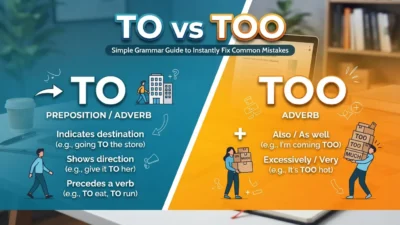
However, in “look forward to,” the word “to” functions as a preposition. A preposition can be followed by a noun or a gerund.
Therefore:
- Correct: I’m looking forward to seeing you.
- Incorrect: I’m looking forward to see you.
The same grammar applies to other expressions:
- I’m looking forward to meeting you.
- She looks forward to hearing from you.
- We look forward to working with you.
Why Do We Say “Seeing” Instead of “See”?
The key is the grammatical structure “look forward to + noun/gerund.”
Here, “seeing” is a gerund. Although it looks like a verb ending in -ing, it functions as a noun in the sentence.
Compare these examples:
| Expression | Correct? | Reason |
| I look forward to seeing you. | ✅ | “Seeing” is a gerund after the preposition “to.” |
| I look forward to see you. | ❌ | The infinitive form is incorrect after this “to.” |
| I look forward to meeting you. | ✅ | “Meeting” is a gerund. |
| I look forward to meet you. | ❌ | The verb form should be “meeting.” |
| I’m looking forward to our meeting. | ✅ | “Meeting” is being used as a noun. |
Remember the simple rule:
look forward to + noun or -ing verb
“Looking Forward to Seeing You” vs. “Looking Forward to See You”
The correct expression is:
“Looking forward to seeing you.”
Not:
“Looking forward to see you.”
This mistake happens because English learners often associate “to” with the infinitive form of a verb. But “look forward to” is a fixed expression in which to is a preposition.
Correct Examples
- I’m looking forward to seeing you.
- We’re looking forward to seeing everyone.
- She is looking forward to seeing her family.
- They look forward to seeing you at the conference.
Incorrect Examples
- I’m looking forward to see you.
- We’re looking forward to see everyone.
- She is looking forward to see her family.
How to Use “Looking Forward to Seeing You” in a Sentence
The phrase works naturally in professional and personal communication.
In a Professional Email
“I’m looking forward to seeing you at the conference next month.”
This sounds polite and professional while showing enthusiasm about meeting someone.
In a Casual Message
“Looking forward to seeing you this weekend!”
This shorter version is perfectly natural in texts and informal messages.
When Confirming Plans
“Everything is set for Friday. I’m looking forward to seeing you then.”
This reassures the other person that the plans are confirmed.
When Meeting Again
“It was great catching up last time. I’m looking forward to seeing you again.”
Adding “again” emphasizes that you have met before.
Formal vs. Casual Alternatives
You can adjust the phrase depending on the situation.
| Phrase | Tone | Best Use |
| I look forward to seeing you. | Formal/professional | Business emails |
| I’m looking forward to seeing you. | Friendly/professional | General communication |
| Looking forward to seeing you! | Casual/friendly | Texts and informal emails |
| I can’t wait to see you. | Very enthusiastic | Friends and personal messages |
| I’m excited to see you. | Warm and enthusiastic | Casual or personal situations |
| It will be great to see you. | Warm and polite | Professional or personal contexts |
| I look forward to meeting you. | Professional | First-time meetings |
American vs. British English
The expression “looking forward to seeing you” is standard in both American and British English.
There is no significant grammar difference between the two varieties when using this phrase.
You may notice differences in spelling, vocabulary, punctuation, or broader communication style, but this particular expression works naturally in both forms of English.
For example:
American English:
“I’m looking forward to seeing you next week.”
British English:
“I’m looking forward to seeing you next week.”
Both are completely correct.
In professional writing, “I look forward to seeing you” can sound slightly more formal than “I’m looking forward to seeing you,” but both are widely used.
Common Mistakes to Avoid
1. Using “see” Instead of “seeing”
The most common mistake is:
I’m looking forward to see you.
The correct version is:
I’m looking forward to seeing you.
2. Writing “Looking Forward for Seeing You”
Another incorrect variation is:
I’m looking forward for seeing you.
The fixed expression is “look forward to,” not “look forward for.”
3. Forgetting the “to”
Incorrect:
I’m looking forward seeing you.
Correct:
I’m looking forward to seeing you.
4. Overusing the Phrase
Although the expression is useful, repeating it in every email can make your writing feel predictable.
Try alternatives such as:
- I’m excited about our meeting.
- It will be great to see you.
- I’m eager to meet with you.
- I hope to see you soon.
- I’m pleased that we’ll be meeting soon.
5. Confusing “Seeing You” With “Meeting You”
“Seeing you” often suggests that you already know the person or expect to see them again.
For a first meeting, “looking forward to meeting you” is usually more precise.
For example:
First meeting:
“I’m looking forward to meeting you.”
Someone you already know:
“I’m looking forward to seeing you again.”
“Looking Forward to Seeing You” vs. “Looking Forward to Meeting You”
Both expressions are correct, but there is a subtle difference.
“Looking forward to seeing you” is often used when you already know the person or expect to see them again.
“Looking forward to meeting you” is more appropriate when you are going to meet someone for the first time.
For example:
- “I’m looking forward to meeting you at the interview.”
- “I’m looking forward to seeing you at the reunion.”
This distinction can make professional emails sound more natural and accurate.
Is “Looking Forward to Seeing You” Formal?
Yes, it can be formal, but it is not limited to formal situations.
In a business email, you might write:
“Thank you for your time. I look forward to seeing you at the meeting.”
In a message to a friend, you might simply write:
“Looking forward to seeing you Saturday!”
The surrounding words determine much of the tone.
For formal communication, the complete sentence “I look forward to seeing you” generally sounds more polished than the shortened “Looking forward to seeing you.”
Can You Say “I Am Looking Forward to Seeing You”?
Absolutely. “I am looking forward to seeing you” is completely correct.
The contracted version, “I’m looking forward to seeing you,” is more conversational and natural in many situations.
Examples:
- Formal: “I am looking forward to seeing you at the meeting.”
- Neutral: “I’m looking forward to seeing you next week.”
- Casual: “Looking forward to seeing you soon!”
Frequently Asked Questions
Is “looking forward to seeing you” correct?
Yes. It is grammatically correct and widely used in both American and British English. It expresses positive anticipation about meeting someone.
Why is “seeing” correct after “to”?
Because the “to” in “look forward to” is a preposition. Prepositions can be followed by gerunds, so “seeing” is correct.
Is “looking forward to see you” wrong?
Yes. In standard English, “looking forward to see you” is incorrect. Use “looking forward to seeing you.”
Is “looking forward to seeing you” formal?
It can be formal, neutral, or casual depending on the context. The complete form “I look forward to seeing you” is particularly suitable for professional emails.
Can I use “looking forward to seeing you” in an email?
Yes. It is a natural way to close an email when you expect to meet the recipient. For a formal business email, “I look forward to seeing you” is a polished choice.
What is the difference between “seeing you” and “meeting you”?
“Seeing you” usually works well when you already know the person or expect to see them again. “Meeting you” is generally better when you are meeting someone for the first time.
Can I say “looking forward to seeing you again”?
Yes. This is very natural when you have already met the person. The word “again” clearly communicates that you are anticipating another meeting.
What are some alternatives to “looking forward to seeing you”?
Depending on the tone, you can say “I’m excited to see you,” “I can’t wait to see you,” “It will be great to see you,” or “I look forward to meeting you.”
Summary
“Looking forward to seeing you” is a correct, natural, and versatile English expression used to show that you are pleased or excited about seeing someone in the future. It works in emails, conversations, invitations, professional communication, and casual messages.
The most important grammar rule is simple: use “look forward to + noun or -ing form.” Therefore, say “I look forward to seeing you,” not “I look forward to see you.” If you are meeting someone for the first time, “I look forward to meeting you” is usually the better choice.
Actionable Takeaway
When you want to express anticipation about a future meeting, confidently use “I’m looking forward to seeing you.” For professional writing, choose the slightly more formal “I look forward to seeing you.” For casual messages, “Looking forward to seeing you!” sounds friendly and natural.
Before sending your next email or message, check one thing: if you use “look forward to,” follow “to” with a noun or an -ing form. That small grammar rule will help you avoid one of the most common mistakes with this phrase.

Kalven Driost works on the Wordifs site producing reliable content while communicating through wordifs@gmail.com to support research editing publishing consistency transparency and audience focused knowledge sharing practices for modern readers.