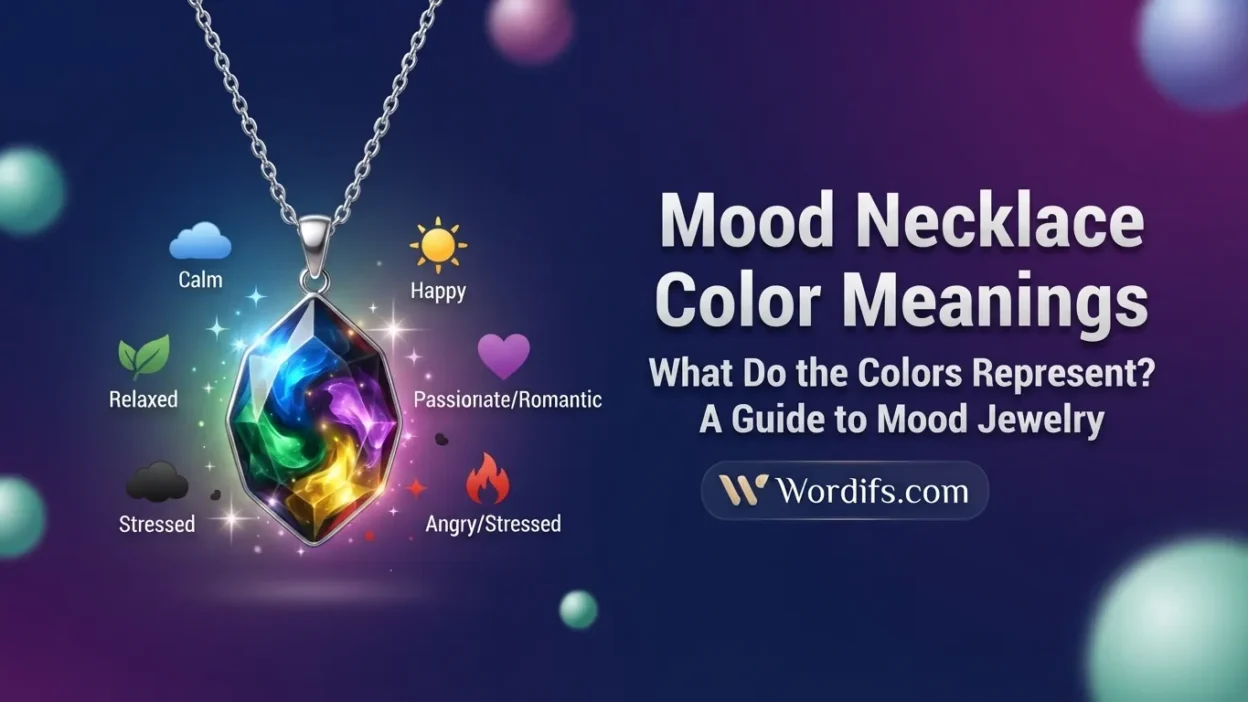
Mood necklace color meanings follow a simple pattern: blue and violet usually suggest a warm, relaxed state, green points to a calm middle ground, amber and yellow show mixed or slightly tense conditions, and gray or black mean cooler skin.
The twist is that the stone responds to temperature, not emotion. Below, you’ll learn what each color means, how the stone works, why your necklace may differ from a chart, and how to read it with realistic expectations.
Quick Answer
Mood necklace colors reflect skin temperature, not feelings. Blue and violet usually suggest a warm, relaxed state; green points to a calm, average temperature; amber and yellow suggest a mix or slight tension; gray and black signal cooler skin. Exact meanings vary by brand, so always check your necklace’s color chart.
What Is a Mood Necklace?
A mood necklace is a pendant, usually a stone or glass cabochon, that changes color throughout the day. It is the necklace version of the classic mood ring, which became a pop culture craze in the 1970s. Today you’ll find mood pendants in silver-tone settings, heart shapes, teardrops, and even mood bracelets and mood stone charms.
Many people buy one as a fun accessory, a gift for teens, or a conversation starter. Understanding the colors helps you enjoy it without expecting it to work like a medical device or a lie detector.
How Does a Mood Necklace Work?
Most mood jewelry contains thermochromic liquid crystals sealed beneath a clear stone or glass cover. These crystals twist as their temperature changes, and the twist changes which wavelengths of light they reflect. The result is a visible color shift.
Here is the short version:
- Warmer crystals tend to reflect blue and violet light.
- Cooler crystals tend to reflect amber, gray, or black.
- Moderate temperatures usually show green.
Your emotions can influence your body temperature indirectly. Stress may reduce blood flow to the skin, while relaxation can increase it. But exercise, weather, a hot shower, a cold drink, or a heated room can shift the color just as easily. That’s why a mood necklace is better described as a temperature indicator than an emotion detector.
Mood Necklace Color Meanings Chart
Every manufacturer prints a slightly different chart, but most follow this general pattern from coolest to warmest:
| Color | Common Meaning | Likely Temperature State |
| Black or dark gray | Tense, stressed, or very cold | Coolest |
| Amber or yellow | Unsettled, mixed feelings, or nervous | Cool to mild |
| Green | Calm, average, or neutral | Moderate |
| Blue | Relaxed, content, or happy | Warm |
| Violet or deep blue | Very relaxed, passionate, or romantic | Warmest |
Treat this table as a general guide. Some brands swap the order of certain colors, so the chart that came with your piece is the most reliable reference.
Black Mood Necklace Color Meaning
Black or very dark gray is the color most people worry about, but it is usually harmless. Traditionally it is described as stress, tension, or being emotionally shut down. In practice, it most often means one of three things:
- Your skin is cold, such as on a winter day.
- The pendant isn’t touching your skin well.
- The liquid crystals are worn out or damaged.
If your stone stays black all day and in every setting, the stone has probably stopped responding. Moisture damage is a common cause.
Amber and Yellow Mood Necklace Meaning
Amber, orange, and yellow tones generally represent mixed emotions, restlessness, or mild anxiety. Physically, they point to skin that is cooler than average but not cold.
These colors often show up when you first put the necklace on, before it warms to your body. They can also appear during a stressful commute, a nervous moment, or in an air-conditioned room. Think of amber as a “somewhere in the middle, a bit unsettled” signal.
Green Mood Necklace Meaning
Green is the most common color for many wearers because it sits near typical skin temperature. Most charts describe it as calm, balanced, or average. If your necklace is green during an ordinary afternoon, that’s exactly what to expect.
A green stone doesn’t mean you’re bored or numb. It means your surface temperature is in the moderate range for that particular stone.
Blue Mood Necklace Meaning
Blue is widely associated with relaxation, contentment, and happiness. It usually appears when your skin is comfortably warm. You may see it after a walk, during a cozy evening, or while spending time with people you enjoy.
Blue is often the “happy” color on printed charts, though the physical cause is warmth. A gentle blue pendant is a nice sign that your body is warm and relaxed, which often goes along with feeling good.
Violet and Purple Mood Necklace Meaning
Violet, deep blue, and purple sit at the warm end of the scale. Charts commonly label them as passionate, romantic, very relaxed, or deeply happy.
Because the crystals only reach these colors at higher temperatures, you’ll see them less often. Common triggers include hot weather, a warm room, a fever, or a warm drink held near the stone. If your pendant turns violet in the summer, don’t read too much into it emotionally.
Why Mood Necklace Colors Differ Between Brands
If your necklace doesn’t match an online chart, that’s normal. Here’s why:
- Different crystal blends: Manufacturers use different formulas that react at different temperatures.
- Different temperature ranges: Some stones start shifting around the high 70s°F, while others respond at slightly warmer ranges.
- Different color orders: A few brands list a unique sequence or add extra shades like pink or teal.
- Different materials: Glass, resin, and epoxy covers conduct heat differently.
When a chart from the seller is available, trust it over a generic one.
Why Does My Mood Necklace Stay One Color?
A pendant stuck on one color is a frequent search, and the cause is usually simple. Check these first:
- Stone damage: Water, humidity, or heat can break the liquid crystal layer.
- Poor skin contact: A necklace hanging outside your shirt picks up room temperature rather than body heat.
- Age: Mood stones typically wear out over months or a few years, depending on quality.
- Cheap materials: Low-cost pieces may use weaker thermochromic material.
- Extreme conditions: A very cold or very hot environment can lock the stone near one end of its range.
If the stone is black and unresponsive, it is most likely finished. If it is stuck on blue, it may be overheated by the environment.
How to Read Your Mood Necklace More Accurately
You’ll get better information if you give the stone a fair chance. Follow these steps:
- Wear the pendant against your skin for at least five to ten minutes before checking.
- Compare readings across the day, not a single moment.
- Note the environment, such as a cold office or a hot car.
- Track patterns, like which colors show up when you’re resting versus busy.
- Avoid judging it right after washing your hands, exercising, or going outside in extreme weather.
Over a week or two, you’ll learn your own personal baseline. That baseline matters more than any printed chart.
Do Mood Necklaces Really Reflect Your Emotions?
Not directly. There is no scientific evidence that a mood necklace detects emotions. What it detects is surface temperature, and temperature can loosely connect to emotional states through blood flow and the body’s stress response. But the connection is weak and affected by dozens of outside factors.
A fair way to use it is as a playful self-check. If your pendant turns dark during a tense meeting, it may be a reminder to breathe and relax. It can’t tell you whether you are in love, lying, or depressed, and it should never replace professional advice about mental health.
Mood Necklace vs. Mood Ring vs. Mood Bracelet
| Feature | Mood Necklace | Mood Ring | Mood Bracelet |
| Placement | Neck or chest | Finger | Wrist |
| Skin contact | Moderate, depends on length | Strong | Moderate to strong |
| Response speed | Slower | Faster | Medium |
| Best for | Style, gifting, daily wear | Quick readings | Casual wear |
Rings usually respond fastest because fingers have strong blood flow and constant skin contact. Necklaces often read cooler because the pendant can shift away from the skin or sit under clothing.
How to Care for a Mood Necklace
Good care helps the color-changing effect last longer. Keep these habits in mind:
- Remove it before showering, swimming, or washing dishes.
- Avoid hot tubs, saunas, and steam rooms.
- Wipe it gently with a dry or barely damp soft cloth.
- Store it in a cool, dry place when not wearing it.
- Keep it away from perfume, cleaning products, and sunscreen.
Moisture is the biggest enemy. Even a slight leak around the setting can ruin the stone.
Are Mood Necklaces Safe?
For most people, yes. The liquid crystals are sealed inside the stone. The more realistic concern is the metal. Some inexpensive jewelry contains nickel, which can irritate sensitive skin. If you have a metal allergy, look for hypoallergenic, nickel-free, or stainless steel options. If the stone cracks, stop wearing it and keep it away from young children.
Mood Necklace Gift Ideas and Who They Suit
Mood necklaces make easy, affordable gifts. They are popular for:
- Teens and tweens who enjoy retro trends
- Birthday or friendship gifts
- Stocking stuffers and party favors
- 70s and 80s themed outfits
- Anyone who likes interactive, color-changing jewelry
When giving one, include the color chart so the wearer understands the meanings, and mention that the colors are a fun guide rather than an emotional diagnosis.
Frequently Asked Questions
What does a green mood necklace mean?
Green usually means calm, balanced, or average. Physically, it points to a moderate skin temperature, which is the typical range for many wearers.
What does a black mood necklace mean?
Black traditionally signals tension or stress, but it more often means cold skin, poor contact, or a damaged stone. If it stays black everywhere, the crystals may have worn out.
What is the happiest mood necklace color?
Blue is most commonly labeled as happy or relaxed, while violet often means very relaxed or romantic. Both appear when your skin is warm, so environment matters as much as mood.
Are mood necklaces accurate?
They accurately react to temperature, but they don’t accurately measure emotions. Think of them as entertainment with a loose connection to your body’s state.
Why did my mood necklace stop changing colors?
The most common causes are moisture damage, age, or extreme temperatures. Once the liquid crystal layer is damaged, it usually cannot be repaired.
How long do mood necklaces last?
Lifespan varies by quality and care. Many last several months to a few years when kept dry and away from heat.
Can you wear a mood necklace in the shower?
It is best not to. Water and steam can seep into the setting and destroy the color-changing effect.
Do mood necklace colors mean the same for everyone?
No. Each wearer has a different baseline skin temperature, and each brand uses different crystals. Your personal pattern is more meaningful than a universal chart.
Final Thoughts
Mood necklace color meanings are best understood as a fun, temperature-based guide rather than a true emotional reading.
Blue and violet suggest warmth and relaxation, green means balance, amber shows a mixed or slightly tense state, and black often means cool skin or a tired stone.
Learn your own baseline, keep the pendant dry, and enjoy the color changes for what they are: a playful link between your body and your style.

Orvian Treloux works on the Wordifs site developing structured blogs coordinating via wordifs@gmail.com to ensure accuracy originality clarity usefulness engagement and long term trust among global readers across digital platforms.