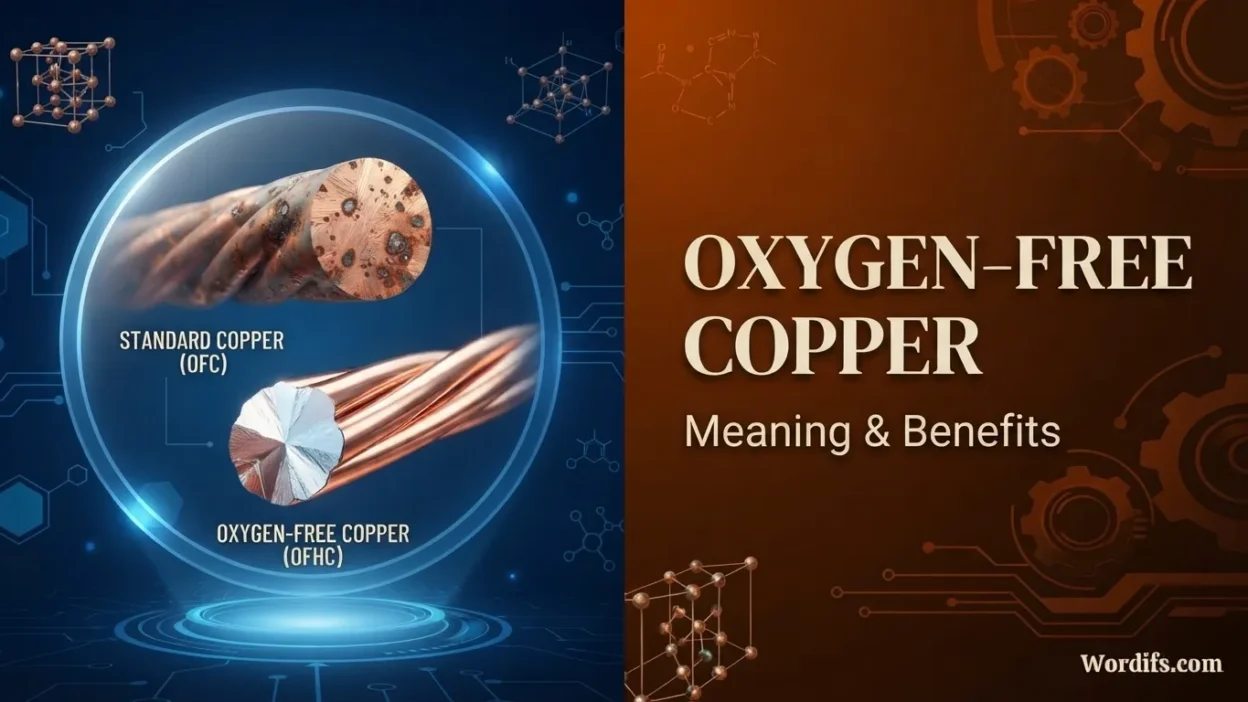
Oxygen-free copper is a high-purity form of copper manufactured to contain extremely low levels of oxygen. It is valued for its excellent electrical conductivity, high purity, and reliable performance in demanding applications. You can find oxygen-free copper in high-performance electrical components, audio equipment, telecommunications systems, and specialized industrial applications.
The term oxygen-free copper meaning refers to copper that has been processed under controlled conditions to minimize oxygen content and reduce oxygen-related impurities.
Depending on its grade, oxygen-free copper can offer conductivity close to pure copper, making it useful when electrical performance and material consistency are important. However, not every copper application requires oxygen-free copper, and its advantages depend on the specific grade, manufacturing process, and intended use.
Quick Answer:
Oxygen-free copper is a high-purity copper material produced with very low oxygen content, typically under tightly controlled manufacturing conditions. Common grades include C10100 and C10200 in the United States. It offers excellent electrical and thermal conductivity and is used in electronics, power systems, telecommunications, and specialized industrial equipment.
What Is Oxygen-Free Copper?
Oxygen-free copper, often abbreviated as OFC, is a type of copper manufactured to minimize oxygen and other impurities. Unlike some conventional copper grades that contain measurable amounts of oxygen, OFC is produced using refining and processing methods designed to achieve high purity and specific oxygen limits.
Copper naturally conducts electricity and heat exceptionally well. Oxygen-free copper retains these properties while offering material characteristics that can be beneficial in applications involving high temperatures, specialized joining methods, or demanding electrical requirements.
The exact properties depend on the grade, purity, processing history, and final product form. Oxygen-free copper is available as wire, rod, sheet, strip, tubing, and other industrial shapes.
What Does the Term Oxygen-Free Actually Mean?
The phrase oxygen-free does not necessarily mean that the copper contains absolutely no oxygen atoms. Instead, it describes copper produced to meet a specified low-oxygen requirement.
For example, two common US copper grades are:
- C10100: Oxygen-free electronic copper, generally containing at least 99.99% copper under applicable specifications.
- C10200: Oxygen-free copper, generally containing at least 99.95% copper under applicable specifications.
The grades have different oxygen limits and composition requirements. Their exact specifications should be checked against the relevant ASTM, UNS, or supplier documentation.
The word electronic in C10100 refers to the grade designation and its material characteristics. It does not mean that the copper contains electronic components.
How Is Oxygen-Free Copper Made?
Manufacturers use carefully controlled processes to reduce oxygen contamination during copper production.
A simplified manufacturing process includes the following steps:
- Copper refining: Copper is refined to achieve high purity and remove unwanted impurities.
- Oxygen control: The manufacturing process limits exposure to oxygen and manages the chemical conditions of the copper.
- Melting and casting: Controlled conditions help prevent unwanted oxygen from entering the molten metal.
- Forming: The copper is processed into wire, rods, sheets, or other required shapes.
- Quality testing: Manufacturers verify the composition and relevant physical or electrical properties against the specified grade.
Some production methods use controlled atmospheres or other techniques to maintain low oxygen levels. The precise method varies by manufacturer and product.
Main Types of Oxygen-Free Copper
Oxygen-free copper is not a single universal material specification. Different grades are designed to meet different purity and oxygen requirements.
1. C10100 Oxygen-Free Electronic Copper
C10100 is commonly called oxygen-free electronic copper, or OFE copper.
Its defining characteristics include:
- Very high copper purity.
- Extremely low oxygen content.
- Excellent electrical conductivity.
- Excellent thermal conductivity.
- Suitability for demanding electronic and industrial applications.
C10100 is often selected for specialized electrical components, vacuum-related equipment, and applications where material purity is particularly important.
Its low oxygen content can also be beneficial in certain high-temperature environments where conventional oxygen-bearing copper may experience problems during processing.
2. C10200 Oxygen-Free Copper
C10200 is another widely recognized oxygen-free copper grade.
It generally has a slightly less restrictive purity requirement than C10100, while maintaining a low oxygen content. It provides excellent electrical and thermal conductivity and is suitable for many applications requiring reliable copper performance.
Common uses include electrical conductors, industrial components, and products where oxygen control is desirable.
C10100 vs. C10200: What Is the Difference?
|
Feature
|
C10100
|
C10200
|
| — | — | — |
|
Common name
|
Oxygen-free electronic copper
|
Oxygen-free copper
|
|
Typical minimum copper content
|
99.99%
|
99.95%
|
|
Oxygen content
|
Very low, tightly controlled
|
Very low
|
|
Electrical conductivity
|
Excellent
|
Excellent
|
|
Purity requirements
|
More stringent
|
Generally less stringent
|
|
Typical selection factor
|
Applications requiring very high purity
|
Applications requiring low oxygen and excellent conductivity
|
These figures are general descriptions rather than a substitute for a material certificate. Always confirm the applicable specification, oxygen limit, conductivity, and impurity requirements before purchasing.
Key Properties of Oxygen-Free Copper
Oxygen-free copper is valued for several material properties that make it suitable for electrical and industrial applications.
1. Excellent Electrical Conductivity
Copper is one of the most effective commonly used electrical conductors. High-purity oxygen-free copper can provide excellent conductivity, particularly when properly processed and manufactured.
Electrical conductivity matters because it affects resistance, energy losses, and heat generation in a conductor.
For example, oxygen-free copper may be used in specialized electrical contacts, precision conductors, and components that require consistent electrical performance.
However, oxygen-free copper is not automatically more conductive than every other copper grade. Properly manufactured conventional high-conductivity copper can perform similarly. The difference depends on purity, impurities, processing, and the applicable material specifications.
2. Excellent Thermal Conductivity
Copper transfers heat efficiently, making it useful for thermal management.
Oxygen-free copper may be used in specialized heat-transfer components, cooling systems, and electronic assemblies where both conductivity and material purity matter.
Its performance depends on the grade and manufacturing condition, including whether the copper has been annealed, cold-worked, or otherwise processed.
3. High Purity
High purity is one of the defining features of oxygen-free copper.
Reducing oxygen and other impurities can help provide consistent electrical and thermal performance. High-purity copper is particularly valuable when even small variations in composition could affect a specialized manufacturing process.
Purity alone, however, does not guarantee superior performance in every application. Mechanical properties, surface condition, and manufacturing quality also matter.
4. Good Ductility and Formability
Copper is generally ductile, meaning it can be drawn into wire or formed into different shapes without immediately breaking.
Oxygen-free copper can be manufactured into products such as:
- Fine electrical wire.
- Copper strips and sheets.
- Rods and bars.
- Specialized tubes.
- Precision electronic components.
Its actual flexibility and formability depend on temper, grain structure, thickness, and processing history.
5. Performance in Certain High-Temperature Applications
Oxygen-bearing copper can develop problems under certain elevated-temperature conditions, particularly when hydrogen interacts with copper oxides inside the material.
Low-oxygen copper can reduce the risk of this specific type of hydrogen-related damage.
This characteristic makes oxygen-free copper useful in some specialized high-temperature, vacuum, and electronic applications. It does not mean the material is immune to oxidation, overheating, or every form of thermal damage.
Common Uses of Oxygen-Free Copper
Oxygen-free copper is used in industries that value electrical performance, thermal conductivity, and low oxygen content.
Electronics and Electrical Equipment
OFC may be used in specialized electronic components, electrical contacts, precision conductors, and equipment where consistent material properties are important.
Examples include selected semiconductor-related components, high-purity electrical parts, and precision electrical assemblies.
Not all electronic products require oxygen-free copper. Standard copper grades often work well for ordinary wiring and electrical applications.
Audio Equipment and Speaker Cables
Oxygen-free copper is frequently marketed for audio cables, speaker wires, and headphone cables.
Its high conductivity makes it a suitable electrical conductor, and its low oxygen content is a recognizable material specification.
However, oxygen-free copper does not automatically produce better audible sound than properly designed copper cable of suitable thickness and construction. Cable resistance, conductor size, length, connectors, and the electrical requirements of the equipment are generally more relevant to performance.
When buying audio cables, look for appropriate wire gauge, construction quality, and clear material specifications rather than relying on the OFC label alone.
Telecommunications and Signal Transmission
Oxygen-free copper can be used in certain telecommunications conductors, signal cables, and specialized electronic systems.
Good conductivity and consistent manufacturing help support reliable electrical connections.
Nevertheless, cable design, shielding, impedance, insulation, and signal frequency can be more important than the difference between oxygen-free and conventional high-conductivity copper.
Vacuum Equipment and Specialized Industrial Systems
High-purity copper grades are useful in certain vacuum systems and specialized industrial equipment.
Depending on the design, copper components may support heat transfer, electrical connections, or other functions requiring controlled material composition.
The suitability of a particular OFC grade depends on operating temperature, vacuum conditions, joining methods, and the engineering specifications of the equipment.
Power and Energy Applications
Oxygen-free copper may be selected for specialized conductors, busbars, electrical contacts, and other power-related components.
Its conductivity helps limit electrical resistance, while its purity can be beneficial for particular manufacturing requirements.
For many ordinary power-distribution systems, however, standard electrical-grade copper is already an excellent choice.
Oxygen-Free Copper vs. Regular Copper
The main difference between oxygen-free copper and conventional copper is the oxygen content and the manufacturing requirements used to achieve it.
Regular copper is not necessarily low quality. Many standard copper grades have excellent conductivity and are appropriate for electrical wiring, plumbing, and industrial products.
|
Comparison
|
Oxygen-Free Copper
|
Conventional Copper
|
| — | — | — |
|
Oxygen content
|
Very low and controlled
|
Varies by grade
|
|
Purity
|
Typically very high
|
Depends on specification
|
|
Electrical conductivity
|
Excellent
|
Can be equally excellent
|
|
Thermal conductivity
|
Excellent
|
Generally excellent
|
|
Hydrogen-related performance
|
Often advantageous in relevant conditions
|
Depends on oxygen content and grade
|
|
Cost
|
May be higher
|
Often more economical
|
|
Typical use
|
Specialized or high-purity applications
|
General electrical and industrial applications
|
Which One Is Better?
Neither material is universally better.
Choose oxygen-free copper when low oxygen content, specific purity requirements, or resistance to hydrogen-related damage under relevant conditions matters to the application.
Choose conventional high-conductivity copper when it meets the required electrical, mechanical, and manufacturing specifications at a more economical price.
The best material is the one that meets the actual engineering requirements rather than the one with the most impressive-sounding label.
Oxygen-Free Copper vs. OFHC Copper
Another term you may encounter is OFHC, which stands for oxygen-free high-conductivity copper.
OFC and OFHC are often used in closely related contexts, particularly when discussing high-purity copper products.
However, the terms are not always interchangeable in every technical or commercial specification. Product naming can vary by industry and supplier.
When comparing materials, check the actual grade designation, chemical composition, oxygen limit, conductivity, and applicable standards instead of relying on the abbreviation alone.
For example, a supplier listing OFHC copper for a specialized application should provide enough information to determine whether the material meets the required specification for that application.
Is Oxygen-Free Copper Worth the Extra Cost?
Oxygen-free copper can be worth the additional expense when its material properties solve a specific engineering problem.
It may justify its cost when an application requires:
- Very low oxygen content.
- Particularly high copper purity.
- Reliable performance during specialized high-temperature processing.
- Specific material characteristics for vacuum or electronic applications.
- Compliance with a defined copper-grade specification.
On the other hand, paying extra for oxygen-free copper may provide little practical benefit when the application only requires ordinary electrical conductivity.
For example, standard high-conductivity copper wire can be suitable for household electrical circuits, provided it meets the required electrical and safety standards. Oxygen-free copper is not automatically necessary for that purpose.
Factors to Consider Before Buying
Before purchasing oxygen-free copper, evaluate these factors:
- Grade: Determine whether C10100, C10200, or another specified grade is required.
- Conductivity: Check the required electrical or thermal performance.
- Purity: Verify the composition and impurity limits.
- Mechanical properties: Consider strength, hardness, ductility, and temper.
- Product dimensions: Confirm the required thickness, diameter, or shape.
- Manufacturing conditions: Determine whether the copper must withstand specialized welding, heating, or vacuum processing.
- Price and certification: Compare suppliers and request documentation when material specifications are critical.
For industrial projects, a material test report or certificate of analysis can help verify that the supplied copper meets the required specification.
How to Identify Genuine Oxygen-Free Copper
The appearance of copper alone cannot reliably establish whether it is oxygen-free.
Oxygen-free copper may have the same familiar reddish appearance as other copper grades. Color, shine, and surface finish are not sufficient evidence of oxygen content or purity.
Use the following steps to evaluate a product:
- Check the grade designation. Look for C10100, C10200, or the precise grade required by your application.
- Review the technical datasheet. Confirm the specified composition, oxygen content, conductivity, and mechanical properties.
- Ask for certification. For critical applications, request a material certificate or test report.
- Verify the manufacturer. Purchase from a supplier that provides traceable material specifications.
- Match the material to the application. Make sure the product meets the relevant industry standards and design requirements.
Be cautious of listings that advertise oxygen-free copper without specifying a grade or providing meaningful technical details.
Environmental and Recycling Considerations
Copper is a recyclable metal, and oxygen-free copper can generally be recycled through appropriate copper-recovery processes.
Recycling helps recover valuable material and can reduce the need for newly mined copper. However, the environmental benefits depend on collection, sorting, transportation, processing, and the energy used in recycling.
Oxygen-free copper scrap may be valuable when its grade and composition are known. Mixing different copper alloys or contaminated materials can affect the quality of recovered metal.
Businesses handling copper scrap should follow applicable recycling procedures and verify material composition when purity is important.
Frequently Asked Questions
1. What does oxygen-free copper mean in simple words?
Oxygen-free copper is high-purity copper manufactured to contain very little oxygen. It provides excellent electrical and thermal conductivity and is used in specialized electronics, electrical components, and industrial applications.
2. Is oxygen-free copper 100% pure copper?
No. Oxygen-free copper is not necessarily 100% pure. Common grades such as C10100 and C10200 have specified minimum copper contents and limits on oxygen and other impurities. The exact composition depends on the grade.
3. Is oxygen-free copper better than regular copper?
Not always. Oxygen-free copper is useful when very low oxygen content or particular purity requirements matter. Conventional high-conductivity copper can provide comparable electrical performance in many everyday applications.
4. Does oxygen-free copper improve sound quality?
Not automatically. Oxygen-free copper is an excellent conductor, but it does not inherently guarantee better audible sound. Cable gauge, length, resistance, connections, and equipment compatibility are more important factors to consider.
5. What are the most common oxygen-free copper grades?
Two widely recognized grades are C10100, oxygen-free electronic copper, and C10200, oxygen-free copper. They have different purity requirements, so the appropriate grade depends on the application.
6. Is oxygen-free copper more expensive?
It can be more expensive than conventional copper because of its manufacturing and material requirements. The price difference depends on grade, dimensions, quantity, supplier, and market conditions.
7. How can I tell whether copper is oxygen-free?
You generally cannot confirm oxygen content by looking at the metal. Check the grade marking, supplier datasheet, and material certificate. Laboratory testing may be necessary when independent verification is required.
8. Can oxygen-free copper be used for ordinary electrical wiring?
Oxygen-free copper can conduct electricity effectively, but ordinary electrical wiring usually does not require it. Use copper wire that meets the applicable electrical codes, safety requirements, and conductor specifications for the installation.
Final Thoughts
Oxygen-free copper is a high-purity copper material designed to minimize oxygen content while maintaining excellent electrical and thermal conductivity. Common grades such as C10100 and C10200 serve applications ranging from specialized electronics to industrial equipment.
Understanding the meaning of oxygen-free copper helps you distinguish genuine material specifications from marketing claims. Although OFC offers advantages in certain demanding environments, it is not automatically superior to every conventional copper grade. Compare the material’s specifications, intended use, and cost before deciding which option best meets your needs.

Kalven Driost works on the Wordifs site producing reliable content while communicating through wordifs@gmail.com to support research editing publishing consistency transparency and audience focused knowledge sharing practices for modern readers.