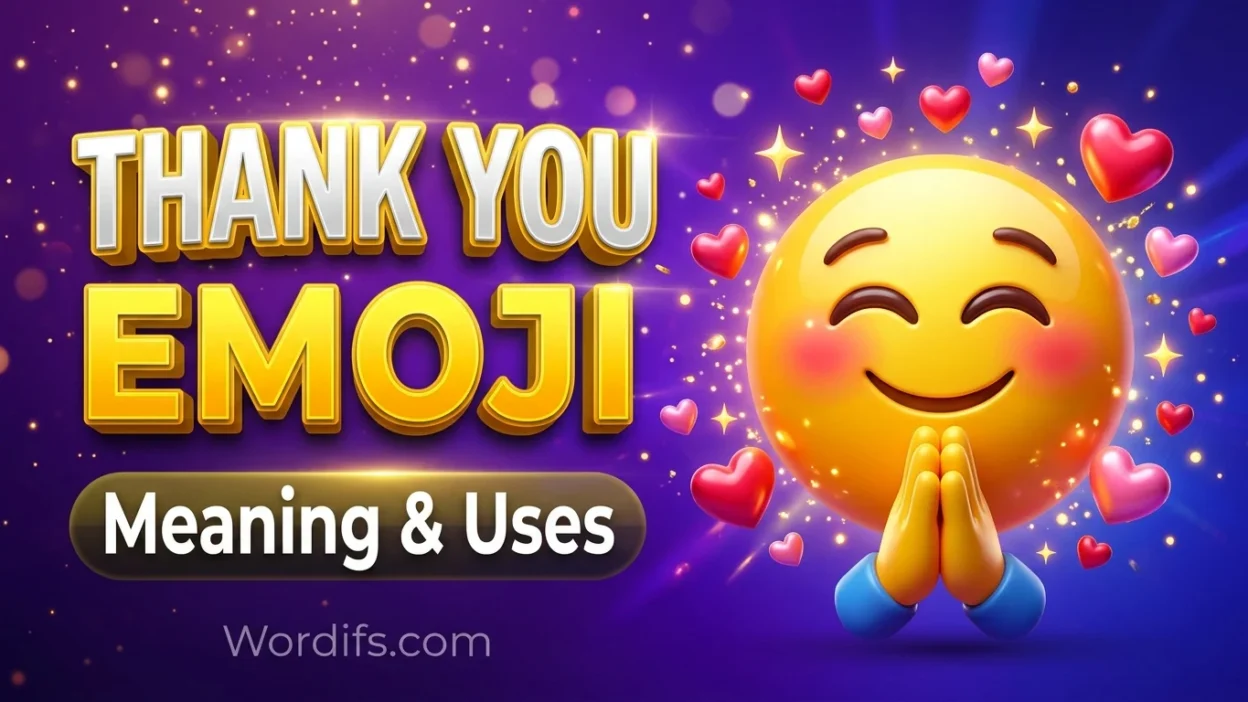
Which emoji means thank you? The most widely used thank you emoji is 🙏 (folded hands). It has no official “thank you” label in Unicode, but people around the world use it to say thanks, show gratitude, or politely ask for something. Other emojis like ❤️, 😊, 🤝, and 🫶 also work, depending on who you are talking to.
This guide explains what 🙏 means, where it came from, which alternatives suit different situations, and how to avoid awkward mix-ups in personal and professional chats.
Quick Answer
- Best all-round thank you emoji: 🙏 (folded hands)
- Warm and personal: ❤️, 🥰, 🫶, or 😊
- Professional: 🙏, 🤝, or 👍, used sparingly
- Heartfelt and emotional: 🥹 or 💐
- Official name of 🙏: “Folded Hands” (Unicode name: Person with Folded Hands)
- Watch out for: some people read 🙏 as prayer, and others as a high five
What Is the Thank You Emoji?
The thank you emoji is the folded hands symbol, 🙏 (Unicode U+1F64F). Two palms press together in front of the body, a gesture many cultures link with thankfulness, respect, and humility.
Unicode, the group that standardizes emojis, does not officially call it the “thank you emoji.” That label comes from everyday use. Over time, people chose 🙏 as the quickest way to say “thanks” without typing a word.
The same emoji has several meanings, and the context decides which one applies:
- Thank you: “Got the files, 🙏”
- Please: “Can you send it today? 🙏”
- Prayer or hope: “Sending strength to your family 🙏”
- Respect or greeting: a gesture similar to namaste in some regions
- Apology: “Sorry for the delay 🙏”
Where Did the Folded Hands Emoji Come From?
The 🙏 emoji was added to Unicode in 2010 and became part of the standard emoji set in 2015. It grew out of early Japanese mobile phone symbols, where people used a pressed-hands gesture to say thanks, ask a favor, or apologize.
Pressed or folded hands carry meaning in many traditions:
- In Japan, the gesture is linked to gratitude before meals and to polite requests.
- In South Asia, pressing palms together is part of greetings like namaste.
- In Christian settings, folded hands are commonly linked to prayer.
- In Buddhist traditions, the gesture shows respect and reverence.
This mix of meanings explains why 🙏 is so popular. It feels sincere and gentle, and it works across languages. It is also why the emoji can be misread.
Other Emojis That Mean Thank You
Many emojis can express thanks. Some are better for friends, some for work, and some for big moments.
| Emoji | Name | Best used for |
| 🙏 | Folded hands | General thanks, polite requests |
| ❤️ | Red heart | Warm thanks to friends and family |
| 🥰 | Smiling face with hearts | Affectionate gratitude |
| 😊 | Smiling face with smiling eyes | Friendly, light thanks |
| 🫶 | Heart hands | Sincere appreciation and love |
| 🥹 | Face holding back tears | Deeply touched, emotional thanks |
| 🤝 | Handshake | Agreement and professional thanks |
| 👍 | Thumbs up | Quick acknowledgment |
| 💐 | Bouquet | Thanking someone for a kind gesture |
| 🎁 | Gift | Thanks for a present or favor |
| 🫡 | Saluting face | Respect and thanks for service or effort |
| 🤗 | Hugging face | Warm, friendly gratitude |
Newer emojis such as 🫶, 🥹, and 🫡 arrived with Unicode 14 in 2021, so they may look different on older phones or software.
How to Choose the Right Thank You Emoji
The right emoji depends on your relationship, the platform, and the tone. Here is a simple guide.
| Situation | Suggested emoji | Why it works |
| Thanking a close friend | ❤️ 🥰 🫶 | Feels personal and warm |
| Thanking a coworker | 🙏 😊 👍 | Polite and friendly |
| Replying to a manager or client | 🙏 🤝 | Respectful, not too casual |
| Someone helped in a hard time | 🙏 🥹 ❤️ | Shows real emotion |
| Thanking a customer | 😊 🙏 💐 | Pleasant and professional |
| Social media comments | ❤️ 🙏 ✨ | Friendly and quick |
| After a gift | 🎁 🥰 ❤️ | Matches the moment |
When in doubt, use 🙏 or 😊. Both are rarely wrong.
Is 🙏 a Prayer Emoji or a Thank You Emoji?
It is both. This is the biggest source of confusion.
Many people use 🙏 to mean prayer or “I’m praying for you.” Others use it to mean thanks. The surrounding words usually make it clear:
- “Thanks so much for helping today 🙏” means gratitude.
- “Please keep him in your prayers 🙏” means prayer.
- “Please call me back 🙏” means a polite request.
If your message could be read two ways, add a short word like “thanks” or “thank you.” For example, a bare 🙏 under a post about someone’s illness may look like a prayer, even if you meant to thank the person for sharing.
A note for Muslim users: in many Muslim communities, dua (supplication) is made with open, cupped palms rather than pressed palms. The 🤲 (palms up together) emoji fits that gesture better. For thanks, 🙏 is still widely understood, but 🤲 is the better choice for dua.
Another common mix-up: some people see 🙏 as a high five, especially when they glance at it quickly. Context and a few words of text prevent this.
How to Use Thank You Emojis in Messages
Short examples show how emojis can support your words instead of replacing them.
With friends:
- “You made my day, thank you! 🥰”
- “Thanks for coming over 🙏”
- “I owe you one ❤️”
At work:
- “Thanks for the quick update 🙏”
- “Appreciate your help on this 🤝”
- “Thank you, this is perfect 👍”
On social media:
- “Thank you all for the birthday wishes! ❤️🙏”
- “So grateful for this community 🫶”
With customers:
- “Thank you for your order! 😊”
- “We appreciate your feedback 🙏”
Putting the emoji at the end of the sentence is the most natural choice. One emoji is usually enough.
Using Thank You Emojis at Work
Emojis are now common in workplace chats such as Slack, Microsoft Teams, and WhatsApp. They can make messages warmer, but a few habits keep things professional.
- Use 🙏 or 😊 for routine thanks.
- Match your team’s style. If nobody else uses emojis, use fewer.
- Avoid emojis in formal emails, legal notes, or messages to senior leaders you do not know well.
- Skip emojis in serious or sensitive conversations, such as complaints or bad news.
- Use words first for important thanks, such as recognizing someone’s big effort.
A sincere sentence like “Thank you for staying late to finish this” means more than an emoji alone. The emoji can be a small finishing touch.
Skin Tones and Platform Differences
Since 2015, 🙏 has been available in five skin tone options plus the default yellow. You can pick one by pressing and holding the emoji on most phone keyboards.
Emojis also look slightly different on each platform. Apple, Google, Samsung, and Microsoft all draw 🙏 in their own style. The meaning stays the same, but the look can change. Some designs make the hands look more like a high five, which is one reason the mix-up happens.
You can find the emoji quickly by:
- Typing “thank” or “pray” in your phone keyboard’s emoji search
- Pressing Windows key + period (.) on Windows
- Pressing Control + Command + Space on a Mac
Common Mistakes to Avoid
- Using only 🙏 in a serious post. It may look like a prayer. Add a word like “thanks.”
- Overusing emojis. A row of ten hearts and folded hands can look insincere.
- Using casual emojis in formal messages. A 🥰 to a new client can feel too personal.
- Ignoring cultural meaning. Folded hands have religious and cultural weight in many places.
- Replacing real thanks with an emoji. For big favors, write at least a sentence.
- Assuming everyone sees the same image. Designs differ across devices.
- Sending thanks too late. A quick emoji sent on time beats a long message sent a week later.
Practical Tips
- Pair words with the emoji. “Thank you so much 🙏” is clearer than 🙏 alone.
- Match the tone. Use hearts for warmth, handshakes for business, and folded hands for general use.
- Keep it short. One or two emojis are enough.
- Think about your audience. Age, culture, and relationship all affect how an emoji lands.
- Save favorites. Most keyboards keep a recent or frequent emoji list for quick access.
- Use text shortcuts if helpful. Some apps let you set a shortcut so typing “ty” suggests 🙏.
- Be genuine. People can tell when thanks are automatic. Mention what you are thankful for when you can.
Frequently Asked Questions
What is the thank you emoji?
The most common thank you emoji is 🙏, the folded hands emoji. People also use ❤️, 😊, 🥰, 🫶, and 🤝 to show gratitude.
Is 🙏 a high five or a prayer?
Officially, it shows two hands pressed together, not a high five. It is often used for prayer, but it is equally common for thanks and polite requests.
Is there an official thank you emoji in Unicode?
No. Unicode names 🙏 “Person with Folded Hands.” The “thank you” meaning comes from how people use it.
Which thank you emoji is best for professional messages?
🙏 and 🤝 are safe for most workplace chats. A simple 👍 or 😊 also works. Keep emojis light and avoid them in very formal emails.
How do I send a thank you emoji on my phone or computer?
Open your emoji keyboard and search “thank” or “folded hands.” On Windows, press Windows key + period. On a Mac, press Control + Command + Space.
Can 🙏 offend anyone?
Rarely. Some people may read it as religious, so a short clarifying word helps. In formal or sensitive settings, written thanks are safer.
What emoji shows deep gratitude?
🥹 and 🫶 suit emotional thanks, and 🙏 works well when you want to sound sincere. Add a sentence about what the person did for you.
Is 🤲 a thank you emoji?
Not exactly. 🤲 (palms up together) is more often used for dua, hope, or receiving a blessing, though some people use it to show thankfulness.
Conclusion
The thank you emoji most people reach for is 🙏, and for good reason. It is warm, simple, and understood in many languages. Still, it can also mean prayer, a request, or an apology, so the words around it matter.
Choose your emoji based on the person and the moment. Use hearts for loved ones, a handshake for business, and folded hands when you want a safe, polite option. Pair the emoji with a few honest words, and your appreciation will always come across clearly.

Kalven Driost works on the Wordifs site producing reliable content while communicating through [email protected] to support research editing publishing consistency transparency and audience focused knowledge sharing practices for modern readers.