You send a message you instantly regret, and your thumb lands on the same face every time: 😬. The nervous emoji is one of the most relatable symbols on any keyboard, but its meaning shifts with context. Used well, it adds humor and honesty. Used badly, it can confuse the person reading it.
This guide explains what the nervous face means, how it differs from similar emojis, and how to use it with confidence.
Quick Answer
The nervous emoji most often means the grimacing face emoji 😬. It shows awkwardness, nervousness, embarrassment, or a “this is uncomfortable” feeling. People use it when they feel anxious, caught off guard, or sorry about a small mistake.
Quick facts:
- Official name: Grimacing Face
- Emoji: 😬
- Unicode: U+1F62C
- Typical meaning: awkward, nervous, “oops,” cringe
- Tone: light, humorous, self-aware
- Close alternatives: 😅 😰 😓 🫣
What Is the Nervous Emoji?
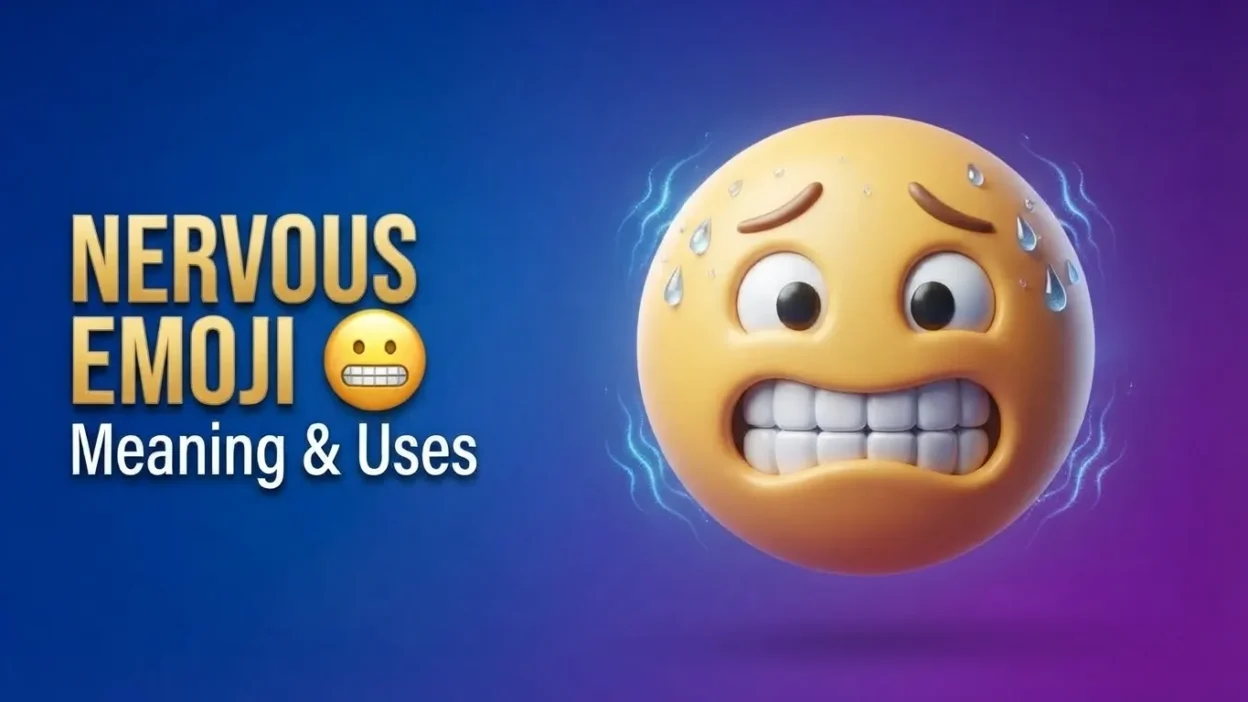
The nervous emoji, officially the grimacing face emoji, shows a face with a tense, stretched mouth and clenched teeth. The eyes are wide open and the grin looks forced. It is the face people make when they are trying to stay calm while feeling uneasy.
Unicode approved 😬 in 2012 as part of Unicode 6.1, and it has been a staple of texting and social media ever since. You can see how each brand draws it, from Apple to Google to Samsung, on theEmojipedia Grimacing Face page.
There is no single “official” nervous emoji. People use the term loosely for several faces, including 😬, 😅, 😰, and 😓. Most of the time, though, nervous face emoji refers to 😬.
What Does the 😬 Emoji Mean?
The grimacing face covers a family of related feelings. Here are the most common meanings.
Awkwardness and Embarrassment
This is the classic use. You walked into the wrong meeting, called a teacher “Mom,” or waved at someone who wasn’t waving at you. The emoji says, “That was uncomfortable.
Nervousness and Anxiety
Before an interview, a presentation, or an exam, 😬 shows nerves without sounding dramatic. It is a casual way to say “I’m a bit worried about this.”
Mild Apology
When you are late or have made a small mistake, the emoji softens the message. “Sorry, I forgot to reply 😬” feels warmer than a flat apology.
Cringe and Secondhand Embarrassment
Many people send it when they see something painfully awkward, such as a bad joke, an embarrassing video, or a messy argument.
“This Could Go Wrong”
Sometimes 😬 is a warning. “We’re about to tell the boss 😬” suggests tension ahead.
Nervous Emoji vs. Similar Emojis
Many faces look nervous but carry different shades of meaning. Choosing the wrong one can change your tone.
| Emoji | Name | Main Feeling | Best Used When |
| 😬 | Grimacing Face | Awkward, uneasy | Cringe moments, small mistakes |
| 😅 | Grinning Face with Sweat | Relieved, nervous laugh | You narrowly avoided trouble |
| 😰 | Anxious Face with Sweat | Real worry, stress | Genuine anxiety or fear |
| 😓 | Downcast Face with Sweat | Tired, disappointed | Hard work or a letdown |
| 😟 | Worried Face | Concern | Showing care or concern |
| 🫣 | Face with Peeking Eye | Nervous curiosity | You can’t look but must |
| 🫠 | Melting Face | Overwhelmed, embarrassed | Wanting to disappear |
The key difference: 😬 is mostly social discomfort. 😰 is closer to real anxiety. 😅 usually carries a note of relief.
How People Use the Nervous Emoji in Real Life
In Text Messages
- “Meeting my partner’s parents tonight 😬”
- “I think I sent that to the wrong person 😬”
- “Final exam results are out tomorrow 😬”
On Social Media
On platforms like Instagram, TikTok, X, and Reddit, 😬 often appears in comments under awkward clips or risky opinions. It can mean “I can’t watch this” or “this is going to be messy.”
At Work
In workplace chat tools such as Slack and Microsoft Teams, the emoji is common for flagging a tricky situation. Client moved the deadline up 😬” is clear and friendly. Just keep it professional. It works best between colleagues who already know each other.
As a Reaction
On WhatsApp, iMessage, and Messenger, people react to messages with 😬 when something is embarrassing, unfortunate, or awkwardly funny.
Is the Nervous Emoji Positive or Negative?
It is neither, strictly speaking. The emoji is neutral to mildly negative, but it is rarely harsh. Most people read it as honest and a little humorous rather than upset. That is why it works so well for softening bad news or admitting a slip-up.
Does the Meaning Change by Culture or Age?
Slightly. Younger users often treat 😬 as a cringe reaction. Older users may read it as a literal smile with gritted teeth. In some regions, people confuse it with a grin or a show of teeth, especially on older emoji designs.
Platform design also matters. Some versions look more like a forced smile, while others look clearly anxious. If your message depends on tone, add a few words so there is no confusion.
Common Misunderstandings
- “It means the person is happy.” Not usually. The teeth can look like a grin, but the feeling is uneasy.
- “It’s the same as the sweating emojis.” It isn’t. The sweat faces suggest stress or relief, while 😬 is about awkwardness.
- “It’s rude.” Rarely. It is usually playful, though context can change that.
- “It always means fear.” Often it means embarrassment or hesitation, not terror.
Examples: Good and Bad Uses
| Situation | Message | Works? |
| Friend asks if you studied | “Not really 😬” | Yes, honest and funny |
| Sharing a missed deadline with a manager | “Running a day behind, sorry 😬” | Yes, if the relationship is friendly |
| Someone shares sad news | “I’m sorry for your loss 😬” | No, it feels careless |
| Reacting to a cringe video | “😬😬😬” | Yes, matches the mood |
| Formal email to a client | “Please find the report 😬” | No, too casual |
Common Mistakes to Avoid
1. Using it for serious or sad news. The face can look dismissive when someone is grieving or hurting. Choose 💙 or a sincere sentence instead.
2. Mixing it up with 😁. Some platforms render the two faces similarly. Check how your message looks before sending something important.
3. Overusing it. If every sentence ends with 😬, the emoji loses meaning, and you may seem anxious or sarcastic.
4. Using it in formal writing. Business proposals, legal notes, and first emails to strangers are better off without it.
5. Using it to hide a real problem. If you are truly stressed or struggling, a joking emoji can cover up what you want to say. Say it directly.
Practical Tips for Using the Nervous Emoji
- Match the moment. Use it for minor awkwardness, not major problems.
- Pair it with words. A short sentence removes any doubt about your tone.
- Know your audience. Friends and teammates will understand. A new contact may not.
- Pick the right alternative. Use 😰 for real worry, 😅 for relief, and 🫣 for nervous curiosity.
- Test on your own device. Designs differ across iPhone, Android, and Windows, so preview your message.
- Keep it to one. A single 😬 reads as casual. A string of them reads as dramatic.
Why the Nervous Emoji Became So Popular
People like emojis that feel honest. The grimace captures a feeling that is hard to explain in words: a mix of awkwardness, humor, and hope that things turn out fine. It also helps people admit small flaws without turning them into a big deal, which is why it fits so naturally in modern chat culture.
Frequently Asked Questions
1. What is the nervous emoji called?
The most common nervous emoji is the Grimacing Face 😬. Other faces people call “nervous” include 😅, 😰, and 😓.
2. What does 😬 mean in a text?
It usually means awkwardness, nervousness, or embarrassment. It can also be a mild apology or a reaction to something cringeworthy.
3. Is 😬 a happy or sad emoji?
Neither. It is a neutral, slightly uneasy emoji that signals discomfort with a touch of humor.
4. What is the difference between 😬 and 😅?
😬 shows awkwardness or tension. 😅 shows a nervous laugh, often after relief from a close call.
5. Which emoji shows real anxiety?
😰 (Anxious Face with Sweat) is closer to genuine anxiety or fear. 😟 (Worried Face) shows concern.
6. Can I use the nervous emoji at work?
Yes, in casual chats with colleagues you know well. Avoid it in formal emails, reports, or messages to clients you haven’t met.
7. What does 😬 mean from a girl or a guy?
The meaning is the same regardless of gender: awkward, nervous, or embarrassed. Tone, context, and the relationship matter more than who sends it.
8. Does 😬 look different on iPhone and Android?
Yes. Each platform draws the face a little differently. Some versions look more like a tense smile, others more like a cringe, but the intended meaning remains the same.
Conclusion
The nervous emoji 😬 is a small symbol with a clear job: it helps you express awkwardness, nerves, and light embarrassment without needing long explanations. It works best in casual conversations, where honesty and humor go together.
Use it with care. Match it to the situation, avoid it in serious or formal moments, and choose a different emoji when you genuinely feel anxious or want to show relief. A little thought about tone makes your messages clearer and more human.

Kalven Driost works on the Wordifs site producing reliable content while communicating through wordifs@gmail.com to support research editing publishing consistency transparency and audience focused knowledge sharing practices for modern readers.