If you have ever paused while writing greatful or grateful, you are not alone. This is a common spelling mistake because the word sounds as though it might be related to “great.” However, only one spelling is correct in standard English.
The correct spelling is grateful. It means feeling or showing appreciation for something someone has done, something you have received, or something positive in your life. In this guide, you will learn why grateful is correct, why greatful is a common mistake, and how to remember the difference.
Quick Answer
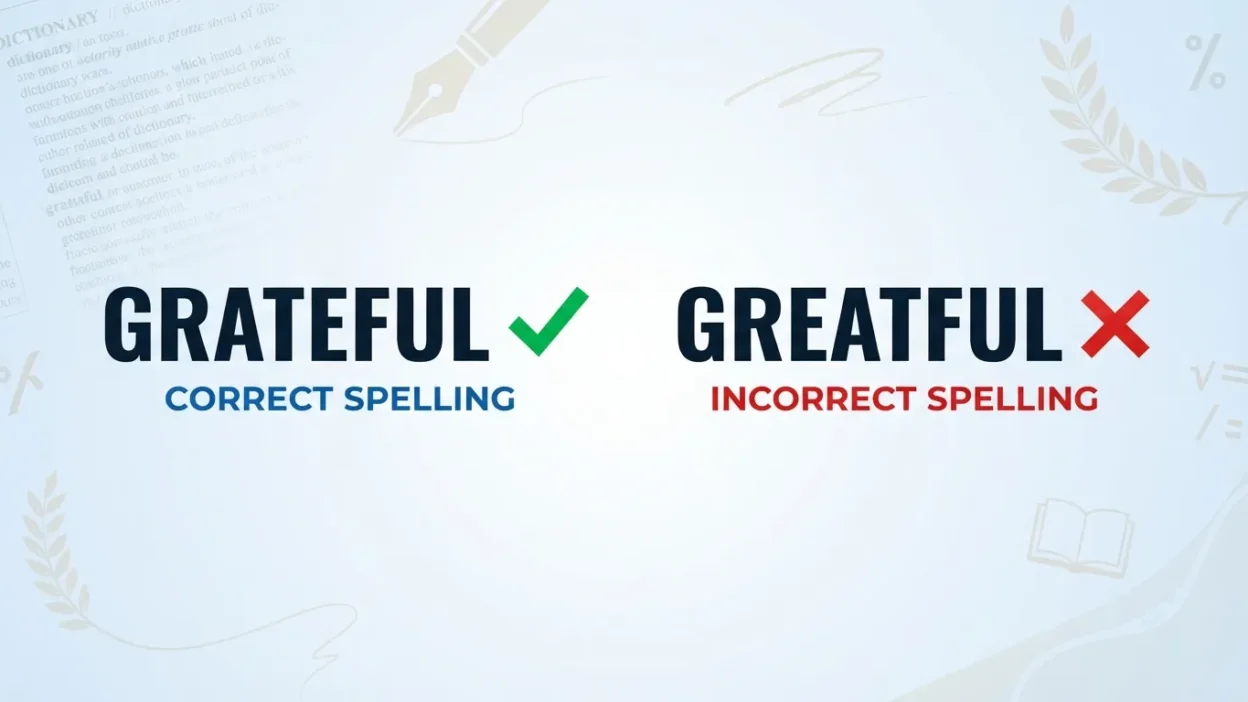
Grateful is the correct spelling.
Greatful is a misspelling and should not be used in standard English.
- Correct: I am grateful for your help.
- Incorrect: I am greatful for your help.
The word grateful means thankful or appreciative. It is commonly followed by for when you are identifying what you appreciate and to when you are identifying the person you appreciate.
Greatful or Grateful: Which One Is Correct?
The correct word is grateful, spelled with an “a” after the “gr.”
Grateful = correct
Greatful = incorrect
The confusion usually comes from the word great. Because “great” means excellent or wonderful, it is easy to assume that adding -ful creates “greatful.” English spelling does not always work that way, though.
Grateful comes from the word gratitude, which means thankfulness or appreciation. The related words gratefully and gratitude can help you recognize the correct spelling.
For example:
I am grateful for everything you have done for me.
Here, grateful expresses appreciation.
What Does Grateful Mean?
Grateful is an adjective that describes someone who feels or expresses thankfulness and appreciation.
When you are grateful, you recognize the value of something you have received or experienced. You might feel grateful for someone’s kindness, support, advice, generosity, friendship, or help.
Examples of grateful in sentences
- I am grateful for your support.
- She was grateful for the opportunity.
- We are grateful to everyone who helped us.
- He felt deeply grateful for his family’s encouragement.
- They were grateful to their teacher for the extra guidance.
- I am truly grateful that you were there when I needed help.
The word can describe a simple feeling of appreciation or a deep sense of thankfulness.
Why Is “Greatful” Wrong?
The spelling greatful looks logical at first because it resembles the word great. However, “greatful” is not the standard English spelling of the word meaning thankful.
The correct spelling is connected to gratitude, not great.
Think of this word family:
- grateful
- gratefully
- gratitude
These words all relate to thankfulness and appreciation.
A useful memory trick is:
Grateful = gratitude + ful
You do not need to think of great + ful. Thinking about gratitude makes the correct spelling easier to remember.
Grateful vs. Greatful: Comparison Table
| Word | Correct? | Meaning | Example |
| Grateful | Yes | Thankful or appreciative | I am grateful for your help. |
| Greatful | No | No standard English meaning in this context | I am greatful for your help. |
If you are writing an email, essay, social media post, thank-you note, or professional message, always use grateful.
How to Use “Grateful” Correctly
One of the most useful patterns is:
grateful for + thing
Examples:
- I am grateful for your kindness.
- She is grateful for the opportunity.
- We are grateful for your support.
- He was grateful for the advice.
Another common structure is:
grateful to + person
Examples:
- I am grateful to my parents.
- She is grateful to her teacher.
- We are grateful to everyone who attended.
- He is grateful to his friends.
You can also combine both structures:
I am grateful to you for your support.
This sentence identifies both the person and the thing being appreciated.
Common Mistakes With Grateful
1. Writing “greatful”
This is the most common spelling mistake.
Incorrect:
I am greatful for your help.
Correct:
I am grateful for your help.
2. Confusing grateful with gratitude
Although these words are related, they have different grammatical roles.
Grateful is an adjective:
I am grateful for your kindness.
Gratitude is a noun:
I expressed my gratitude for your kindness.
3. Using “grateful of”
In standard English, grateful for is generally the appropriate construction when referring to something you appreciate.
Less natural:
I am grateful of your help.
Better:
I am grateful for your help.
4. Forgetting “to” when naming a person
When you want to identify the person you appreciate, use grateful to.
I am grateful to my parents.
You can then add for to identify the reason:
I am grateful to my parents for their support.
American vs. British English: Is the Spelling Different?
No. Grateful is spelled the same way in both American and British English.
There is no standard American spelling greatful or British spelling greatful. The correct form is grateful in both varieties.
For example:
American English:
I am grateful for your help.
British English:
I am grateful for your help.
The spelling does not change based on which variety of English you use.
Grateful Synonyms and Related Words
Several words can express a similar idea, although their exact meanings and tones can differ.
Common synonyms for grateful
- thankful
- appreciative
- obliged
- indebted
- appreciative
- pleased
- fortunate
For example:
I am grateful for your assistance.
can often become:
I am thankful for your assistance.
Or:
I really appreciate your assistance.
However, grateful, thankful, and appreciative are not always completely interchangeable. Grateful often emphasizes a sincere sense of appreciation, particularly for someone’s kindness, help, or generosity.
Grateful vs. Thankful
These words are closely related, but there can be a subtle difference in usage.
Grateful often emphasizes appreciation for something received or something someone has done.
I am grateful for your support during a difficult time.
Thankful can express relief or appreciation.
I am thankful that everyone arrived safely.
In everyday English, however, the two words frequently overlap.
Examples of “Grateful” in Everyday Writing
Knowing how the word appears in real sentences can make the spelling easier to remember.
Professional example
I am grateful for the opportunity to work with your team.
Personal example
I am so grateful for everything you have done for me.
Thank-you message
I am truly grateful to you for helping me through this process.
Social media example
Feeling grateful for all the wonderful people in my life.
Formal writing
We are grateful to our customers for their continued support.
These examples show that grateful works naturally in casual, professional, and formal contexts.
A Simple Trick to Remember “Grateful”
If you repeatedly write greatful, use this trick:
Grateful → Gratitude → Thankful
The word gratitude contains the same grat- beginning as grateful.
You can remember:
Grateful comes from gratitude, not great.
Another simple association is:
grateful = feeling gratitude
This connection can prevent the common “great + ful” spelling error.
Is “Greatful” Ever Correct?
In standard modern English, greatful is not the correct spelling when you mean “thankful” or “appreciative.”
If you are trying to express appreciation, use grateful.
For example:
❌ I am greatful for this opportunity.
✅ I am grateful for this opportunity.
❌ We are greatful to our customers.
✅ We are grateful to our customers.
❌ She was greatful for his advice.
✅ She was grateful for his advice.
Frequently Asked Questions
Is “greatful” or “grateful” correct?
Grateful is correct. Greatful is a common misspelling. Use grateful when you mean thankful or appreciative.
Why do people spell grateful as greatful?
People often make this mistake because grateful sounds similar to great and it seems natural to combine “great” with “-ful.” However, the correct spelling is related to gratitude.
What does grateful mean?
Grateful means feeling or showing appreciation and thankfulness. For example, “I am grateful for your help” means “I appreciate your help.”
Is it “grateful for” or “grateful to”?
Both can be correct, but they serve different purposes. Use grateful for when referring to something you appreciate and grateful to when referring to the person you appreciate.
I am grateful for your help.
I am grateful to you.
You can use both together:
I am grateful to you for your help.
Is grateful the same as thankful?
They are very similar and are often interchangeable. Grateful generally emphasizes appreciation, while thankful can also express relief or appreciation.
Is “grateful” spelled differently in British English?
No. Grateful has the same spelling in American and British English. Greatful is not the standard spelling in either variety.
What is the noun form of grateful?
The noun form is gratitude.
She expressed her gratitude for the support.
The adverb form is gratefully:
He gratefully accepted the offer.
What is the easiest way to remember grateful?
Remember the connection grateful → gratitude. If you associate the word with gratitude, you are less likely to mistakenly spell it greatful.
Final Summary
When choosing between greatful or grateful, the answer is straightforward: grateful is the correct spelling. It means thankful, appreciative, or feeling gratitude toward someone or something. Greatful is a common spelling error caused by the word’s similarity to “great,” but it should not be used when expressing thankfulness.
Remember the simple connection grateful = gratitude. Use grateful for when talking about something you appreciate and grateful to when identifying the person you appreciate. If you are writing American or British English, the spelling remains grateful.
Actionable Takeaway
Before you write greatful, stop and connect the word to gratitude. Then write grateful.
Correct: I am grateful for your help.
Incorrect: I am greatful for your help.
Once you remember grateful → gratitude, this common spelling confusion becomes much easier to avoid.

Zevran Callix works on the Wordifs site creating clear informative articles while collaborating through wordifs@gmail.com to maintain consistency quality research readability and reader focused blogging standards worldwide digital content platform.